

Tiger Pistol Shrimp Care: Tank Setup, Feeding and Acclimation
Learn how to set up a burrow home, feed, and safely acclimate your Tiger Pistol Shrimp for long-term health and interesting behavior in your reef tank.
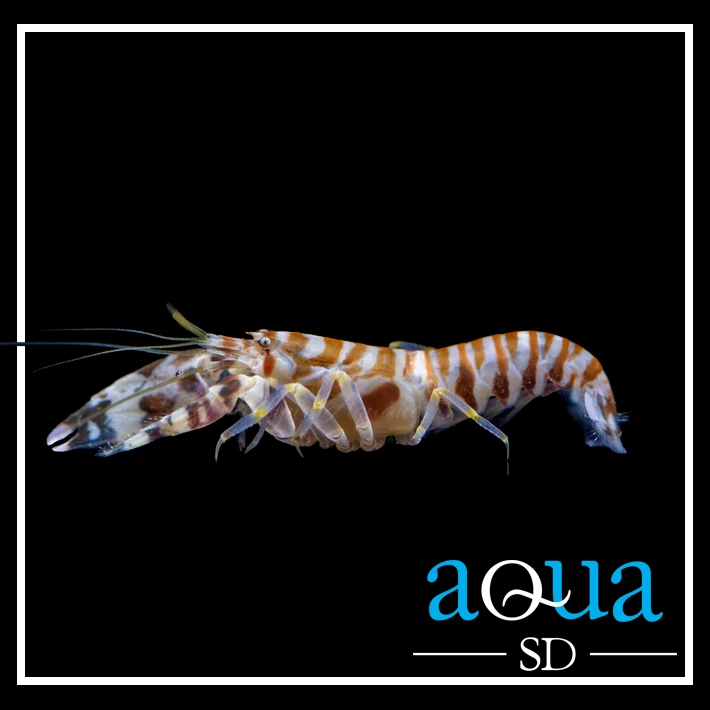
Tiger Pistol Shrimp Care: Tank Setup, Feeding and Acclimation
The Tiger Pistol Shrimp brings a unique appeal to any marine aquarium. This small but fascinating invertebrate is easy to care for and one of the most active and entertaining additions to a reef tank.
Invertebrate care · Detailed tutorial · About 8 minutes · Beginner friendly
The key habit: Provide a deep sand bed so your shrimp can dig its burrow, and maintain stable water parameters with extra attention to avoiding nitrates and copper.
In this guide
- What your Tiger Pistol Shrimp is and where it comes from
- Tank size and the substrate it needs
- Tank mates and temperament
- Feeding your pistol shrimp
- Water parameters and stability
- How to acclimate your shrimp safely
- Signs of good health
1. What your Tiger Pistol Shrimp is and where it comes from
The tiger pistol shrimp (Alpheus bellulus) is a species of shrimp belonging to the family Alpheidae, which are commonly known as snapping shrimp. These shrimps typically have a yellowish-white body adorned with brown bands and spots, giving them a tiger-like appearance, and usually reach up to 3 inches in length.
The tiger pistol shrimp is found in the tropical waters of the Indo-West Pacific area, dwelling in sandy, muddy and detrital substrata in shallow waters. What makes this shrimp special is its oversized claw, which it uses to create a powerful snapping sound for hunting and communication.
2. Tank size and substrate
Provide a mature marine aquarium with a sand bed at least 2–3 inches deep. The minimum tank size is 20 gallons. However, some sources recommend fine to medium sand substrate 2–3 inches deep minimum for burrow construction.
A substrate like sand or fine gravel is preferable to allow the shrimp to dig and create burrows. Tiger Snapping Shrimp thrive in environments with sand, rock caves, and dim light. The shrimp's burrowing is not just for hiding—it's essential behavior, and without the right substrate, the shrimp will become stressed.
Include small pieces of rubble rock and live rock to stabilize burrow structures, and ensure open sand areas for extensive tunnel systems.
3. Tank mates and temperament
Tiger Pistol Shrimp are peaceful toward most fish and peaceful toward other corals, but territorial around their burrow. Tiger Pistol Shrimp ignore most fish and corals, but will defend their burrow from other bottom-dwelling shrimp and crabs. Keep only one shrimp per burrow unless you have a known mated pair.
One of the most interesting aspects of this shrimp is its potential partnership with a goby. Because these shrimp have poor eyesight, the goby acts as a lookout for predators while the shrimp provides a home for the goby; both also benefit in sharing food resources. If you want to keep a pair, buy them already bonded rather than hoping two will pair up.
Invertebrates are highly sensitive to copper, and copper-treated water or medications should never be added to an aquarium that houses them.
4. Feeding your pistol shrimp
Typically, pistol shrimp primarily rely on scavenging leftover food and detritus in a well-established aquarium, making supplemental feeding usually unnecessary; however, in certain circumstances, targeted feeding might be beneficial to ensure optimal health and growth.
If you do feed, they will forage on the substrate for meaty foods, such as frozen brine shrimp or mysis shrimp, and various pellet foods. Snapping Shrimp will accept any meaty freeze-dried and frozen foods and bottom feeder tablets.
Signs of underfeeding include lethargy, decreased digging activity, and a lack of scavenging behavior. If you observe these signs, consider supplementing their diet. Deliver food right at the burrow mouth for a burrow-bound shrimp because food isn't always visibly disappearing.
5. Water parameters and stability
Maintaining stable water parameters is a component to the success of keeping this invertebrate; Tiger pistol shrimp are intolerable of high nitrates. Regular water changes are necessary to replenish iodine that is important for the proper molting of Tiger pistol shrimp.
| Parameter | Range |
|---|---|
| Temperature | 75–80°F |
| Salinity (Specific Gravity) | 1.024–1.026 |
| pH | 8.1–8.4 |
| Alkalinity | 8–12 dKH |
| Calcium | 420-440 ppm |
| Magnesium | 1260-1350 ppm |
| Nitrate | Below 10 ppm |
| Phosphate | Below 0.10 ppm |
The Pistol Shrimp need a correct level of iodine in the water to promote proper molting.
6. How to acclimate your pistol shrimp safely
Gather before you start
- Shrimp drip line or airline tubing
- Acclimation bucket (1–2 gallon)
- Airline valve (to control drip rate)
- Container to hold shrimp shipping water
- Small fine-mesh net
1. Float the sealed shipping bag in your tank for 15 minutes to let the temperature equalize slowly.
2. Open the bag and place it in a bucket. Let the shrimp stay in its shipping water for now.
3. Set up a drip line from your tank into the bucket at a rate of about 2–4 drops per minute. Drip acclimate slowly, since shrimp are sensitive to sudden changes in salinity and pH.
4. Drip for 45 to 60 minutes so the shrimp gradually adjusts to your tank's water chemistry.
5. Use a net to gently catch the shrimp and move it to the tank. Do not pour the shipping water into your tank.
Molting is natural; shed exoskeletons can look like a dead shrimp. It's incredibly common for new (and even established) pistol shrimp to "disappear" for days or even weeks. Unless you detect signs of death (such as a strong smell or decaying body), assume it's just being reclusive.
7. Signs of good health
| What you notice | What to check next |
|---|---|
| Shrimp is active and digging burrows | Normal; this is healthy behavior |
| Vibrant coloration and constant digging | Your shrimp is thriving |
| Shrimp becomes more reclusive, refuses food, or appears duller in color | A molt may be coming; maintain stable water and wait |
| Lethargy, decreased digging activity, and lack of scavenging behavior | Consider supplemental feeding |
| Shrimp has lost a claw or other appendage | Check for stress, aggressive tank mates, or a difficult molt; ensure water is stable |
| Loud popping or snapping sounds | Normal communication and hunting; no action needed |
Your care log
Placed on: ______ Tank size: ______ gallons Paired with goby: Yes / No
Temperature: ______ °F Salinity: ______ pH: ______ dKH: ______
Sand bed depth: ______ inches Burrow location: ______
First molt observed: ______ Last water change: ______
Sources
Checked November 5, 2026.
1. Top Shelf Aquatics, "Tiger Pistol Shrimp"
2. Aquatics Unlimited, "SHRIMP – TIGER PISTOL Alpheus bellulus"
3. Wikipedia, "Tiger pistol shrimp"
4. Saltwater Fish, "Tiger Pistol Shrimp Alpheus Bellulus: A Comprehensive Guide"
5. Vivid Aquariums, "Tiger Pistol Shrimp"
6. Aquariumspecialty.com, "The Tiger Pistol Shrimp (Alpheus bellulus) For Your Aquarium"
7. STL Marine Solutions, "Tiger Pistol Shrimp (Alpheus bellulus)"
8. Aquifarm, "How Long Do Pistol Shrimp Live In Captivity – Maximize Their Lifespan"
9. Reef Jar, "Pistol Shrimp 101: Care Guide, Types, Behavior, Tank Setup"
10. LiveAquaria, "Tiger Snapping Shrimp (Symbiosis Shrimp): Saltwater Aquarium Fish"
11. Dr Reef Quarantined Fish, "Tiger Pistol Shrimp"
12. Aquariadise, "Pistol Shrimp: A Complete Guide to this Snapping Crustacean"
13. Aquarium Breeder, "Pistol Shrimp: 210dB Snap, Care, Diet, and Tank Mates"
14. Fishyhub, "Pistol Shrimp Care Guide: Tank Requirements, Feeding and Compatibility"