Cleanup Crew
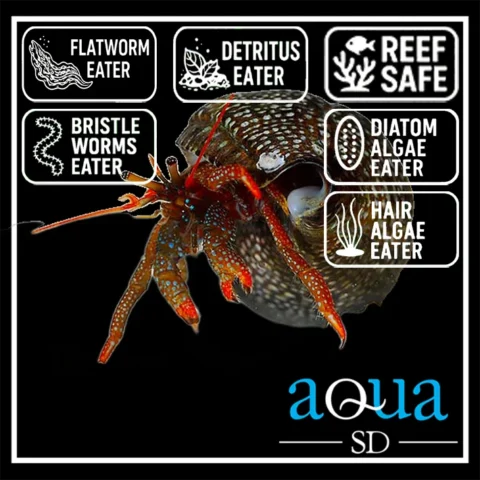
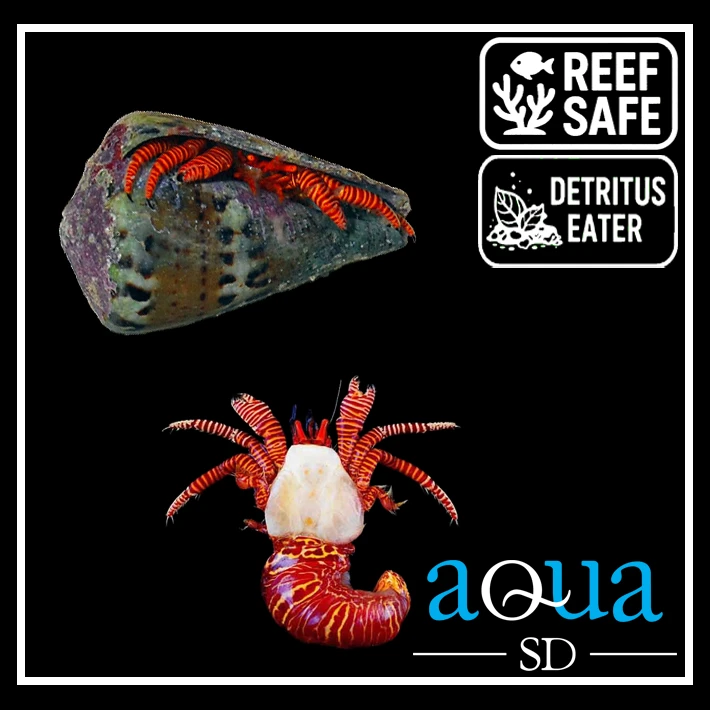
Orange Leg Hermit Crab (Reef Safe) – Ciliopagurus strigatus
$37.48
Live animal: Overnight delivery, Tuesday–Friday (Saturday $25 extra, arranged by phone or email). Covered by our Live Arrival Guarantee.We ship daily. Prices and availability may change. Images are for illustration only and may vary from the actual product. Stock is subject to change.
- Packed to order with heat or cold packs for the season
- Eating and settled in our systems before it ships
- Questions? Ask a reef keeper
Share
About this invertebrate
About this invertebrate
Orange Leg Hermit Crab (Reef Safe) – Ciliopagurus strigatus is a saltwater hermit crab that uses a borrowed shell for protection. In a reef aquarium, it can help with cleanup by scavenging leftover foods and consuming some algae and detritus, making it a practical addition for many community setups. The scientific name is provided as Ciliopagurus strigatus, and general hermit crab husbandry guidance applies to this group.
Features:
- Reef-compatibility: typically chosen for display tanks where you want a scavenger without targeting corals
- Scavenger behavior: helps process leftover foods and detritus to support a cleaner-looking tank
- Shell needs: provides more security and reduces stress when hermits can access appropriate empty shells
- Natural activity: often spends time foraging and exploring, which can be interesting to observe in-tank
- Helps balance micro-life: may graze on film algae and small organic matter as available
- Best kept in stable conditions to support shell maintenance and overall health
Specifications:
- Scientific name: Ciliopagurus strigatus
- Care level: Moderate (requires stable marine parameters and appropriate shell options)
- Temperament: Generally reef-safe/scavenging
- Diet: Omnivorous scavenger; accepts leftover foods plus algae/film algae and detritus as available
- Water salinity (general guidance): Approx. 1.020–1.025 specific gravity
- Temperature (general guidance): Approx. 72–78°F (22–26°C)
- pH (general guidance): About 8.1–8.4
- Placement: Bottom to mid-water zones; provide substrate depth for natural behavior