

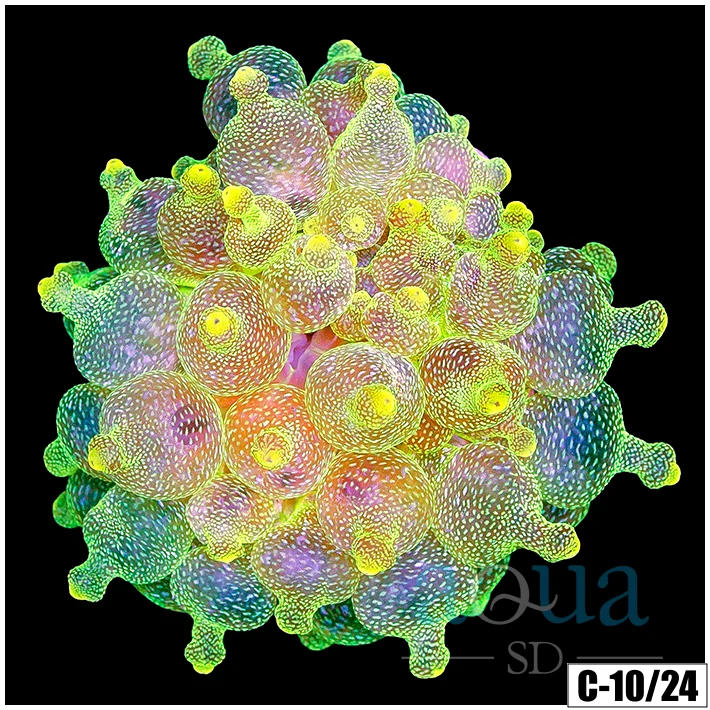
ASD Lemon Lime BTA
$74.99With code SPOOKY70: $22.50
- Packed to order with heat or cold packs for the season
- Eating and settled in our systems before it ships
- Questions? Ask a reef keeper
Share
About this coral
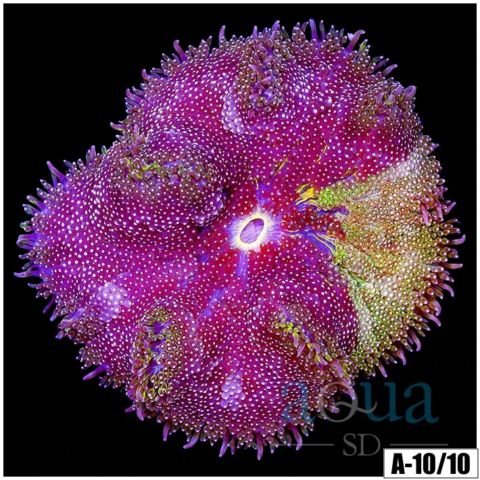
ASD Lemon Lime BTA – Vibrant Green & Yellow Bubble Tip Anemone
About This Anemone
Add a brilliant splash of fluorescent color and natural movement to your saltwater aquarium with the ASD Lemon Lime BTA, a beautiful Bubble Tip Anemone featuring striking lemon-yellow and lime-green coloration.
This eye-catching anemone combines the flowing movement of a Bubble Tip Anemone with vibrant, citrus-inspired colors that can become a stunning focal point in an established reef aquarium.
The ASD Lemon Lime BTA is a named aquarium-trade variety of Entacmaea quadricolor, commonly known as the Bubble Tip Anemone or BTA. This species is particularly popular among reef enthusiasts because of its distinctive tentacles, attractive coloration, and ability to form symbiotic relationships with certain clownfish.
Under suitable conditions, Bubble Tip Anemones may develop rounded, bulb-like swellings at the ends of their tentacles. However, tentacle shape naturally varies, and healthy specimens may display longer, more extended tentacles instead.
The Lemon Lime variety is especially appealing to collectors who appreciate bright green and yellow marine livestock. Under appropriate reef aquarium lighting, its coloration can create an impressive contrast against live rock and surrounding corals.
Like other Bubble Tip Anemones, this animal attaches its foot securely to suitable rockwork and may move around the aquarium until it finds a preferred combination of lighting, water flow, and protection.
With stable water conditions, proper lighting, careful placement, and appropriate feeding, the ASD Lemon Lime BTA can become a beautiful long-term addition to a mature saltwater aquarium.
Important: This is a live marine anemone, not a coral. It requires an established aquarium, protected water pumps, and adequate space away from vulnerable livestock.
Features
- Lemon Lime coloration inspired by bright yellow and fluorescent green tones.
- Beautiful Bubble Tip Anemone appearance with flowing, naturally moving tentacles.
- Popular reef aquarium species belonging to Entacmaea quadricolor.
- Photosynthetic marine invertebrate supported by symbiotic algae within its tissues.
- Potential clownfish host for compatible clownfish species.
- Dynamic tentacle shape that may appear bulbous or elongated depending on conditions.
- Striking appearance under reef lighting with fluorescent coloration that can stand out in aquarium displays.
- Naturally attaches to rockwork using its specialized pedal disc or foot.
- Moderate-to-high lighting requirements suitable for appropriately equipped reef aquariums.
- Moderate, indirect water flow preference allows gentle tentacle movement.
- Accepts appropriately sized marine meaty foods as supplemental nutrition.
- Can reproduce through natural splitting under certain conditions.
- Excellent centerpiece potential in an established anemone-safe reef aquarium.
- Unique natural variation in color intensity, tentacle appearance, and expanded size.
- Best for experienced or prepared reef hobbyists who can maintain stable conditions.
Specifications
| Specification | Details |
|---|---|
| Product Name | ASD Lemon Lime BTA |
| Common Name | Lemon Lime Bubble Tip Anemone |
| Scientific Name | Entacmaea quadricolor |
| Family | Actiniidae |
| Livestock Type | Marine Anemone |
| Category | Live Goods – Anemones |
| Coloration | Lemon Yellow and Lime Green; Individual Appearance May Vary |
| Care Level | Moderate / Intermediate |
| Minimum Suggested Aquarium Size | Approximately 30 Gallons; Larger Systems Preferred |
| Aquarium Maturity | Established, Stable Reef System; Generally 6+ Months |
| Lighting | Moderate to High |
| Suggested Lighting | Approximately 150–250 PAR, Adjusted Gradually |
| Water Flow | Moderate, Indirect |
| Placement | Stable Rockwork With Suitable Crevices |
| Temperament | Semi-Aggressive / Stinging |
| Reef Compatibility | With Caution |
| Diet | Photosynthetic With Supplemental Marine Meaty Foods |
| Clownfish Hosting | Possible, Not Guaranteed |
| Growth | May Expand and Reproduce by Splitting |
| Individual Size | Varies by Available Specimen |
| Availability | Subject to Current Inventory |
Recommended Water Parameters
| Parameter | Recommended Range |
|---|---|
| Temperature | 75–79°F (24–26°C) |
| Salinity | 1.024–1.026 Specific Gravity |
| pH | 8.1–8.4 |
| Alkalinity | 7–9 dKH |
| Calcium | 400–450 ppm |
| Magnesium | 1250–1400 ppm |
| Nitrate | Approximately 5–20 ppm |
| Phosphate | Approximately 0.04–0.10 ppm |
| Ammonia | Undetectable |
| Nitrite | Undetectable |
| Lighting | Approximately 150–250 PAR as a General Starting Range |
| Water Movement | Moderate and Indirect |
These are general Bubble Tip Anemone husbandry guidelines, not verified holding conditions for this specific ASD color variety. Consistent, stable aquarium chemistry is more important than maintaining any single exact value.
Lighting Requirements
The ASD Lemon Lime BTA requires dependable reef aquarium lighting to support the photosynthetic algae living within its tissues.
These symbiotic algae provide a substantial portion of the energy needed by the anemone.
A general lighting range of 150–250 PAR is a reasonable starting point for many established Bubble Tip Anemones, although individual specimens may prefer different intensities.
Lighting Recommendations
- Use a quality reef aquarium light capable of maintaining appropriate intensity.
- Gradually acclimate the anemone to your aquarium’s lighting conditions.
- Avoid sudden changes in lighting intensity or photoperiod.
- Provide suitable rockwork where the anemone can position itself.
- Monitor tissue inflation, attachment, color, and overall condition.
The anemone may move to find a preferred location. Bright coloration does not necessarily mean that stronger lighting is always beneficial.
Water Flow Requirements
The ASD Lemon Lime BTA generally prefers moderate, indirect, variable water movement.
Appropriate flow allows the tentacles to move naturally while helping exchange gases and transport food particles.
Avoid placing the anemone directly in front of an unprotected powerhead or a strong, concentrated water jet.
Excessive flow may cause the anemone to remain contracted or abandon its attachment site.
Important Pump Safety
Bubble Tip Anemones are capable of moving throughout the aquarium.
Always install suitable guards on powerheads, wavemakers, circulation pumps, and other accessible intakes.
An anemone drawn into a pump can suffer serious injury and potentially release damaged tissue into the aquarium.
Feeding and Nutrition
The ASD Lemon Lime BTA is photosynthetic but also capable of capturing and consuming marine animal foods.
When properly illuminated, it receives much of its energy from its symbiotic algae. Occasional supplemental feeding can provide additional nutrition.
Suitable Foods
- Small pieces of thawed marine shrimp
- Appropriately sized mysis shrimp
- Small portions of marine fish
- Suitable anemone or marine invertebrate foods
Recommended Feeding
Offer a small portion of appropriately sized food approximately once or twice per week, if the anemone is healthy, attached, and accepting food.
Feeding frequency should be adjusted according to the animal’s condition, lighting, and overall aquarium nutrient levels.
Never force food into the anemone’s mouth or feed pieces that are too large to consume comfortably.
Remove uneaten food to avoid deteriorating water quality.
Placement and Aquarium Compatibility
Ideal Placement
Provide stable live rock or reef-safe rockwork with suitable crevices where the anemone can attach its foot.
Although you can initially place the anemone in a preferred location, it may relocate until it finds satisfactory lighting, flow, and protection.
Allow sufficient open space around its expanded tentacles.
Clownfish Compatibility
Bubble Tip Anemones may form a hosting relationship with compatible clownfish species.
Potential hosts include certain:
- Ocellaris Clownfish
- Percula Clownfish
- Clarkii Clownfish
- Tomato Clownfish
- Maroon Clownfish
Clownfish hosting is not guaranteed. Individual clownfish may ignore an anemone entirely, and some may require time to establish a relationship.
Never force a clownfish into an anemone.
Coral Compatibility
Bubble Tip Anemones possess stinging cells that can injure nearby corals and other aquarium inhabitants.
They can damage LPS corals, SPS corals, and soft corals if they move into direct contact.
Maintain adequate separation and monitor the animal for movement.
Acclimation and Introduction Instructions
- Inspect the shipment: Check the anemone and shipping container upon arrival.
- Verify aquarium readiness: Confirm that temperature, salinity, and water chemistry are stable.
- Equalize temperature: Carefully bring the sealed shipping container toward the aquarium’s temperature.
- Follow appropriate shipping-water acclimation procedures: Avoid prolonged exposure to opened shipping water, particularly if ammonia accumulation is suspected.
- Inspect the anemone: Look for excessive tissue damage, a deteriorating foot, or other signs of serious distress.
- Protect aquarium pumps: Confirm that all accessible circulation intakes are adequately guarded.
- Introduce carefully: Place the anemone near suitable rockwork with a secure attachment location.
- Provide manageable lighting and flow: Avoid intense lighting or concentrated water movement immediately after introduction.
- Allow natural attachment: Give the anemone the opportunity to secure itself without unnecessary handling.
- Monitor closely: Watch for attachment, inflation, normal mouth appearance, and movement around the aquarium.
Never pull an attached anemone from rockwork by force. Damage to the foot can lead to severe injury.
Avoid pouring shipping water directly into the display aquarium.
Growth and Natural Reproduction
Healthy Bubble Tip Anemones may grow larger over time and sometimes reproduce asexually through a process known as fission, commonly called splitting.
During this process, one anemone divides into two individuals.
Natural splitting can occur in captivity, but it is not guaranteed and may also happen in response to stress.
Do not intentionally stress an anemone to encourage splitting.
As anemones grow or reproduce, additional space may be necessary to prevent contact with nearby corals and equipment.
Important Product Information
The ASD Lemon Lime BTA is a live Bubble Tip Anemone, not a stony coral.
The name Lemon Lime describes the advertised color variety rather than a scientifically distinct species.
Individual specimens can vary in yellow and green color intensity, tentacle length, bubble-tip development, size, and overall appearance.
Coloration can also appear different under white versus blue aquarium lighting.
Unless an individual specimen is specifically labeled WYSIWYG (What You See Is What You Get), photographs should be treated as representative examples rather than guarantees of the exact animal supplied.
For the best results, introduce this anemone only into a mature, stable saltwater aquarium equipped with protected pumps and appropriate reef lighting.
Handling should be minimized. Wear aquarium-safe gloves when necessary, and avoid contact with eyes and sensitive skin.
This species is not suitable for freshwater aquariums.
Availability and Pricing
We ship daily, contact us for availability and price.
Recommended Application
The ASD Lemon Lime BTA is an excellent choice for established reef aquarium enthusiasts seeking a colorful, flowing marine centerpiece.
With its lemon-yellow and lime-green coloration, fascinating tentacle movement, and potential to host compatible clownfish, this Bubble Tip Anemone can become a spectacular addition to a carefully maintained saltwater aquarium.
You might also like
-
Live
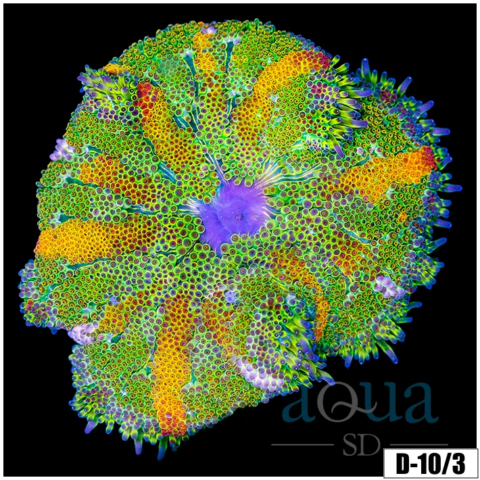 Anemones
Ultra Maxi Mini Carpet Anemone
Price range: $149.99 through $199.99With code FALL70: $22.50 Choose size This product has multiple variants. The options may be chosen on the product page -
Live
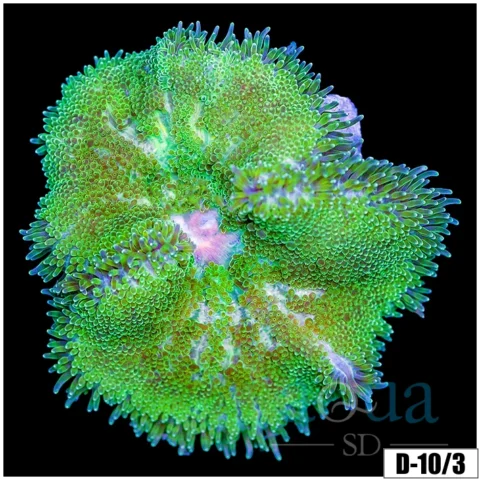 Anemones
Baby Matenensis Carpet Anemone
$99.99With code SPOOKY70: $30.00 Add to cart -
Live
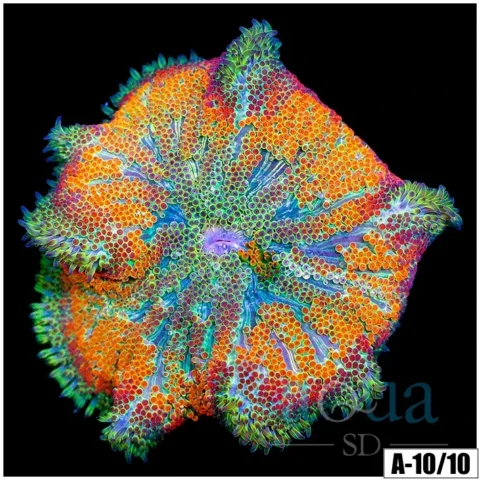 Anemones
Orange Maxi Mini Carpet Anemone
$174.99With code SPOOKY70: $52.50 Add to cart -
Live
 Anemones
Grafted Martinensis Carpet Anemone
$174.99With code SPOOKY70: $52.50 Add to cart