

Tigriopus californicus Copepods: Culture Setup and Harvesting
You will be able to set up and maintain a live copepod culture, harvest regularly, and feed your reef tank a continuous supply of hardy, nutritious copepods.
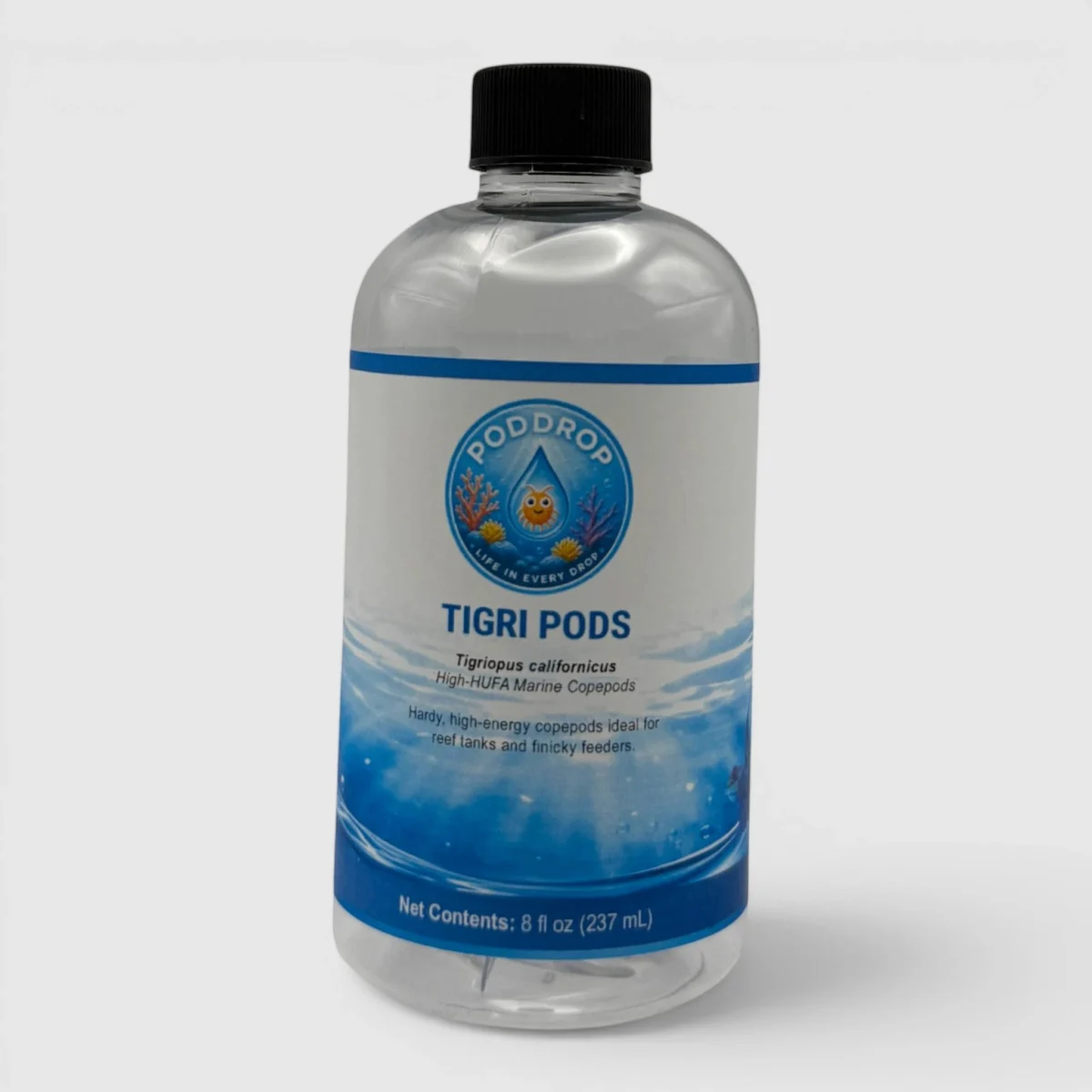
Tigriopus californicus Copepod Culture Setup and Harvesting
Copepod culture setup is essential if you want a continuous supply of live food for mandarin fish, dragonets, filter-feeding corals, and other reef inhabitants. Tigriopus californicus, naturally found in tidepools on the US Pacific Coast, reproduce quickly and can tolerate wide ranges in temperature, oxygen, and salinity, making them robust in culture and able to withstand refrigeration for storage. This guide walks you through building and maintaining a culture of these hardy red copepods from day one.
Feeding · Detailed tutorial · About 15 minutes · Beginner friendly
The key habit: As soon as you notice the green tint in the water starting to fade, it's time for a top-up. For most setups, this means adding a bit of phytoplankton every 2–3 days. Consistent feeding is the single most important factor in keeping your culture alive and productive.
Shop the Tigriopus californicus Copepods
In this guide
- What Tigriopus californicus copepods are and why they matter
- Gather before you start
- Setting up your culture vessel
- Starting your culture
- Daily and weekly maintenance
- Harvesting and feeding your reef
- Troubleshooting and storage
1. What Tigriopus californicus copepods are and why they matter
Tiger Pods exhibit a "jerky" swimming motion that elicits a healthy feeding response in many finicky fishes. Unlike smaller, planktonic copepod species, Tigriopus are robust benthic (bottom-dwelling) pods that fish recognize and eagerly pursue. They are rich in essential fatty acids (HUFAs), promoting vibrant color, health, and growth in fish and corals.
Tigriopus demonstrates higher tolerance to ammonia and nitrite than most marine copepods, surviving elevated levels that would kill sensitive species. While not recommended to maintain copepods in poor water quality, this tolerance means Tigriopus populations survive temporary water quality issues, equipment failures, or overfeeding events that might eliminate more sensitive copepod species.
2. Gather before you start
Gather before you start
- One new or thoroughly cleaned 10–20 liter plastic container, bucket, or small aquarium
- New or reef-dedicated containers only; never use bins that held soap, detergents, household chemicals, or freshwater aquarium medications.
- Air pump with airline tubing and air stone
- Control valve or clamp to regulate airflow
- Clean marine salt mix and reverse-osmosis or distilled water
- Phytoplankton culture or preserved phytoplankton food (like Phyto-Feast or spirulina powder)
- Mesh harvest net (100–250 microns) or fine sieve
- Turkey baster or siphon for maintenance
- Turkey baster for target-feeding your reef tank
- Container for refrigerated storage
- Cover or breathable cloth for the culture vessel
3. Setting up your culture vessel
1. Clean the vessel thoroughly.
Rinse your culture container thoroughly with warm fresh water. Do not use soap, detergent, or any chemical cleaning agent. Even trace residue is harmful to copepods.
2. Mix fresh saltwater.
Shoot for a salinity between 1.020 and 1.025 sg. The key here is keeping it consistent. Use reverse-osmosis or distilled water with a reputable marine salt mix. Do not use water from your display tank or existing culture, as this will contaminate the new setup.
3. Set up aeration.
Add the air source to the culture and run it very low (2–3 bubbles per second is ideal). Gentle aeration is beneficial but not essential, as Tigriopus tolerates low oxygen.
4. Add a light source.
Nothing fancy is required. A basic LED light or just the ambient light in the room works fine. A regular light cycle, like 12 hours on, 12 hours off, is ideal for keeping the phytoplankton food source healthy.
5. Cover the vessel.
This prevents dust, debris, and airborne contamination from entering the culture while still allowing gas exchange.
4. Starting your culture
1. Add your copepods.
Gently pour your live Tigriopus californicus starter culture into the prepared vessel. Do not drip acclimate for too long—copepods can suffer oxygen depletion in a small container. Tigriopus californicus handles rapid salinity increases decently, but doing a brief salinity adjustment can maximize survival.
2. Begin feeding right away.
Add a small amount of Phyto-Feast (1–2 mls) to some culture water and stir until homogenized. Then gently pour the diluted algae in so that you can see it lightly color the culture tank. Alternatively, you can feed them with preserved phyto (ie. Phytofeast.) Spirulina powder can be used in a pinch.
5. Daily and weekly maintenance
Check water level and top off.
Add reverse-osmosis or distilled water to the culture as evaporation occurs. It's a good idea to make a mark on the culture with tape or a sharpie to keep track of the original water level.
Feed consistently every 2–3 days.
The water should carry some color after feeding, but it should not stay opaque day after day. If the vessel remains dark and murky, feeding is exceeding consumption. If it goes crystal clear immediately and pod density is modest, the culture may need more frequent additions.
Weekly water change (optional but recommended).
Siphon out about 25% of the water, making sure to suck up any debris, and replace it with fresh saltwater. You will see "mulm" accumulate on the bottom of the culture after a week or so. The mulm consists of bacteria, organic waste, copepod molts and the copepod nauplii (babies). Light mulm buildup is normal and beneficial; heavy buildup should be removed.
6. Harvesting and feeding your reef
When to harvest.
After 3–4 weeks of consistent feeding and maintenance, your culture should be dense with copepods.
How to harvest.
Use a plankton sieve of 100 to 250 microns to separate the copepods from the culture water. Harvest 20–30% of your copepod culture. Do not add the siphoned culture water to your aquarium as this could be high in ammonia. Place your copepods directly into your reef tank.
How to feed your reef tank.
Try adding them after lights-out and turn your pumps off for an hour or so. This lets them settle into the rockwork instead of getting blown around. Release them into the refugium among the Chaeto or rocks. For direct feeding, Tiger Pods can be added directly into the aquarium, where they will quickly be consumed by fish. They can also be added to a refugium, where a population can establish and reproduce to supply the reef with a continuous supply of nutritious copepods.
Refrigerated storage.
After harvesting, hold them briefly in the fridge in a little culture water, where they slow their metabolism and stay viable for several days. Copepods can be stored in the refrigerator to slow their metabolism and extend their shelf-life. Keep Refrigerated DO NOT FREEZE 32°–39°F.
7. Troubleshooting and storage
Keep tools dedicated to copepod culture.
Keep nets, harvest screens, pipettes, measuring cups, and tubing dedicated to pod culture. Cross-use between your sump and your culture station is a common failure point.
Avoid copper.
Copper is lethal to crustaceans, including copepods, at very low concentrations, and even equipment previously treated with copper medications can carry enough residue to crash a pod culture. Copper-based fish medications must never enter a reef tank for this reason among others.
What to avoid.
Make sure you do not dip your strainer in the copepod culture, and then in your aquarium, and then back in your culture vessel without cleaning it first.
Re-seed regularly.
Once you are comfortable harvesting, you can harvest heavily and re-seed a fresh batch from a portion of your mature culture every 3–4 weeks. Regular re-seeding every four to six weeks becomes more important in a no-refugium setup.
What you notice and what to check next
| What you notice | What to check next |
|---|---|
| Water stays crystal clear after feeding | You may be underfed; increase phytoplankton dose or frequency |
| Water stays opaque or smells funky | You are overfeeding or mulm is building up; do a 25% water change and reduce feeding |
| Copepod density declines | Check for contamination with display-tank tools; verify salinity and temperature stability |
| Culture crashes (clears or smells rotten) | Do not use this batch; begin with a fresh starter and inspect all equipment for copper or soap residue |
| Culture appears to have small white or colored worms | Minor contamination is normal; some cultures stabilize; if problems persist, start fresh |
| Copepods visible but very slow or on bottom | Check aeration and water quality; may indicate stress or low oxygen |
Your care log
Started on: ____________
Vessel volume: ____________
Salinity (sg): ____________
Initial copepod count/batch size: ____________
Light cycle: 12 hours on, 12 hours off
Aeration: ______ bubbles per second
First feeding date: ____________
Phytoplankton type: ____________
First harvest date: ____________
Harvest frequency: Every ______ days or when culture density is ____________
Re-seed schedule: Every ______ weeks
Sources
Checked November 26, 2026.
[1] Reef Nutrition, "Culturing Tiggerpods"
[2] Pod Your Reef, "Tigriopus californicus Copepods: A Scientific and Practical Guide for Reef Aquarists"
[3] Pod Your Reef, "A Complete Guide to Tigriopus Californicus Copepods for Reef Tanks"
[4] Pod Your Reef, "Tigriopus californicus: Species & Culture Guide"
[5] Reefphyto, "How to Culture Copepods at Home"
[6] Reefphyto, "How to Successfully Culture Copepods: UK Reef Keeper's Guide"
[7] Pod Your Reef, "How to Culture Copepods at Home Safely"
[8] SteadyReef, "Copepods in a reef tank: what they do and how to build a self-sustaining population"
[9] Sustainable Aquatics, "SA Live Marine Copepods – Tigriopus californicus"
[10] Reef2Reef, "Culturing 'tigger pods' (Tigriopus californicus)"