

Tiger Turbo Snail Care: Acclimation, Setup, Feeding and Tank Mates
Invertebrate care · Detailed tutorial · About 10 minutes · Beginner friendly
The key habit: When introducing Trochus snails, use the drip acclimation method over 1-2 hours to minimize stress. A proper acclimation is the single most important step for the Tiger Turbo Snail's long-term survival and algae-grazing performance in your tank.
Shop the Tiger Turbo Snail – Trochus sp.
In this guide
- What is a Tiger Turbo Snail
- Tank setup and placement
- Acclimation: the first 2 hours
- Feeding and diet
- Tank mates and reef safety
- Water parameters and stability
- Signs of health and common issues
1. What is a Tiger Turbo Snail
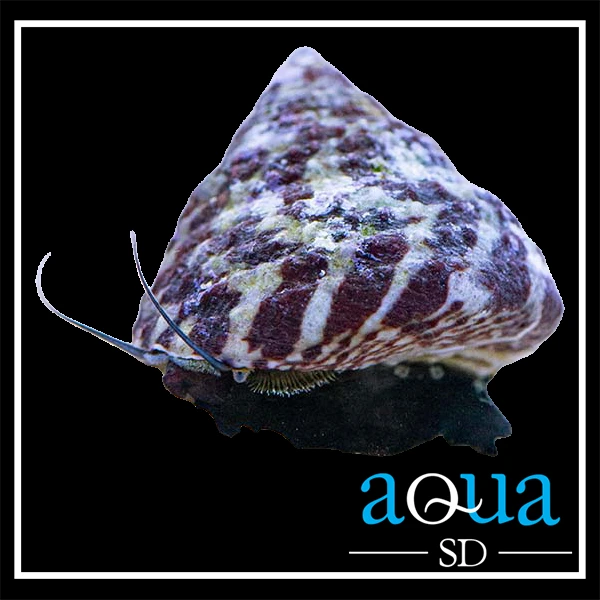
The Trochus Snail, also known as the Turban Snail or Banded Trochus Snail, is a snail that every marine hobbyist needs in their aquarium. These snails feature a conical shell that grows as they mature. They can reach up to 2 inches in size and thrive in tanks with a minimum capacity of 6 gallons.
These snails are particularly effective in tanks with abundant established rock, where they graze on algae. They are also known to consume problematic algae such as cyanobacteria, hair algae, and diatoms, making them a valuable part of your tank's cleanup crew. Unlike some snail species, the Banded Trochus Snail can right itself when knocked over.
2. Tank setup and placement
Trochus snails do best in reef tanks with plenty of live rock and glass surfaces. Generous live rock with some crevices will mimic the Trochus snail's natural environment and give it space to roam. Trochus Snails have no specific substrate requirements, though they typically don't like to feed on the substrate unless food is scarce elsewhere.
Lighting is not a factor in keeping Trochus Snails. They'll do well in aquariums with low to high light. Place your Tiger Turbo on established rock faces, glass walls, and hardscape where algae grows most.
Stocking guidelines: One per 50 l/11 gal is usually a sufficient ratio, as algal growth needs to be able to sustain any Turbo population.
3. Acclimation: the first 2 hours
Proper acclimation prevents the stress-related death that claims many Tiger Turbo Snails. Trochus snails can be sensitive to changes in water chemistry, and improper acclimation is a common cause of mortality.
Gather before you start
- Airline tubing (or turkey baster)
- Adjustable valve or knot for flow control
- Small, clean bucket or container
- Small net or your hand
- Thermometer
Acclimation steps
- Float the sealed bag. Place the sealed bag containing the Trochus snail into your aquarium water for 15-30 minutes. This allows the temperature inside the bag to slowly equilibrate with the tank's temperature.
- Set up the drip system. Fill a clean bucket or container with the clean, dechlorinated water that matches your tank's temperature and parameters. Position the airline tubing in the bucket with a knot or valve to control the drip.
- Add the snails to the bucket. Open the bag containing the aquatic animals and carefully pour the entire contents into the bucket, including the water from the transport bag.
- Start the drip. Start a siphon by sucking on the free end of the airline tubing or use a siphon starter. This will initiate a slow drip of water into the bucket. Use an adjustable valve or tie a knot in the airline tubing to regulate the drip rate. Aim for approximately 2-4 drips per second.
- Acclimate for 1–2 hours. The drip acclimation process should last for at least 1-2 hours, or longer if you have the time. The more gradual the introduction to your tank's water chemistry, the better the Trochus snail's chances of survival.
- Transfer to the tank. When the bucket's water is mostly aquarium water, use a small net or your hand to gently place the snail onto a rock inside the tank. Do not pour the old LFS water into your tank.
4. Feeding and diet
As herbivores, Trochus Snails primarily rely on algae for their nutritional needs. They naturally control nuisance algae in your reef tank by grazing on glass, rocks, and even the substrate.
In well-established systems, they require little to no supplemental feeding, making them a convenient, chemical-free solution for tank maintenance. However, you might need to supplement their diet if you have a newer tank or one with low algae levels.
If supplemental feeding is needed:
I've had success offering them algae wafers and nori sheets. Just place them near them in the evening so they can get to work on it during the night. Feed sparingly; excess food degrades water quality and attracts unwanted algae growth.
Important note: Trochus snails do not eat coralline algae. Your purple and pink coralline will remain.
5. Tank mates and reef safety
Trochus snails are peaceful and won't harm other tank mates or corals. They are considered reef-safe, meaning they can coexist with various coral types, including soft, LPS, and SPS corals.
Predators to avoid: Be cautious of potential predators like pufferfish and hermit crabs that may pose a threat to your trochus snails.
Movement in the tank: They may (like most mid- to large-sized snails) knock down small, loosely secured objects such as new coral frags, but they are regarded as far less destructive in this manner than similar creatures such as turbo snails. Secure your frags and small corals before introducing the snail.
6. Water parameters and stability
Maintaining stable water parameters is a component to the success of keeping this invertebrate; snails are intolerant of high nitrates. More important than hitting exact numbers is keeping parameters steady and within range.
| Parameter | Ideal range |
|---|---|
| Temperature | 75–80°F (23–27°C) |
| Salinity (SG) | 1.023–1.026 |
| pH | 7.7–8.5 |
| Alkalinity | 8–12 dKH |
| Nitrate | Below 20 ppm |
| Ammonia | 0 ppm |
| Nitrite | 0 ppm |
Maintaining proper Ca, Alk, & Mg levels is important for growth of their shells. Maintain excellent water quality through regular water changes of 10–25% every two to four weeks.
Like other invertebrates, Trochus sp. is sensitive to high nitrate levels and intolerant of copper-based medications. Use fish-safe or invertebrate-safe treatments only.
7. Signs of health and common issues
| What you notice | What to check next |
|---|---|
| Snail hiding in shell for days after introduction | Normal stress response; can last 1–2 days. Check for hidden predators or sudden parameter swings. |
| Snail inactive, not grazing | Water quality (especially nitrates), temperature, or signs of predation. Test ammonia, nitrite, and nitrate. |
| Shell becoming thin or pitted | Calcium and alkalinity levels may be too low. Dose calcium and maintain alkalinity at 8–12 dKH. |
| Found on its side | Gently place it upright. Unlike many snails, Trochus can self-right; if it cannot, check for injury or poor water quality. |
| Rapid algae growth despite snail | Tank may be overstocked, or the snail needs supplemental feeding. One snail per 11+ gallons is the guideline. |
| Snail climbing on powerheads and equipment | Normal behavior; algae grows here. Ensure surfaces are not sharp or damaged. |
Your care log
Placed on: ______ Initial weight or size: ______ Tank location: ______
Water tested on: ______ Temperature: ______ Salinity (SG): ______ pH: ______
Nitrate level: ______ Alkalinity (dKH): ______ Calcium (ppm): ______
First supplemental feeding: ______ Food type: ______ Frequency: ______
Notes: __________________________________________________________________
Sources
Checked October 17, 2026. Reference addresses are plain text.
- Live Rock n Reef, "Tiger Turbo Snail – Trochus sp.", https://www.liverocknreef.com/catalog/snails-and-conchs/tiger-turbo-snail-trochus-sp.-12816.html
- Jungle Aquatics, "Trochus Snail Care Tips for Reef Tanks", https://jungleaquatics.com/blogs/news/trochus-snail-care-tips
- Practical Fishkeeping, "Keeping Turbo and friends", https://www.practicalfishkeeping.co.uk/features/keeping-turbo-and-friends/
- Bulk Reef Supply, "How To Care For Trochus Snails", https://www.bulkreefsupply.com/content/post/how-to-care-for-trochus-snails
- Algae Barn, "Using the Trochus Snail", https://www.algaebarn.com/blog/clean-up-crew/utilizing-the-trochus-snail-trochus-spp/
- Top Shelf Aquatics, "Trochus Snail", https://topshelfaquatics.com/products/trochus-snail
- Aquarium Breeder, "Trochus Snails – Detailed Guide: Care, Diet, and Breeding", https://aquariumbreeder.com/trochus-snails-detailed-guide-care-diet-and-breeding/
- Reef Jar, "How To Care For Trochus Snails: A Complete Guide", https://www.reefjar.com/trochus-snails/
- Vivid Aquariums, "How to Care for Trochus Snail", https://vividaquariums.com/products/trochus-snail
- Live Aquaria, "Banded Trochus Snail", https://www.liveaquaria.com/product/564/?pcatid=564
- EWASH, "How do you acclimate a Trochus snail?", https://www.ewash.org/how-do-you-acclimate-a-trochus-snail
- Shrimp Science, "How To Acclimate Snails", https://www.shrimpscience.com/articles/how-to-acclimate-snails/
- AB Aquatics, "Drip Acclimating New Shrimp, Snails Or Fish", https://abquatics.shop/pages/drip-acclimating-new-shrimp-snails-or-fish
- My Reef, "How To Acclimatize Snails to Your Saltwater Aquarium", https://myreef.aquariumdepot.com/how-to-acclimatize-snails-to-your-saltwater-aquarium/