

Red Fromia Starfish Care: Tank Setup, Feeding and Acclimation
Learn how to care for a Red Fromia Starfish, from setting up your tank to acclimating this sensitive starfish and keeping it healthy long-term.
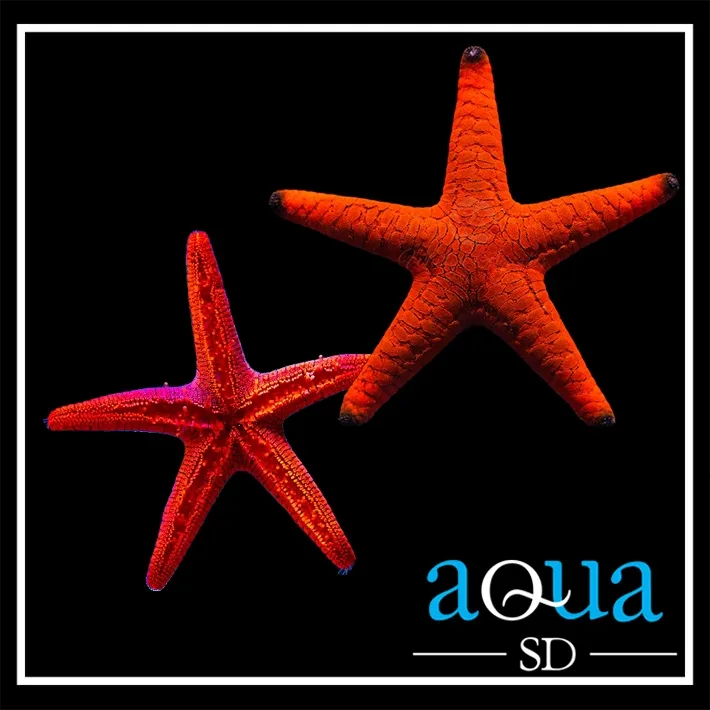
Red Fromia Starfish Care: Tank Setup, Feeding and Acclimation
Red Fromia starfish care starts with understanding that this striking marine invertebrate known for its vibrant red color and tile-like pattern requires very specific conditions. The red seastar is known to be very intolerant of sudden changes in water chemistry.
Invertebrate care · Detailed tutorial · About 8 minutes · Intermediate
The key habit: Proper acclimation is extremely important for sensitive starfish. At least 3 hours of careful drip acclimation is the way to go.
Shop the Red (Fromia) Starfish – Fromia sp.
In this guide
- What the Red Fromia starfish is and where it comes from
- Tank size and setup: live rock and a mature system
- Water parameters and stability
- Tank mates and what to avoid
- Feeding and diet
- Slow acclimation with the drip method
- Signs of health and what to watch for
1. What is the Red Fromia Starfish?
The Fromia milleporella is red to orangish red. They are speckled with black dots and will occasionally have black or white tips on their arms. Fromia Sea Stars are generally found in shallow tropical waters of the Indo-Pacific region including the Red Sea, Indian Ocean and the western and central Pacific Ocean. Fromia sea stars are primarily scavengers and detritivores. They feed on organic matter, algae, and small particles found in the aquarium substrate and on live rock.
2. Tank Size and Setup: Live Rock Is Crucial
Red Fromia Starfish should be housed in a tank that is at least 30 gallons (113.5 liters) per starfish. However, some sources list 30 gallons as the minimum, but this is unlikely to work in the long run. A small system simply doesn't provide the starfish with the amount of food it needs.
They require a tank with plenty of live rock and a sandy substrate, constant salinity, away from puffers or other natural predators, and in a tank with plenty of algae and microorganisms for the starfish to eat its omnivorous diet. It's not a good idea to keep these guys in clean systems. That's not referring to water quality, by the way, as that should be pristine at all times—they're very sensitive—but to gunk. A Fromia will take a biofilm and algae-covered aquarium with lots of live rock, nooks and crannies over a sterile environment any day.
It is most beneficial to introduce Red Fromia Starfish to a tank that has been established for at least 1 year.
3. Water Parameters: Stability Above All
It is important that water parameters are PRISTINE and do not fluctuate. They need a mature stable tank environment, as they are sensitive to water changes. Temperature, salinity, and pH variations can be detrimental to them.
Maintain these ranges:
| Parameter | Range | Notes |
|---|---|---|
| Temperature | 72–78 °F (22–26 °C) | Keep stable; avoid fluctuations |
| pH | 8.1–8.4 | Test weekly |
| Salinity (Specific Gravity) | 1.023–1.025 | Very important; check with refractometer |
| Alkalinity (dKH) | 8–12 | Supports shell and skeleton health |
| Nitrate | As low as possible | Not tolerant of high nitrates |
Like other starfish they are quite sensitive to changes in the PH, temperature, and salinity changes.
4. Tank Mates and Compatibility
It is reef safe and will not harm any other species. Fromia sea stars are generally reef-safe and peaceful, making them suitable for reef aquariums. Safe with most reef fish and invertebrates; avoid predatory species that may nip at the starfish.
You'll have to avoid any fish or invert species that would try to make a snack out of your Fromia. Harlequin shrimp are the most notorious example, as these wacky-looking crustaceans are adapted specifically to a starfish-based diet. Not tolerant of copper medications.
5. Feeding Your Red Fromia
It's likely that red Fromia starfish feed on what is sometimes called epibenthic felt, a mixture of all sorts of detritus, algae and biofilm found on the ocean floor and various surfaces. This makes them detritivores.
In a well-established tank with plenty of live rock and algae, your Fromia should find much of its natural food. Usually doesn't need additional feeding unless the tank is new or has a thin substrate. If your tank is very clean or very new, supplement 1–2 times per week with small pieces of clam, mussel, or sinking pellets.
Not tolerant of high nitrates, so avoid overfeeding.
6. Acclimation: The Most Critical Step
Gather before you start
- A 5 gallon bucket
- Airline tubing and airstone (for drip acclimation)
- A plastic container or small cup
- Your aquarium's water
They need a long acclimation period before being introduced to a tank. As a result, they need a long acclimation period before being introduced to a tank. This is the single most important step in keeping your Fromia alive.
1. Start temperature acclimation immediately
Slow temperature acclimation: 45 – 60 min Place the starfish in its sealed bag in your tank water for 45–60 minutes so it reaches tank temperature.
2. Begin drip acclimation
Dripping is the preferred method of acclimation for all inverts. Most invertebrates are best with a 1 hour drip. More sensitive invertebrates like starfish and urchins should be dripped for longer. This animal requires a long, slow drip acclimation period of no less than 2-1/2 hours in order to properly adjust to the parameters in your new aquarium. At least 3 hours of careful drip acclimation is the way to go.
3. Set up the drip
Pour water from the bag into a small plastic container. Using airline tubing with a knot or valve, drip your tank water into the container at one drip per second. Every 20 minutes, remove about half the water from the container and continue dripping. Repeat for 3 hours minimum.
4. Move the starfish
After 3+ hours, use a small cup to gently scoop the starfish and place it directly into your tank. Do not pour the acclimation water into your tank.
Make sure there is no significant change in water temperature while acclimating.
7. What You Notice and What to Check
| What you notice | What to check next |
|---|---|
| Starfish moving slowly or not at all for 24–48 hours after introduction | Normal during adjustment; watch for continued inactivity after this period |
| Arm tips curling slightly | Occasional curling at the tips is normal during feeding |
| Starfish pale or losing color | Check salinity, pH, and temperature; test for ammonia and nitrite |
| Starfish not moving and smells bad | Starfish has died; remove immediately to prevent ammonia spike |
| Arm appears damaged or torn off | Not emergency—starfish can regrow limbs, but check water parameters |
Your care log
Tank established on: ____________
Introduced on: ____________ Acclimation time (minimum 3 hours): ____________
Tank size: ____________ gallons Live rock present: Yes / No
Temperature: ____________ °F pH: ____________ Salinity: ____________
Feeding schedule: ____________ Food type: ____________
Checked on: ____________ Observations: ____________
Sources
Checked November 6, 2026.
1. Blue Zoo Aquatics, "Red Fromia Starfish, Red Starfish – Fromia milleporella"
2. Fantaseaaquariums.com, "Red Fromia Starfish Care | Fromia milleporella"
3. Frag Box Corals, "Red Fromia Sea Star"
4. Livefish.com.au, "Red Fromia Sea Star"
5. Eastwoodaquarium.com.au, "Red Fromia Starfish"
6. Reeflings.com, "Red Starfish (Fromia milleporella)"
7. Quality Marine, "Red Fromia Sea Star"
8. Saltwaterfish.com, "Starfish For Sale"
9. SaltCorner.com, "Fromia milleporella (Red Star)"
10. Whitlynaquatics.com, "Red Fromia Starfish – Fromia milleporella"