

Purple Firefish Goby Care: Tank Setup, Feeding and Acclimation
You'll learn how to set up a safe home for your Purple Firefish, what to feed it, how to introduce it properly, and what water conditions it needs.
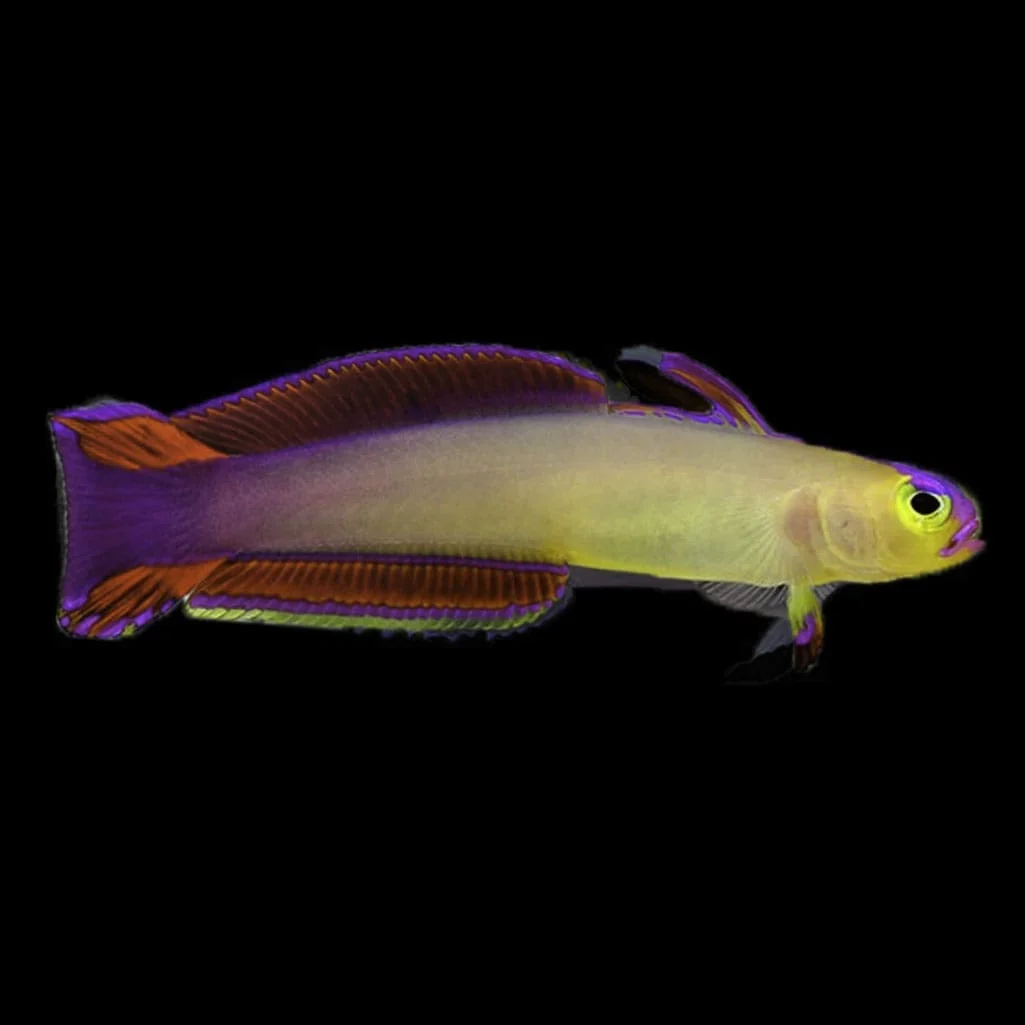
A beginner’s guide to Purple Firefish Goby care. You'll learn how to set up a safe home for your Purple Firefish, what to feed it, how to introduce it properly, and what water conditions it needs.
Purple Firefish Goby Care: Tank Setup, Feeding and Acclimation
Learning how to keep the Purple Firefish, a peaceful reef-safe dartfish, involves expert guidance on tank size, rockwork, moderate flow, diet, and tankmate choices. This small, colorful goby can thrive for years in a well-prepared aquarium.
Fish care · Detailed tutorial · About 8 minutes · Beginner friendly
The key habit: A tight-fitting tank lid is essential because the firefish is an extreme jumper. Check your aquarium cover daily for any gaps before adding or during the acclimation period.
Shop the Purple Firefish Goby (Lg)
In this guide:
- Where this fish comes from and what it is
- Tank size and aquascaping
- Water flow and current
- Tank mates and compatibility
- Feeding your Purple Firefish
- Acclimation and quarantine
- Water parameters and stability
- Signs of good health
1. What is the Purple Firefish Goby?
The elegant firefish, or purple firefish (Nemateleotris decora), is found over hard, open bottoms of reefs, sandy patches and rubble, as well as deeper coastal outer reef drop-offs where there are strong currents. The head is purple and the body colour is whitish or yellowish, gradually darkening to deep grey towards the tail. The fins have longitudinal bands of purple, red, black and orange.
This species is often found in pairs and is monogamous. In the wild, firefish use burrows and crevices as shelter, darting in when alarmed. Your aquarium should replicate this behavior pattern.
2. Tank Size and Aquascaping
Adults are comfortable in aquariums of 20 gallons or more, with some references suggesting 24 gallons as a starting point. For a single fish, 20 gallons is workable; however, in a 20-gallon tank a single Purple Firefish works, but you are operating at the edge of the margin—any aggression from a tank mate, any minor water quality spike, any scheduling miss on a water change hits harder than it would in a 30-gallon system. If your primary goal is keeping a Purple Firefish happy for several years, start with 30 gallons.
Build abundant rockwork with cracks, caves, crevices, and loose coral rubble so that a retreat is always within a short dart, and leave generous open water for hovering. The Banggai Cardinalfish can be a bit shy at first, so it will appreciate any crevices and caves in your rockwork to hide in. (This principle applies equally to firefish.) Provide PVC pipe, rock tunnels, or natural rubble for shelter.
3. Water Flow and Current
Moderate current suits the species well, since firefish habitually face into the flow to intercept drifting food. Do not use a powerhead pointing directly at the firefish's hiding spots; instead, position flow so the fish can hover naturally and intercept passing plankton. Keep the water flow low to moderate. Strong currents stress the fish.
4. Tank Mates and Compatibility
The Purple Firefish Goby exudes a peaceful demeanor, fostering harmonious cohabitation with various peaceful tank mates. The Purple Firefish Goby is quite docile and should not bother its tank mates except for other firefish. It is best kept either singly or as a pair.
Compatible neighbors include clownfish, small peaceful wrasses, other gobies, and invertebrates. Do not house a Purple firefish with overly aggressive and pugnacious tank-mates. Avoid dottybacks, large wrasses, and hawkfish, which may chase or outcompete the firefish for food.
5. Feeding Your Purple Firefish
In nature this is a zooplankton feeder, taking copepods and crustacean larvae from the water column rather than picking at the substrate. Small meals offered about twice daily match the grazing pattern of a plankton feeder better than a single large feeding. Since the firefish gobies possess small guts, feeding them at least twice daily is best.
Offer frozen mysis shrimp, brine shrimp, bloodworms, and quality marine flakes or micro-pellets. This fish accepts all prepared foods. Variety and vitamin enrichment help preserve the violet and orange pigments that make the fish worth keeping. Soak frozen food in liquid vitamins before feeding. Leftover food will cause nitrates and phosphates to rise. If you see food falling to the sand bed and into the rocks, you should feed slower and give the fish a chance to eat before adding a little more.
6. Acclimation and Quarantine
Gather before you start
- 10-gallon quarantine tank (optional but recommended)
- Airline tubing and valve, or drip line
- Clean 1- or 2-gallon bucket
- Net
- Thermometer
- Dim lighting
A standard 2 to 4 week quarantine for all new arrivals catches the majority of these problems before they enter the display system. Every new Purple Firefish should spend 2 to 4 weeks in a separate quarantine tank before entering your display reef.
1. Set up your quarantine or acclimation bucket. Acclimating your fish is the process in which you get your new fish accustomed to the water chemistry in your quarantine or isolation tank. You always have to presume the water you have in both your display tank and your quarantine is going to vary in some way from the water in which the fished previously housed or shipped in. Regardless of whether you bought it online or purchased from a local store, the pH, temperature, salinity, and even nutrient levels will be different from the levels in your tank.
2. Pour the bag contents into the bucket. Gently pour the fish and transport water into a clean bucket. Do not pour bag water into your display or quarantine tank.
3. Start a drip line. The drip acclimation method works by slowly mixing aquarium water with the transport water over time. This gradual adjustment allows the fish's body to adapt naturally instead of being forced to cope with an immediate change. Using airline tubing, create a siphon from your aquarium into the acclimation container. Adjust the flow until the water drips at roughly two to four drops per second.
4. Allow gradual mixing for 30–45 minutes. Let it drip for 45 minutes to 2 hours, until the bucket water has at least tripled in volume. Once the water volume has doubled, remove about half of it with a cup, then continue dripping until it doubles again.
5. Net the fish into quarantine or display. Gently scoop the firefish with a net into your quarantine or display tank. Do not pour bucket water into the tank. Keep lights dim for the first day. Provide a quiet environment during introduction.
6. Quarantine for 2–4 weeks (recommended). A basic quarantine setup requires only a bare 10-gallon tank, a sponge filter seeded from the display, a heater, and a short length of PVC pipe for hiding. Observe for signs of stress, parasites (white spots, rapid gill movement), or disease. Once the fish is feeding well and shows no signs of illness, transfer it to the display tank using the same drip acclimation method.
7. Water Parameters and Stability
Temperature 72–80°F; Stability matters more than the exact number. dKH (Alkalinity) 8–12 dKH; Important if keeping corals alongside the firefish. Nitrate <20 ppm; Weekly water changes keep this in check. Additional parameters:
- pH: 8.1–8.4
- Salinity: 1.020–1.025 specific gravity
- Phosphate: Less than 0.10 ppm
- Ammonia and nitrite: 0 ppm
Avoid big swings—maroon clownfish will let you know by sulking in a corner, refusing food, or ramping up aggression. (This principle applies to firefish as well.) Perform weekly 20–25% water changes to maintain stable, low nutrient levels. Test water before each water change and after adding any new livestock.
8. Signs of Good Health
A healthy Purple Firefish displays these behaviors and characteristics:
- Active hovering and darting into and out of caves without hesitation
- Feeding readily at the water surface or mid-column twice daily
- Vibrant purple and yellow coloring—fading indicates poor nutrition or stress
- Clear eyes with no cloudiness
- Intact fins with no tears or fraying
- Normal breathing (gill movement regular and not rapid)
- Regular poops visible on the sand bed
Watch for warning signs: lethargy, refusal to eat, clamped fins, excessive hiding, spots or scratches on the body, or rapid gill movement. These may indicate stress, parasites, or disease. Perform a 25–30% water change and isolate the fish if these symptoms appear.
What you notice and what to check next
| What you notice | What to check next |
|---|---|
| Fish hiding constantly after two weeks | Tank mates may be too aggressive; verify water parameters (temp, salinity, nitrate) are stable; reduce light intensity initially |
| Fading purple color | Check nitrate and phosphate levels; increase vitamin-enriched frozen food; verify stable temperature and light |
| Rapid gill movement, spots on body | Quarantine immediately; check ammonia, nitrite, and salinity; observe for parasites; perform 25% water change |
| Fish not eating after three days | Verify tank-mate compatibility; reduce feeding frequency to once daily; offer live copepods or very small frozen shrimp |
| Fish darting erratically, jumping at lid | Inspect for tank-mate aggression; check for cracks in lid; dim lights; verify water parameters; ensure adequate caves |
Your care log
Quarantine tank started on: ______ Water parameters tested: ______ °F, ______ pH, ______ SG
Transferred to display on: ______ Display tank size: ______ gallons Rockwork caves added: ______
First feeding date: ______ Diet mixture: ______ Feeding frequency: twice daily
Observations (behavior, color, appetite):
________________________________________________________________________
Water changes (date, % changed, parameters):
________________________________________________________________________
Sources
Checked October 31, 2026.
- Top Shelf Aquatics, "Purple Firefish Care Guide"
- Saltwaterfish.com, "Purple Firefish Goby Care Facts"
- Aquatics Unlimited, "Goby – Firefish Purple Nemateleotris decora"
- Absolutely Fish Naturals, "Purple Firefish Goby"
- Fish Stores, "Purple Firefish Care: Tank Mates, Diet & Tank Size Guide"
- Rate My Fish Tank, "Acclimating Fish – Drip Method"
- Bulk Reef Supply, "9 Easy Steps to Drip Acclimating New Saltwater Fish"
- Seahorse Aquarium Supply, "Purple Firefish"
- Tropical Treasures Wyoming, "How to Acclimate New Fish"
- Wikipedia, "Elegant firefish"