

Peppermint Shrimp Care: Tank Setup, Acclimation and Feeding
After reading this guide, you'll be able to acclimate your new peppermint shrimp and care for it long-term with the right tank parameters, rockwork, and feeding routine.
Invertebrate care · Detailed tutorial · About 15 minutes · Beginner friendly
The key habit: This shy, nocturnal species is best suited to mature reef aquaria. Set up your tank with plenty of live rock hiding places and stable water parameters before adding your shrimp.
Shop the Peppermint Shrimp; Atl. – Lysmata wurdemanni
In this guide
- What a peppermint shrimp is and where it comes from
- Setting up your tank: size, rockwork and filtration
- Tank mates and temperament
- Water parameters and quality
- Feeding and diet
- Acclimating your new shrimp
- Signs of health
1. What a peppermint shrimp is and where it comes from
The peppermint shrimp grows to about 1.50 to 1.75 inches. The natural habitat for peppermint shrimp is the waters of the Caribbean near rocks and coral or along the West Atlantic from the Florida Keys, Key West, and even in the Gulf of Mexico where there are shallow reef habitats.
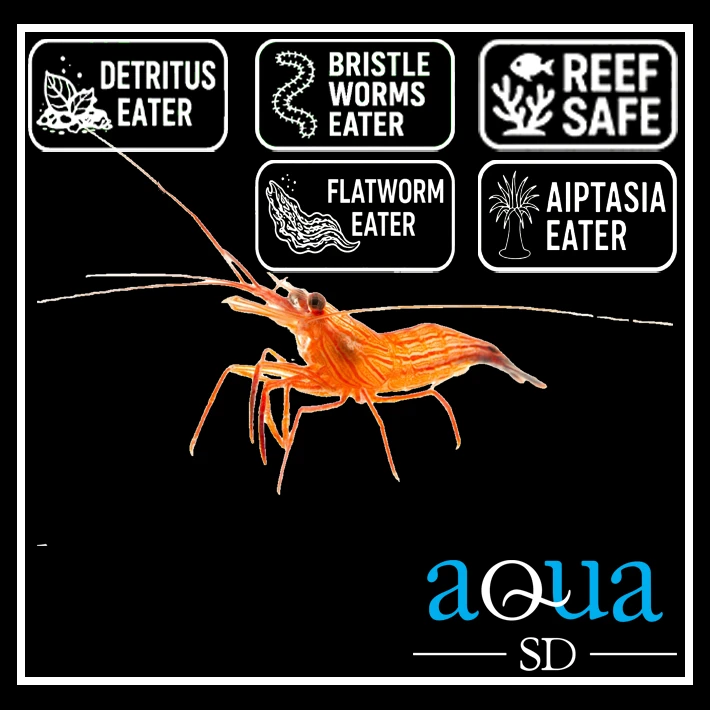
This species has an added benefit in that it will consume the pest anemone Aiptasia. However, they will also feed on certain small polyps and may take food from corals and slower organisms, so observe carefully. These shrimp may stay hidden amongst the live rock for most of the day, but can usually be observed scavenging under blue moon lighting in the evening.
2. Setting up your tank: size, rockwork and filtration
The ideal habitat for a peppermint shrimp is a minimum ten-gallon tank. If you plan to add additional peppermint shrimp, you should add an extra 5-10 gallons per shrimp. If you are adding this shrimp to an already-established aquarium, it will be fine and will not take up much space given its small size.
Since its natural habitat is a rocky shoreline or a hard-bottom reef, you can use items such as rock for the substrate, and don't forget to add plants so it has plenty of hiding spots. They're usually happy in tanks that include live rock as the biologically active surfaces trap detritus and offer them plenty of nooks and crannies to explore. Provide plenty of rockwork with caves and overhangs where the shrimp can retreat during the day, as they are naturally nocturnal.
Lighting is not a major factor in keeping peppermint shrimp. They'll do well in aquariums with low to high light. Provide moderate water flow to ensure proper circulation and oxygenation. Avoid placing them in areas with very strong currents.
Employ high-quality filtration, such as a protein skimmer, to ensure optimal water quality.
3. Tank mates and temperament
Peppermint shrimp are a sociable species, and can be kept in groups in spacious aquaria. Choose tankmates with care, avoiding large, predatory, and aggressive species. Don't put any fish or invertebrates bigger than six inches long in the tank with your peppermint shrimp. The larger the size difference, the more likely they'll try to eat your shrimp.
The peppermint shrimp is a fairly easy going shrimp that should play well with others of its own species but it may fight with other shrimp species in the aquarium. Reef tank keepers have reported mixed results when keeping them in their reef tanks. Some say that they nip at soft corals and others claim that they've never witnessed this behavior. So it is not considered completely reef tank safe. If you notice your peppermint shrimp eating coral, you can physically cover the coral, or you may want to limit the extra things in the shrimp's diet. If it has eaten all of the Aiptasia and is still hungry, this may lead to the coral-eating behavior.
4. Water parameters and quality
Keep temperature between 75°F – 82°F (25°C – 28°C) and specific gravity (salinity) between 1.023 – 1.025. Aim for a pH of 7.7 to 8.5 and alkalinity of 8 – 12 dKH. Calcium should be maintained at 380-450 ppm and magnesium at 1250-1350 ppm, as these shrimp moult regularly and need minerals to form new exoskeletons.
Like other invertebrates, the peppermint shrimp cannot tolerate copper-based medications or high nitrate levels. Maintain ammonia and nitrite levels at 0 ppm, and nitrates below 20 ppm. Maintain excellent water quality through regular water changes of 10–25% every two to four weeks. Consistent testing of water parameters such as salinity, pH, ammonia, nitrite, and nitrate levels is essential to ensure a stable environment.
It also requires supplemental iodine to encourage proper molting of its carapace. Regular water changes are necessary to replenish iodine that is important for the proper molting of peppermint shrimp.
5. Feeding and diet
This shrimp is an aiptasia eater and will also scavenge around the tank looking for bits and pieces. Make sure they are getting enough to eat. Unless your tank is particularly nutrient sparse (for instance, a brand new tank or an SPS tank where you need to keep nutrient levels low), peppermint shrimp will likely keep themselves well-fed. All of that detritus and leftover food will supply the ready meals they need.
In addition to what it obtains from scavenging, the diet of the peppermint shrimp should consist of most types of prepared foods and the occasional pieces of fresh fish. Give them a sinking shrimp pellet or sinking tiny pieces of fresh fish. Feed 2-3 times per week if the tank is well-established. They'll also graze on detritus, algae, and uneaten food between feedings.
6. Acclimating your new shrimp
Shrimp are sensitive to water parameter changes. We suggest via drip acclimation.
Gather before you start
- Clean bucket or container (never used with soap or chemicals)
- Airline tubing (about 3 feet)
- Airline valve or a loose knot to tie in the tubing
- Small net for transferring the shrimp
Acclimation steps
1. Float the sealed bag. Float the sealed bag in your aquarium for 15-20 minutes. This allows the water temperature inside the bag to gradually match your tank temperature.
2. Pour the shrimp into a container. Gently open the bag and pour the shrimp and shipping water into your clean bucket. Do not pour shipping water directly into your aquarium, it can contain waste or unwanted bacteria.
3. Set up the drip line. Set up your airline tubing as a siphon from your tank to the container by submerging one end of the tubing in your tank and starting a siphon (you can suck on the other end or use a syringe). Adjust the valve or knot to achieve 2-4 drops per second.
4. Let it drip for 1-2 hours. Let the drip continue for 1-2 hours. The water volume in the container should roughly double or triple during this time. Keep the bucket in a quiet, dimly lit spot to minimize stress.
5. Transfer the shrimp to your tank. Use a small net to transfer the shrimp. After acclimation, it helps to introduce them to the tank when the lights are off, and do try to place them gently in the safety of the rock work rather than introducing them to the empty water column.
6. Discard the acclimation water. Do not pour it into your tank. Wait at least 24 hours before offering food to newly acclimated shrimp. This gives them time to reduce stress levels, explore their new environment, and find natural biofilm and algae.
7. Signs of health
These shrimp are most active at night, so it's normal that you won't see them during the day. You may be able to get them out of hiding once food hits the water. One of the first things you might notice is their curiosity. It's a really good sign if they start exploring and scavenging around. This means they're getting comfortable in their new surroundings.
Watch for regular molting, which is necessary for growth. Avoid copper-based treatments, which are lethal to shrimp. If your shrimp stops eating or hides constantly after the first few days, check your water parameters and ensure nitrate levels are not elevated.
What you notice and what to check next
| What you notice | What to check next |
|---|---|
| Shrimp hides constantly during the day | This is normal behavior for a nocturnal species; they should emerge at night or when food is added |
| Shrimp appears to molt | This is healthy; ensure calcium and magnesium levels support new exoskeleton formation |
| Shrimp stops eating or becomes lethargic | Test ammonia, nitrite, nitrate, and salinity; check that water temperature is within range |
| You see Aiptasia anemone populations declining | The shrimp is working; continue regular feeding and observation |
| Shrimp nips at soft corals | Reduce overall tank feeding frequency and ensure shrimp gets supplemental food |
| Shrimp missing leg or appendage | Likely from molting or minor damage; the limb will regenerate over successive molts if conditions are stable |
Your care log
Purchased on: ______ Tank size: ______ Date acclimated: ______ Lights on/off time: ______ First sighting (feeding time): ______ Water temperature: ______ Salinity (SG): ______ pH: ______
Sources
Checked October 21, 2026.
- Fishkeeper UK, "Peppermint Shrimp-Lysmata wurdemanni" https://www.fishkeeper.co.uk/fish/marine/crabs-shrimp/peppermint-shrimp-
- Fishlore, "Peppermint Shrimp Care (Lysmata wurdemanni)" https://www.fishlore.com/profile-peppermintshrimp.htm
- Saltwater Aquarium Blog, "Peppermint shrimp expert care guide: diet, size, reef safe" https://www.saltwateraquariumblog.com/peppermint-shrimp/
- Gensou Premium Aquascaping, "Peppermint Shrimp Care Guide: Lysmata Wurdemanni Aiptasia Control" https://gensou.sg/peppermint-shrimp-care-guide-reef/
- Fish Laboratory, "Peppermint Shrimp (Lysmata wurdemanni) Ultimate Care Guide" https://www.fishlaboratory.com/fish/peppermint-shrimp/
- Bulk Reef Supply, "How To Care For Peppermint Shrimp" https://www.bulkreefsupply.com/content/post/how-to-care-for-peppermint-shrimp
- Aquarium Source, "Peppermint Shrimp 101: Diet Mates Breeding and Tank Setup" https://www.aquariumsource.com/peppermint-shrimp/
- The Aquarium Guide, "Peppermint Shrimp: Complete Guide to Care, Breeding, Tank Size and Disease" https://theaquariumguide.com/articles/peppermint-shrimp
- Aquatics Unlimited, "SHRIMP – PEPPERMINT Lysmata wurdemanni complex" https://aquiticsunlimited.com/product/02dcd191-aec2-11ea-f336-753609f23d73/
- Reef Bay, "Complete Peppermint Shrimp Care Guide" https://reefbay.com/guides/complete-peppermint-shrimp-care-guide
- Live Aquaria, "Peppermint Shrimp" https://www.liveaquaria.com/products/peppermint-shrimp
- The Biota Group, "Peppermint Shrimp" https://shop.thebiotagroup.com/products/peppermint-shrimp
- Reef Cleaners, "Tank Cleaners: Peppermint Shrimp" https://www.reefcleaners.org/aquarium-store/peppermint-shrimp
- Aquatic Arts, "Acclimation Guides & Information" https://aquaticarts.com/pages/acclimation-information
- Shrimp Keepers, "How to Acclimate Shrimp: Drip Method Guide for Beginners" https://www.shrimpkeepers.com/blog/how-to-acclimate-shrimp/
- Violet Aquarium, "Acclimation Guide for Starfish and Shrimps" https://www.violetaquarium.com/pages/1-3-acclimation-guide-for-starfish-and-shrimps
- Aquarium Depot, "How To Acclimate Shrimp To Your New Tank" https://myreef.aquariumdepot.com/how-to-acclimate-shrimps-to-your-new-tank/
- Shrimp Keepers, "How to Acclimate Shrimp: Drip vs Float Method Guide 2024" https://www.shrimpkeepers.com/blog/how-to-acclimate-shrimp-drip-method-vs-float-method/