

Ocellaris Clownfish Care: Tank Setup, Feeding and Acclimation
You'll learn to set up a tank, acclimate your captive-bred clownfish, maintain stable water conditions, and feed it properly for long-term health.
Fish care · Detailed tutorial · About 10 minutes · Beginner friendly
The key habit: Ocellaris clownfish do best in mature aquariums with consistent salinity, low stress, and good nutrition. Establish stable water conditions before bringing the fish home, and keep them stable every day after.
Shop the Ocellaris Clown; Captive Bred. – Amphiprion ocellaris
In this guide:
- What you're bringing home: species background and captive-breeding
- Tank size and setup
- Water parameters to maintain
- Water flow and placement
- Feeding and diet
- Acclimation: Your first steps
- Health signs and tank mates
1. What you're bringing home
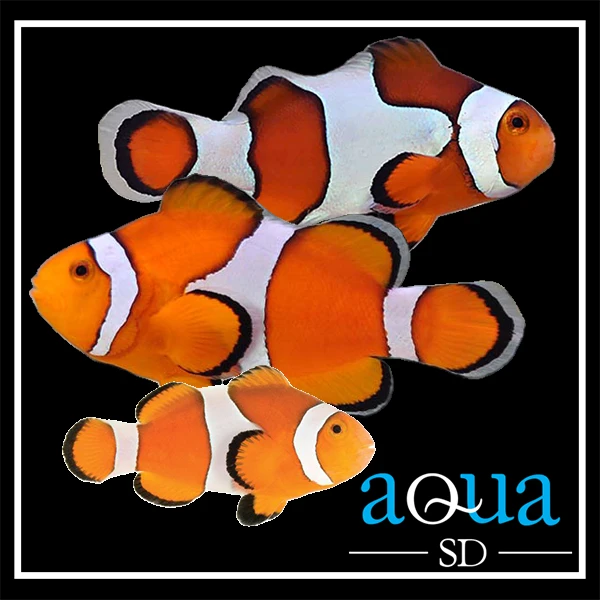
Ocellaris Clownfish are from the Indo-Pacific, grow to 2–3 inches, with females larger than males, and are omnivorous. Most Ocellaris Clownfish sold today are captive-bred, and an ever-increasing number of color patterns as well as long-finned varieties are available.
Captive clownfish do not need an anemone to survive, although in the wild they form complex social structures around a host anemone. In your home tank, your clownfish will be happy and healthy without a host, though you may watch it adopt a shelter near rockwork or decor.
2. Tank size and setup
Ocellaris clownfish do best in aquariums of 10 gallons or larger, though a bonded pair can thrive in tanks as small as 20–30 gallons, though larger systems offer better stability.
They thrive in well-established aquariums that mimic their natural reef environment, with live rock providing ample hiding places. Provide at least a few small caves or crevices where the fish can retreat. Use a heater, reliable filtration, and regular water changes.
3. Water parameters to maintain
Keep these ranges consistent—sudden changes cause more stress than slightly imperfect numbers [1]:
| Parameter | Range |
|---|---|
| Temperature | 74–80°F |
| pH | 8.0–8.4 |
| Specific Gravity (Salinity) | 1.020–1.025 |
| Alkalinity (KH) | 8–12 dKH |
| Nitrate | < 10 ppm |
| Ammonia & Nitrite | 0 ppm |
Keep ammonia and nitrite at zero. Keep nitrate low, though clownfish tolerate moderate levels better than delicate corals.
4. Water flow and placement
Moderate water flow is ideal. Ocellaris clownfish are not built for relentless current. They can handle strong reef flow in short bursts, but they prefer calmer zones where they can hover comfortably.
Create varied flow across the tank. Let pumps provide circulation for corals, but make sure some sheltered areas remain behind rockwork or near corners.
5. Feeding and diet
Ocellaris Clownfish are omnivores that readily accept a wide variety of foods including high-quality marine pellets, flake food, frozen mysis shrimp, brine shrimp, and finely chopped seafood. They benefit from occasional algae-based foods and vitamin-enriched preparations.
Feed two to three times daily in small portions. Alternate between pellets, frozen foods, and occasional algae-based options to provide balanced nutrition. Your clownfish will readily accept food and eat eagerly—watch for overfeeding, as these fish have small mouths and stomachs.
6. Acclimation: Your first steps
Quarantine new fish when possible. This greatly reduces the risk of marine ich and brooklynella. If you don't have a quarantine setup, acclimation is still critical to success.
Gather before you start
- Bucket or acclimation box (5–10 gallons)
- Airline tubing and valve
- Thermometer
- Timer or clock
- Small net
- Paper towels or cloth
1. Float the sealed bag in your tank for 15–20 minutes to match water temperature.
2. Open the bag carefully and pour out about half the water into a bucket.
3. Set up a drip line: Using airline tubing, tie a loose knot in it or use a valve to create a slow drip (about one drop per second) from your tank into the bucket. Place the clownfish in the bucket.
4. Run the drip for 30–45 minutes so the bucket's water gradually becomes your tank's water, acclimating the fish to your pH, salinity, and temperature.
5. After 45 minutes, use a small net to gently move the fish into your tank. Do not pour the bucket water into your tank—discard it.
6. Turn off the lights for a few hours to reduce stress. The fish will hide as it explores.
7. Health signs and tank mates
Watch for an alert posture, vibrant colors, and intact fins. A healthy clownfish swims actively, feeds eagerly, and explores its hiding spots.
| What you notice | What to check next |
|---|---|
| Fish stays hidden for many days, doesn't eat | Water parameters (especially ammonia, nitrite); tank may not be cycled. Check salinity and temperature. |
| White spots or rough patches on skin | Marine ich or other parasites. Isolate immediately and seek treatment advice. |
| Torn or frayed fins | Check for aggressive tank mates or sharp decor. Ensure good water quality. |
| Gasping at surface, slow movement | Low oxygen, high temperature, or high ammonia/nitrite. Check all parameters. |
| Pale colors, loss of appetite | Stress or early disease. Check water stability and look for irritation or spots. |
Ocellaris Clownfish are generally peaceful, making them suitable for community tanks. They can be slightly territorial, particularly around their chosen anemone or a specific area of the tank. House them with other peaceful species; avoid large predators or fin-nippers. Invertebrates like cleaner shrimp are usually safe.
Your care log
Tank size: ______ gallons
Placed on: ______
Temperature (°F): ______
Specific gravity: ______
pH: ______
Feeding schedule: ______ times daily
First signs of settlement: ______
Notes: ______
Sources
Checked October 10, 2026.
[1] Coralifeproducts.com, Ocellaris Clownfish Care Guide, https://www.coralifeproducts.com/care-guides/ocellaris-clownfish
[2] Fish Laboratory, "Ocellaris Clownfish (Amphiprion ocellaris): Ultimate Care Guide", https://www.fishlaboratory.com/fish/ocellaris-clownfish/
[3] MixedReefTank.com, "Ocellaris Clownfish Care: Aquarium Tips for Nemo", https://mixedreeftank.com/fish/clownfish-care
[4] Fancy Reef, "Ocellaris Clownfish Care Guide for Reef Tanks", https://fancyreef.com/ocellaris-clownfish/
[5] Reef Archive, "Ocellaris Clownfish Care Guide – Amphiprion ocellaris", https://www.reefarchive.com/fish/clownfish/ocellaris-clownfish
[6] Reeflings, "Ocellaris Clownfish (Amphiprion ocellaris)", https://reeflings.com/species/amphiprion-ocellaris
[7] Easy Clean Aquatics, "Ocellaris Clownfish Care Guide", https://easycleanaquatics.com/encyclopedia/clownfish-ocellaris