

Lyretail Hogfish Care: Tank Setup, Feeding and Acclimation
You'll learn how to set up a tank for a Lyretail Hogfish, feed this active hunter, and acclimate it safely to its new home.
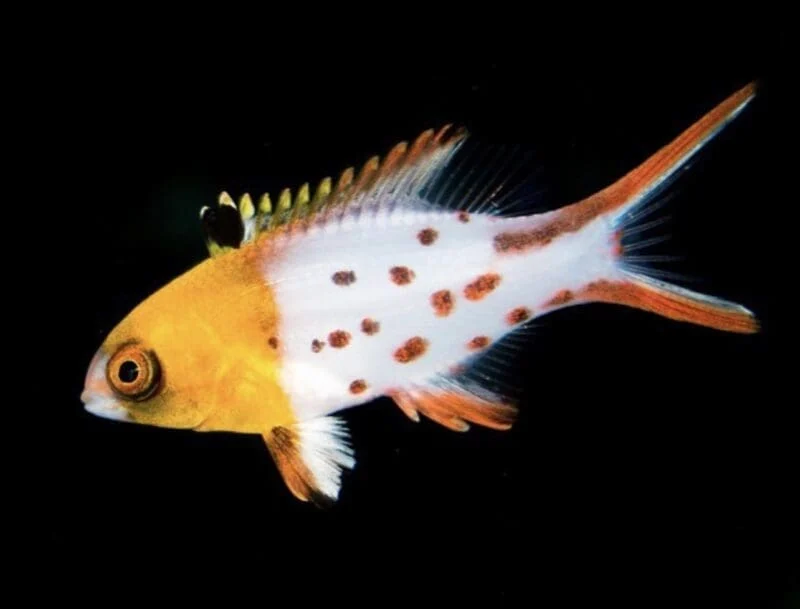
A beginner’s guide to Lyretail Hogfish care. You'll learn how to set up a tank for a Lyretail Hogfish, feed this active hunter, and acclimate it safely to its new home.
Lyretail Hogfish Care: Tank Setup, Feeding and Acclimation
The Lyretail Hogfish (Bodianus anthioides) combines a reddish-brown head and forebody with a pale, spotted rear half and a deeply forked, lyre-shaped tail. This active, colorful wrasse is a rewarding addition to a mature marine aquarium—but only if you understand its hunting behavior and provide a setup that suits its personality.
Fish care · Detailed tutorial · About 8 minutes · Beginner friendly
The key habit: Provide a stable, mature tank with at least 100 gallons, hiding places, and a deep sand bed so this fish feels secure and can express its natural hunting behavior.
In this guide
- What the Lyretail Hogfish is and where it comes from
- Tank size and setup, including rockwork and sand bed
- Tank mates and temperament as it grows
- Feeding strategies for its carnivorous diet
- Water parameters and maintaining water quality
- Acclimation and signs of good health
- Behavior and the unique hunting technique
1. What the Lyretail Hogfish is and where it comes from
The Lyretail Hogfish combines a reddish-brown head and forebody with a pale, spotted rear half and a deeply forked, lyre-shaped tail. Native to the Indo-Pacific, it explores reef slopes, coral rubble, and nearby sand. Juvenile Lyretail Hogfish act as cleaner fish, picking parasites and dead scales off other fish, but as it grows, this behavior stops.
Lyretail Hogfish are active, semi-aggressive, and very aware of their environment. Its vivid colors and curious personality make it a popular aquarium fish, but its appetite for invertebrates and aggressive behavior as it matures require thoughtful tank planning.
2. Tank size and setup
Tank size
Begin with a minimum of 70 gallons for a Lyretail Hogfish, though it is an active swimmer and is best kept in a tank with plenty of room for swimming. Most sources recommend an adult aquarium of at least 100 gallons with a long, wide footprint, open swimming space, and secure rockwork.
Rockwork and hiding places
The Lyretail Hogfish needs a well-decorated aquarium with plenty of hiding spots, such as caves and crevices, to give an opportunity to carry out its natural browsing behavior in captivity. A fine sand bed of at least 2-3 inches will help them feel secure. Rocks should be placed on the aquarium glass and sand poured around them to eliminate the danger of a cave-in when the hogfish dives in.
Lighting and water flow
Moderate to high lighting is preferred. Provide moderate water flow to support the overall health of the system without blowing the fish around continuously.
Lid
Make sure the tank has a tight-fitting lid, as this species is known to jump when startled or during feeding excitement.
3. Tank mates and temperament
The Lyretail Hogfish's behavior changes dramatically as it grows. Although juveniles are usually quite peace-loving, once a larger lyretail hogfish is established in its captive home it may behave aggressively toward smaller or more docile tankmates.
Moderately-aggressive tankmates, like groupers, hawkfishes, angelfishes, and some of the more placid triggerfishes can be introduced into a tank containing an acclimated, adult lyretail hogfish. Mature hogfish will prey upon shrimp, snails, mussels and small fish. Avoid keeping more than one hogfish per tank unless the system is large and specifically designed to manage territorial behaviour.
The Lyretail Hogfish may be considered reef safe but with caution, as it is known to overturn corals while searching for food.
4. Feeding strategies
Feed your hogfish a meaty variety of foods that may include pellets, frozen formulas, shrimp, scallops and mussels. It is recommended to feed them multiple small meals throughout the day rather than one large feeding.
The Lyretail Hog is carnivorous, and it thrives on a protein-rich diet. In the wild, it feeds on small crustaceans, worms, and invertebrates. They usually learn to take dry foods as well.
The unique hunting behavior of this fish is one of its most appealing traits. Adult Lyretail Hogfish are often seen blowing jets of water at the substrate to uncover worms, snails and other small crustaceans hidden in the sand.
5. Water parameters and water quality
The Lyretail Hogfish thrives in stable saltwater conditions. Maintain these ranges:
| Parameter | Range |
|---|---|
| Temperature | 75°F – 82°F (24°C – 28°C) |
| Salinity | 1.020 – 1.025 SG |
| pH | 8.1 – 8.4 |
| Alkalinity (dKH) | 8 – 12 |
| Nitrate | <20 ppm |
| Ammonia | 0 ppm |
| Nitrite | 0 ppm |
The Lyretail Hog may be slightly sensitive to changes in water quality, so regular water testing and maintenance are essential.
6. Acclimation and signs of good health
Gather before you start
- Quarantine tank or separate container (optional but recommended for new fish)
- Acclimation line or drip kit
- Thermometer
- Feeding schedule plan
Acclimation steps
1. Float the bag: Place the sealed bag in your quarantine or display tank for 15-20 minutes to allow temperature equilibration.
2. Begin the drip: When first bringing the eel home, as with any fish, you will want to place them in an isolation tank before placing them into the main tank. However, adding rocks to an isolation tank often makes it too cramped for the eel, stressing them out. Instead many eel owners simply add their eel straight into the tank. If you use a quarantine tank for the hogfish, use a drip line to slowly mix tank water into the acclimation container over 30-45 minutes.
3. Move to the tank: Once acclimated, gently guide the hogfish into the tank.
4. Watch the first week: Observe eating behavior and interaction with rockwork. The fish may hide initially as it learns its new home.
Signs of good health
- Alert, active behavior and constant exploration
- Bright, vivid coloration with no fading or dark patches
- Eating enthusiastically at feeding time
- Clear, undamaged fins
- No visible spots, sores, or white patches
- Healthy fish will display bright colouration, clear, undamaged fins, and responsive behaviour.
7. The hunting behavior and personality
One of the most captivating aspects of owning a Lyretail Hogfish is watching its hunting technique. Larger lyretail hogfish often blow jets of water out of their mouth's at the sand surface to uncover buried prey (this is known as hydraulic jetting). Energetic and curious, it often sifts through the sand by blowing water to uncover hidden prey, adding both movement and personality to the tank.
This active, inquisitive behavior means your fish will constantly interact with the aquascape and the water column. They will hide within the rockwork to sleep, but when threatened may dive into the sand for protection. They can even swim under the sand to avoid predators.
What you notice and what to check next
| What you notice | What to check next |
|---|---|
| Fish hiding for several days | Normal; let it adjust. Offer food after 24 hours. May take a week to settle in. |
| Refusing food | Ensure tank is mature and water parameters are stable. May need live food initially. |
| Aggressive chasing of other fish | Confirms semi-aggressive temperament; confirm tankmates are appropriately sized and tempered. |
| Torn or cloudy fins | Check water parameters; test for ammonia, nitrite, nitrate. May indicate stress or poor water quality. |
| Lethargy or loss of color | Test all water parameters; ensure temperature is 75–82°F. Check for signs of disease (spots, sores). |
Your care log
Placed on: ______ Tank size: ______ gallons
Tankmates introduced: ______
First food offered: ______
Temperature maintained at: ______ °F
Salinity checked on: ______ Reading: ______
First observed hunting behavior: ______
Notes: ___________________________
Sources
Checked November 7, 2026.
1. Top Shelf Aquatics, "Blue Ribbon Eel Care: Feeding & Tank Setup"
2. Top Shelf Aquatics, "Lyretail Hogfish"
3. Saltwater Fish, "Lyretail Hogfish – Hogfish – Saltwater Fish"
4. Abyss Aquatics, "Lyretail Hogfish"
5. iReef, "How to Care for the Lyretail Hog – West Indian Ocean"
6. J&L Aquatics, "Lyretail Hogfish (Atlantic)"
7. Aquatic Collection, "Lyretail Hogfish"
8. Sim's Tropical Fish, "Lyretail Hog Bodianus Anthioides"
9. Aqua Imports, "Lyretail Hogfish (Bodianus anthioides)"
10. Aquatics Unlimited, "Hogfish – Lyretail Bodianus anthioides"