

Using Live Sand to Speed Your Reef Tank Cycle
You'll learn how to use live sand to jump-start your new reef tank's nitrogen cycle and avoid common beginner mistakes.
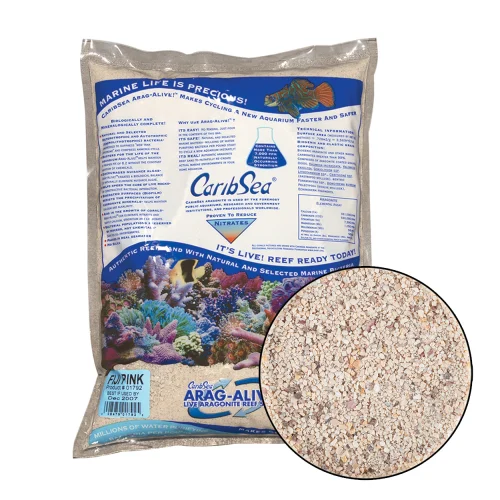
You'll learn how to use live sand to jump-start your new reef tank's nitrogen cycle and avoid common beginner mistakes.
Using Live Sand to Speed Your Reef Tank Cycle
Using live sand to start your reef tank means you can have a thriving aquarium weeks faster than with dry sand alone. Arag-Alive live sand is a great choice for new aquarists and new reef tank setups.
Equipment setup · Detailed tutorial · About 5 minutes · Beginner friendly
The key habit: Do not rinse the substrate when setting up an aquarium with live products. The bacteria are in the water and sand together; rinsing removes both.
Shop the CaribSea Arag-Alive Fiji Pink 10lb
In this guide
- What live sand does and why your tank needs it
- Choosing the right amount for your tank size
- Setting up your sand bed without rinsing
- Keeping the bacteria alive before you add it to your tank
- How to fill your tank to avoid cloudiness
- What happens next as your cycle runs
- Signs your tank is ready for livestock
1. What live sand does and why your tank needs it
Many hobbyists accelerate the nitrogen cycle by adding live rock, live sand, or bottled bacterial supplements. These materials introduce existing bacterial colonies into the system, which can significantly reduce the time needed for the tank to stabilize. Live sand hosts bacterial colonies throughout its grains, particularly in the upper, oxygenated layer, where these bacteria process ammonia and nitrite as part of the nitrogen cycle.
Arag-Alive sands clear quickly and contain millions of live bacteria, speeding up your tanks cycle and leading to less nuisance algae. Live sand beds deeper than 2 inches provide space for anaerobic bacteria to break down nitrates. The bacteria in your sand do the invisible work that keeps your fish and corals safe.
2. Choosing the right amount for your tank size
BRS suggests 1 pound of Fiji Pink sand per 2 gallons of display tank volume on average. For most reef displays, you'll want a sand bed between 1 and 2 inches deep. It's always recommended to get a little extra sand to make sure you have enough on hand when you are filling your tank.
One 10 lb bag of Fiji Pink covers about a 20-gallon tank at 1-inch depth, or a 10-gallon tank at 2 inches deep. If your tank is larger, plan on buying several bags.
3. Setting up your sand bed without rinsing
Gather before you start
- Live sand (keep it moist until you're ready to add it to the tank)
- An empty bag or dinner plate
- A pitcher or slow-pouring container
- Pre-mixed saltwater at the correct salinity (1.025 specific gravity)
1. Pour the sand directly into your dry tank. Do not rinse the substrate. The substrate should be carefully placed on the bottom of the aquarium. Spread it evenly across the bottom.
2. Prepare your saltwater. Mix your saltwater and bring it to the right salinity and temperature (77–79°F) before adding it to the tank.
3. Add water slowly with a plate or bag underneath. Your preconditioned water should be added carefully. Cloudiness will be greatly reduced if a plate or empty bag is used to stop the water being added from disturbing the substrate underneath. Pour the water onto the plate so it flows gently over the sand rather than crashing into it.
4. Keeping the bacteria alive before you add the sand
Keep the sand moist to keep the bacteria alive. If you're not ready to set up your tank right away, leave the bag sealed or keep it damp. Exposure to pure fresh water will kill off bacteria rather quickly. This is why you fill the tank with saltwater first, or at least quickly after adding the sand.
5. How to fill your tank to avoid cloudiness
The sand will make the water cloudy at first—this is normal. Cloudiness will be greatly reduced if a plate or empty bag is used to stop the water being added from disturbing the substrate underneath. Run your filter and any powerheads as soon as the tank is full. The bacteria will begin processing ammonia right away, and the cloudiness typically clears within a few hours to a day.
6. What happens next as your cycle runs
Once your sand bed and tank water are in place, the bacteria begin their work immediately. The bacteria help jumpstart the nitrogen cycle by immediately beginning to process any ammonia present in the water. They will begin processing ammonia and nitrite almost immediately, significantly reducing the time needed to establish a stable cycle. Even so, the nitrogen cycle can take anywhere from a few weeks to over a month to complete, depending on whether you're using bacteria supplements.
Keep your system running with good water flow and lighting. Do not add fish or corals yet—wait for the full cycle.
7. Signs your tank is ready for livestock
Test your water with a reliable aquarium test kit for ammonia, nitrite, and nitrate.
| What you notice | What to check next |
|---|---|
| Water is still cloudy after 24 hours | Your filter may not be working; check that it's running and clean |
| Ammonia reads 0, nitrite reads 0 | Your cycle is complete; you may add livestock slowly |
| Ammonia or nitrite is still high after 2 weeks | Add more live rock or live sand to boost bacteria, or wait longer |
| Water clears but smells foul | Increase water flow and aeration; partial water change may help |
| Nitrate is present but ammonia and nitrite are 0 | Cycle is complete; begin weekly water changes |
Your care log
Tank set up on: ______ Tank size (gallons): ______
Sand depth (inches): ______ Amount used (lbs): ______
Water temperature: ______ °F Salinity (SG): ______
Date ammonia reached 0: ______ Date nitrite reached 0: ______
First livestock added on: ______ Type: ______
Sources
Checked October 30, 2026.
1. Algae Barn, "The Nitrogen Cycle in Saltwater Aquariums: A Beginner's Guide"
2. Bulk Reef Supply, "Fiji Pink Arag-Alive! Live Reef Sand"
3. CaribSea, "Marine Substrates"
4. Charter House Aquatics, "CaribSea Arag-Alive Fiji Pink Live Sand (10lb)"
5. Manta Systems, "Anaerobic Bacteria & Nitrate Control in Reef Tanks"
6. My First Fish Tank, "Best Live Sand for Reef Tanks: 5 I Recommend"
7. Petco, "Live Rock & Sand: Setup, Curing, & Care for Thriving Reef Tanks"
8. Reefs.com, "Live Sand and its Importance in Marine Aquariums"
9. SaltwaterAquarium.com, "Arag-Alive Special Grade Reef Sand (10 lb)"