
Indo Wolverine Frogspawn Care: Light, Flow and Feeding
You'll learn how to place, light, and feed your Frogspawn coral to keep its tentacles swaying and its color vibrant in your established reef tank.
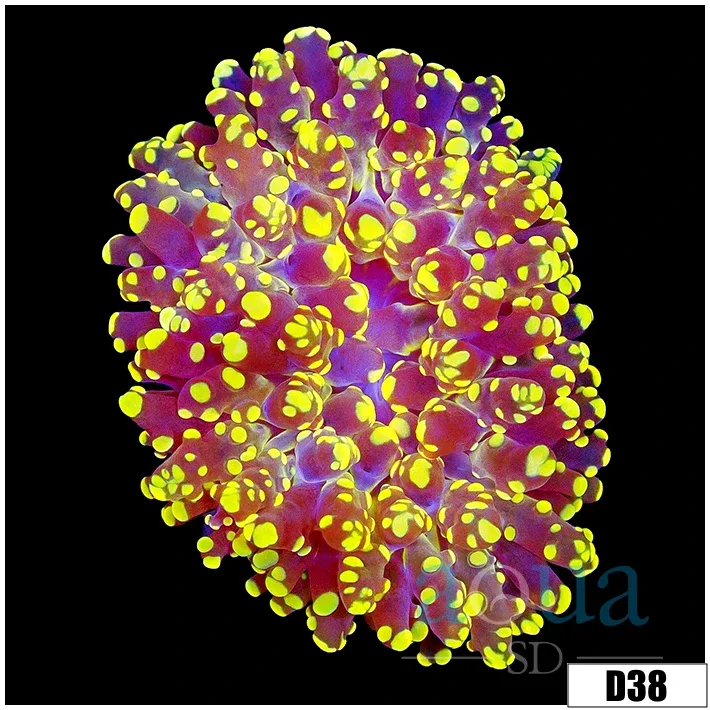
Coral care · Detailed tutorial · About 8 minutes · Beginner friendly
The key habit: Frogspawn corals reward stable placement over constant moves; find one good spot with moderate light and indirect flow, then leave the coral alone while it settles.
Shop the Indo Wolverine Frogspawn
In this guide
- What your Frogspawn is and how it grows
- Light: starting low, acclimating gradually
- Water flow: moderate and indirect
- Placement: where to set it in your tank
- Feeding and nutrition
- Water parameters
- Acclimation and dipping
- Fragging (if you want to propagate it)
1. What your Frogspawn is and how it grows
Frogspawn coral (Euphyllia divisa) is an LPS (Large Polyp Stony) coral that receives its name from its frog egg-looking polyps. It gives you movement, color, and visible growth without extreme SPS difficulty, and it's hardy but requires stable parameters, and can grow in branching or wall forms.
Growth rates are comparable to other LPS corals, which means visible branches will develop over weeks to months when placed correctly. The coral's flowing tentacle motion is one of its best features—movement means the coral is healthy and feeding.
2. Light: starting low, acclimating gradually
Frogspawn corals generally prefer low to moderate lighting, and approximately 75 to 150 PAR is a good starting range. More light is not always better for Frogspawn; extremely intense lighting can cause the coral to remain contracted, lose coloration or become stressed, especially when it has recently been moved from a lower-light environment.
A practical range for many Frogspawn corals is around 100-200 PAR, but every colony should not be placed directly into that range without acclimation—a coral that came from lower light should be introduced gradually so it can adjust.
3. Water flow: moderate and indirect
A range of roughly 75 to 150 PAR with gentle to moderate indirect flow is a practical starting point for most Frogspawn Corals. Moderate, indirect water flow ensures proper tentacle extension; avoid strong, direct currents which can cause tissue recession; randomized flow patterns help prevent detritus buildup.
The Frogspawn coral should be saved at least six inches away from neighboring coral as they extend their tentacles in the evening and might hurt different corals in the course.
4. Placement: where to set it in your tank
Hammer corals generally do best when placed at the bottom of the tank, up to the middle in most reef tank systems (assuming standard, strong reef aquarium lighting; if you have less intense lights, you should move the coral up in the water column accordingly). Avoid the extremes; avoid extremely bright locations or areas of very high current.
Frogspawn and other Euphyllia corals share similar placement needs. A Frogspawn should be placed where it gets moderate light, moderate indirect flow, room to expand, and enough distance from aggressive neighbors; it should not be wedged tightly into rockwork where the tissue rubs against stone or neighboring coral skeletons.
5. Feeding and nutrition
Frogspawns need moderate to high lighting levels, moderate water flow levels and will need to be fed periodically to experience better results and increased growth rates. Like most corals, Goniopora are photosynthetic thanks to their symbiotic zooxanthella, and they also benefit from occasional spot feeding.
Although symbiotic algae called zooxanthellae hosted within them supply some of their nutritional requirements through photosynthesis they do benefit from supplemental feedings of Oyster-Feast, Roti-Feast, and mysis shrimp. Target feed once per week or when the polyps appear most extended and responsive.
6. Water parameters
Frogspawn corals thrive in stable reef conditions. Maintain these ranges:
| Parameter | Range |
|---|---|
| Temperature | 75–80°F |
| Salinity | 1.024–1.026 |
| pH | 8.1–8.4 |
| Alkalinity | 8–9 dKH |
| Calcium | 420–440 ppm |
| Magnesium | 1250–1350 ppm |
| Nitrate | 5–15 ppm |
| Phosphate | 0.03–0.10 ppm |
Sudden changes in light or flow can shock the coral's tissues and its symbiotic zooxanthellae, leading to bleaching, tissue loss, or polyp retraction; Frogspawn corals are particularly sensitive to abrupt environmental changes.
7. Acclimation and dipping
The best practice is to dip and acclimate your corals when adding them to your aquarium; dipping corals removes unwanted parasites, bacteria, and protozoans which can cause damage to your new and already established corals.
Gather before you start
- Aquarium water (from your reef tank)
- A clean container or specimen cup
- An air line and air stone (for drip acclimation)
- A coral dip product (such as iodine-based dips)
- A timer
- Temperature acclimate first. Float the unopened bag or container from the shop in your tank for 15–20 minutes to match the water temperature.
- Drip acclimate for 30–45 minutes. Acclimation usually includes a 30 – 45 minute drip of your aquarium water into the bag water your coral came in. Set up an air line with a gentle drip, adjusting the flow so the bag water level rises slowly.
- Dip the coral. An iodine dip is well tolerated and can prevent problems if done early. Follow the dip product's instructions carefully, typically 2–5 minutes in a freshly prepared solution. Do not over-dip.
- Place in low light first. Dim your aquarium lights or use a shading screen to reduce intensity for the first few days, then gradually increase light intensity or photoperiod over 1-2 weeks, monitoring the coral's response.
- Introduce moderate flow gently. Introduce moderate flow, but avoid direct blasts; adjust as needed based on polyp extension.
- Watch for stress. Observe for signs of stress: retracted polyps, pale or bleached tissue, or failure to expand; if these occur, slow the acclimation process or reduce intensity further. A new Frogspawn may not fully open immediately; if the tissue is intact and the placement is reasonable, give it time; constantly relocating a stressed coral usually makes recovery harder.
8. Fragging
The branching variety of frogspawn coral, Euphyllia paradivisa, is fragged fairly easily by snapping, cutting, or sawing the branches near the base and using cyanoacrylate glue to affix the frag to your preferred piece of live rock.
- Use clean tools. Use clean, sterilized tools to minimize infection risk.
- Cut below the living tissue. Cut through the hard skeleton at the base, leaving the polyp tissue intact above.
- Dip the fresh frag. Dip the coral frag in your iodine solution to prevent infection.
- Secure and rest the frag. Glue the frag to a stable piece of rockwork. Set the frag in a low-stress area, complete with the water flow and lighting conditions you have for the parent colony.
- Monitor healing. Monitor the frag while it heals; once it begins to grow, move the frag to its new home in your tank.
What you notice and what to check
| What you notice | What to check next |
|---|---|
| Polyps fully extended and swaying during the day | Lighting and flow are appropriate; the coral is happy |
| Polyps staying closed or contracted for days | Light may be too intense; flow may be too strong; check water parameters |
| Bleached or pale coloration | Light intensity is too high; reduce PAR gradually or reposition the coral |
| Dull color and weak extension | Light intensity may be too low; increase gradually over several days |
| Brown jelly-like tissue | Isolate the coral if possible; improve flow and water quality immediately; consult a coral dip |
| Visible growth or new branches forming | Stable conditions are working; keep placement, light, and flow consistent |
Your care log
Placed on: ______ Light (PAR): ______ Flow: ______ (gentle, moderate, or strong)
Dip product used: ______ Acclimation time: ______
Water temp: ______°F Salinity: ______ Alkalinity: ______ dKH
First observation: ______
Notes:
Sources
Checked October 8, 2026. Reference addresses are plain text.
- Reef Builders, "Introduction to Goniopora Care," reefbuilders.com/2025/09/23/introduction-to-goniopora-care/
- Queen City Corals, "Frogspawn Coral Care: Lighting, Flow, Placement & Feeding," queencitycorals.com/frogspawn-coral-care-guide/
- Fishlore, "Frogspawn Coral," fishlore.com/coral/frogspawn-coral.htm
- Reef Bay, "Frogspawn Coral Care Guide: PAR, Flow, Placement, and Feeding," reefbay.com/guides/complete-frogspawn-coral-care-guide
- Vivid Aquariums, "Buy Purple Tip Frogspawn Coral," vividaquariums.com/products/purple-tip-frogspawn-coral
- Queen City Corals, "Hammer Coral Care: Lighting, Flow, Placement & Feeding," queencitycorals.com/hammer-coral-care-guide/
- Saltwater Aquarium Blog, "Hammer coral care: placement & feeding of Euphyllia ancora," saltwateraquariumblog.com/hammer-coral-care-placement-feeding-of-euphyllia-ancora/
- Fish Tank Advisor, "Frogspawn Coral Care Guide: Tank Setup, Feeding, and Fragging Tips," fishtankadvisor.com/frogspawn-coral/
- Saltwater Aquarium Blog, "Frogspawn Coral: Should You Add a Frag to Your Tank?," saltwateraquariumblog.com/frogspawn-coral-care-euphyllia-divisa/
- Boodle Shire Aquatics, "Coral Profile: The Frogspawn Corals," boodleshireaquatics.com/post/coral-profile-the-frogspawn-corals
- Extreme Corals, "Frogspawn Coral Care Requirements," extremecorals.com/FROGSPAWN.html
- Extreme Corals, "Frogspawn Coral Success Blueprint," extremecorals.com/blog/care-requirements-of-frogspawn-coral-in-home-reef-aquariums.html
- Fancy Reef, "Frogspawn Coral Care: Light, Flow, and Placement," fancyreef.com/frogspawn-coral-care/