

Firefish Goby Care: Tank Setup, Feeding and Acclimation
You'll learn how to set up a proper home for your Firefish Goby, prevent jumping, feed it correctly, and acclimate it safely to your aquarium.
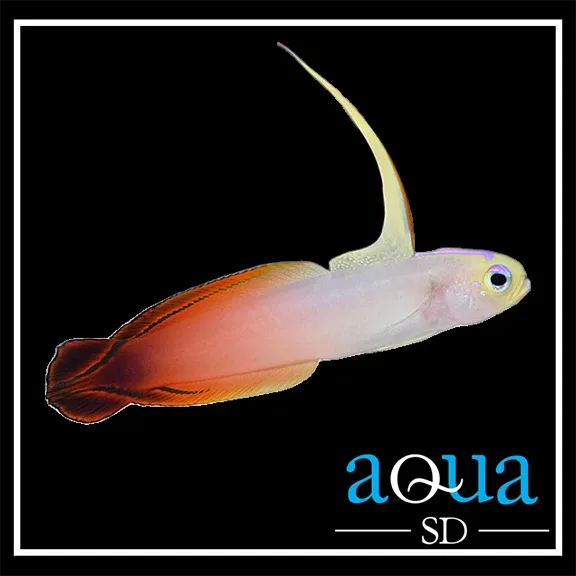
Fish care · Detailed tutorial · About 8 minutes · Beginner friendly
The key habit: Set up a tight-fitting lid and avoid aggressive tank mates. Firefish will jump if startled, and they retreat when bullied by more aggressive fish—both behaviors can be fatal without the right setup.
In this guide
- What the Firefish Goby is and where it comes from
- Tank size and setup
- Tank mates and temperament
- The jumping risk and how to prevent it
- Feeding your Firefish
- Water parameters and stability
- Acclimation and introduction
- Signs of good health
1. What the Firefish Goby is and where it comes from
Nemateleotris magnifica is native to coral reefs of the Indian and Pacific Oceans. In the wild, these fish inhabit areas with moderate to strong currents along outer reef slopes, typically hovering 1-3 feet above the substrate while feeding on zooplankton. They retreat to small caves and crevices in the reef structure when threatened.
What sets the firefish goby apart from other saltwater fish species is its remarkable ability to hover motionlessly in the water column while feeding on planktonic organisms. When you watch your Firefish, you will see it holding position in the current, then darting rapidly to its hiding place when startled. This "hovering and darting" behavior is how the fish survives in the wild and how it will behave in your aquarium.
2. Tank size and setup
A 20-gallon aquarium is the practical minimum for an adult, though the fish will make use of any additional open swimming space. If you want to keep a mated pair, plan for 30 gallons or more.
Build the layout around substantial rockwork set on sand or rubble, with numerous cracks, caves, and secure bolt-holes the fish can dart into, balanced against open water where it can hover and intercept food. A fine sand substrate is preferred in the aquarium, as it allows them to dig and reduces stress. Aim for a sand bed deep enough for the fish to partially burrow, and supplement with rockwork or PVC pipes for additional hiding places.
Moderate to strong flow is beneficial because it carries suspended particles past the fish in the same way current does on a reef slope. Avoid placing powerheads or strong jets directly at your rockwork hiding spots; the fish needs to feel secure in its retreat.
3. Tank mates and temperament
The Firefish Goby is extremely peaceful and gets along well with virtually all non-aggressive marine species. Excellent tankmates include clownfish, chromis, gobies, blennies, wrasses, and other dartfish species.
However, two Firefish in the same tank (unless a mated male/female pair) will fight to the death in a small tank. Avoid housing with aggressive or territorial fish that may bully the Firefish into permanent hiding. It is important to ensure that the fish receives enough food, as it is naturally shy and may be outpaced by other fish during feeding.
4. The jumping risk and how to prevent it
Stable tropical marine conditions and a tightly fitted lid with no escape gaps are both essential, since a startled Firefish will readily jump. While the fire goby has a life expectancy of about 3 years, most are cut way short because they have a bad habit of jumping out of tanks.
The species requires a completely secure, tight-fitting lid with no gaps over 0.2 inches (5 mm). Gaps at power cord holes, in screen tops, or around equipment are all escape routes. Egg crate or mesh coverings over any openings are recommended.
Avoid sudden movements or loud noises near the tank, as stress triggers jumping. Keep the lights off for the first few hours after introducing the fish, and avoid netted stress during tank maintenance near your Firefish's hiding place.
5. Feeding your Firefish
In the wild, the Fire Goby primarily feeds on zooplankton, capturing crustacean larvae and copepods that float in the current. In an aquarium, its diet can consist of live or frozen foods such as brine shrimp, mysis shrimp, and other small crustaceans. Suitable offerings include mysis shrimp, enriched brine shrimp, plankton, finely chopped seafood, and appropriately sized pellets, flakes, and prepared marine foods.
It is recommended to feed the Fire Goby at least twice a day. Scattering the food in different parts of the tank can help ensure that the Fire Goby has the opportunity to eat without being outcompeted by more aggressive fish. They have very small mouths and will ignore food that falls to the sand bed.
Shy individuals sometimes retreat to their bolt-hole during feeding and miss meals entirely when housed alongside aggressive or fast-feeding tankmates. Watch new arrivals closely to confirm that food is actually reaching them, and target-feed near the rockwork if needed until the fish feeds confidently in open water.
6. Water parameters and stability
Firefish Gobies are hardy and adapt well to standard reef aquarium conditions. Maintain stable parameters within these ranges [1]:
| Parameter | Range |
|---|---|
| Temperature | 72–80°F (22–28°C) |
| Salinity | 1.020–1.027 SG |
| pH | 8.1–8.4 |
| Alkalinity | 8–12 dKH |
| Nitrate | Below 10 ppm |
Ensure your water parameters are highly stable before introduction. Sudden shifts in temperature, salinity, or pH can stress a Firefish Goby and may lead to health issues or abrupt changes in temperament.
7. Acclimation and introduction
Gather before you start
- Clean bucket or acclimation container (3–5 gallons)
- 4–6 foot length of airline tubing
- Valve or knot to control flow
- Refractometer or hydrometer (to measure salinity)
- Thermometer
- Net
- Dim lighting in the room
1. Dim the lights
Start by dimming or turning off the lights in your quarantine tanks. Then you want to float the bag over your tank. The fish has been in a completely black box for at least a few hours. So, if you open them up to a very bright room, it can stress them out.
2. Float the bag
Float the bags in your tank which allows the water temperatures to equalize. Let them float for at least 20 minutes, sometimes longer if you feel the bag water was really cold and needs more time. Never open the bags during this process.
3. Start drip acclimation
One at a time, remove the bags from your tank and empty them into a bucket. Be sure you're holding the bag securely inside the bucket before you cut it open, gently pour out the fish and water.
You will need 4 – 6ft of small diameter flexible tubing, airline tubing or small diameter silicone tubing works fine. You also need a small valve to adjust the water flow. Secure one end of the tubing on your tank, being sure the end of the tube is underwater. Place the other end of the tube into your bucket and then start a siphon. Once the water begins to flow, dial back the flow to a slow drip using the valve.
4. Drip slowly
Look for one drop per second, a steady flow just streaming is too much and then one drop maybe every 3 seconds may be too little. This process should take 30-60 minutes, allowing the fish to gradually adjust to the water parameters of the quarantine tank.
5. Check salinity
When the water volume in the bucket doubles, discard half and begin the drip again until the volume doubles once more – about one hour. The bucket water should now match your tank's salinity.
6. Net the fish into your tank
Once acclimated, use a net to transfer the fish from the acclimation container to the quarantine tank. Avoid adding any of the transport water to the quarantine tank.
7. Leave lights off
Keep aquarium lights off for at least four hours after the new arrival is introduced into the aquarium.
8. Signs of good health
A healthy Firefish Goby will:
- Actively hover in the water column, facing into the current
- Dart quickly to its hiding place when spooked
- Eat readily during feeding times
- Maintain bright, vivid coloration (white head, red-orange tail)
- Show a gently rounded belly without appearing bloated
- Breathe at a normal rate (not rapid gilling)
Stress signs include constant hiding, rapid breathing, faded colors, clamped fins, or refusing food for more than a day or two.
What you notice and what to check next
| What you notice | What to check next |
|---|---|
| Fish stays in hiding all day | Tank mates are too aggressive or water parameters are unstable; offer food in front of the hiding spot to confirm it's eating |
| Rapid gill movements or hanging in the current | Check temperature, salinity, and ammonia levels immediately |
| Faded colors or dull appearance | Test nitrate and phosphate levels; perform a partial water change; ensure vitamin-enriched foods are being used |
| Fish attempts to jump (at night, or if startled) | Inspect the lid and all gaps; cover any openings larger than 0.2 inches with mesh or egg crate |
| Fish stops eating | Confirm tank mates aren't preventing access to food; check for signs of illness or injury; reduce lighting and stress |
| White spots or film on body or fins | Contact your supplier or vet; signs of parasites or infection |
Your care log
Collected on: ______ Tank size: ______ gallons Tank mates: ______
Temperature: ______ °F Salinity (SG): ______ pH: ______
First feeding on: ______ Favorite foods: ______
Hiding spots: ______ Lid secure: Yes / No
Notes on behavior: ______
Date of last observation: ______ Overall condition: ______
Sources
Checked October 22, 2026.
- AquaHoy, "Fire Goby (Nemateleotris magnifica): Care and Feeding"
- Top Shelf Aquatics, "Firefish (Nemateleotris magnifica)"
https://topshelfaquatics.com/pages/saltwater-fish/firefish-goby
- Saltwater Aquarium Blog, "Saltwater firefish goby: quick facts, care guide, diet and more"
Saltwater firefish goby: quick facts, care guide, diet and more
- Wikipedia, "Nemateleotris magnifica"
https://en.wikipedia.org/wiki/Nemateleotris_magnifica
- Aquarium Tank Mates, "Firefish Goby (Nemateleotris magnifica) Care Guide, Diet & Tank Mates"
https://www.aquariumtankmates.com/firefish-goby
- The Aquarium Calculators, "Firefish Goby Care Guide: Reef Tank Setup & Compatibility"
https://www.theaquariumcalculators.com/fish/firefish-goby/
- Reef Archive, "Firefish Goby (Nemateleotris magnifica) – Care Guide"
https://www.reefarchive.com/fish/dartfish/firefish-goby
- Fanatasea Aquariums, "Firefish Goby Care & Info"
https://fantaseaaquariums.com/fishes-care/firefish-goby-care/
- Reeflings, "firefish (Nemateleotris magnifica)"
https://reeflings.com/species/nemateleotris-magnifica
- Fish Laboratory, "Firefish Goby: Care, Tank Size, Tank Mates, Breeding & Diet"
- Hygger, "Aquarium Firefish Goby Info and Care Guide"
https://www.hygger-online.com/aquarium-firefish-goby-info-and-care-guide/
- Build Your Aquarium, "Firefish Goby Care Sheet: Setup, Feeding, & More"
- Fishkeeping.co.uk, "Fire Goby (Firefish, Fire Dartfish) – Nemateleotris magnifica"
https://www.fishkeeping.co.uk/modules/caresheets/caresheet.php?caresheetID=183
- Hearts of Stars, "Firefish Goby: The Colourful Star of the Marine Aquarium"
- Reef Bay, "Complete Firefish Goby Care Guide: The Perfect Beginner Reef Fish"
https://reefbay.com/guides/complete-firefish-goby-care-guide-the-perfect-beginner-reef-fish
- Fellow Creatures, "Firefish Goby care guide"
https://fellowcreatures.org/animals/firefish-goby.html
- Bulk Reef Supply, "7 Steps That Make Saltwater Fish Addition Easy!"
https://www.bulkreefsupply.com/content/post/7-steps-that-make-saltwater-fish-addition-easy
- Bulk Reef Supply, "9 Easy Steps To Drip Acclimating New Saltwater Fish – Beginner's Guide"
https://www.bulkreefsupply.com/content/post/9-easy-steps-to-drip-acclimating-new-saltwater-fish-beginners-guide-ep-34
- Quality Marine, "How to 'Drip Acclimation'"
https://www.qualitymarine.com/news/how-to-drip-acclimation/
- Saltwater Fish, "Guide On How To Acclimate Your Saltwater Fish, Coral & Invertebrate"
https://www.saltwaterfish.com/content-acclimation-saltwater-fish-coral-invertebrates
- Manta Systems, "Comprehensive Guide to Quarantining Saltwater Fish: Best Practices for Hobbyists"
https://www.mantasystems.net/a/blog/post/QuarantineTechniques
- Tank Facts, "A Beginner's Guide to Drip Acclimating New Saltwater Fish"
- Kenya Marine Center, "How to acclimate your new salt water aquarium tank arrivals – Drip method"
How to acclimate your new salt water aquarium tank arrivals – Drip method
- Tropical Treasure, "How to Acclimate New Fish: Drip, Float & Quarantine Methods Explained"
https://tropicaltreasureswyo.com/blogs/tank-buddy-blog/how-to-acclimate-new-fish-properly
- Sea Life Planet, "Firefish Goby Care Guide: Tank Setup, Jumping Risk & Tank Mates"
https://sealifeplanet.com/firefish/
- Aquamarine Power, "Firefish Goby Care Guide: Complete Nemateleotris Magnifica Guide"
Firefish Goby Care Guide: Complete Nemateleotris Magnifica Guide
- Reef Beauties, "Firefish Goby (Nemateleotris Magnifica)"
https://reefbeauties.com/products/firefish-goby
- Saltwater Fish, "Firefish Goby – Gobies"
https://www.saltwaterfish.com/product-firefish-goby
- Cora Life Products, "Firefish Care Guide"
https://www.coralifeproducts.com/care-guides/firefish
- Reefs 4 Less, "Firefish Goby For Sale"
- Fishkeeper.co.uk, "Firefish-Nemateleotris magnifica"
https://www.fishkeeper.co.uk/fish/marine/miscellaneous-fish/firefish