

Favia Coral Care: Light, Flow, Placement and Feeding
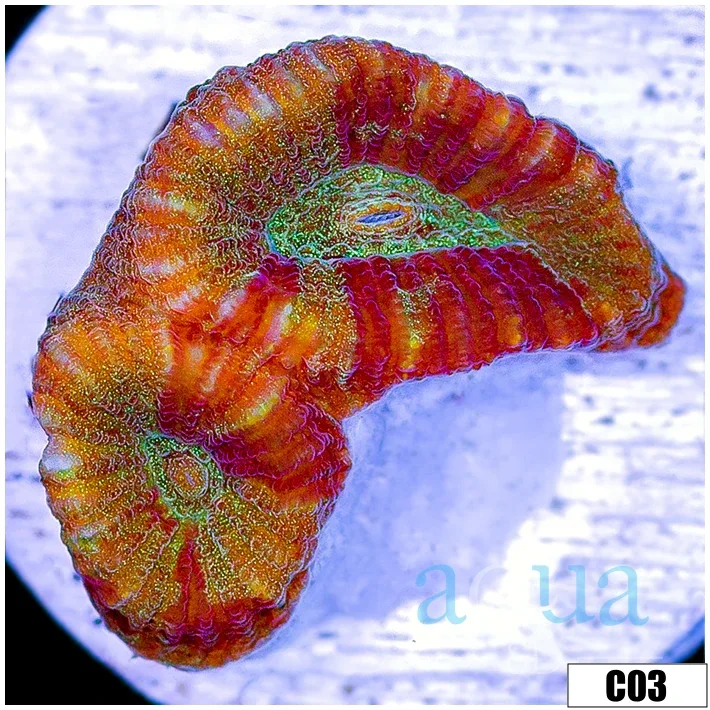
Coral care · Detailed tutorial · About 8 minutes · Beginner friendly
The key habit: Keep water chemistry stable—Favia tolerates normal reef ranges, but does not respond well to sudden swings in alkalinity, salinity, temperature, or nutrients.
In this guide
- What Favia is and where it comes from
- Setting up the right light and flow
- Placement and spacing in your tank
- Acclimation and dipping your new coral
- Feeding and nutrition
- Water parameters to test and maintain
- What healthy and stressed Favia look like
1. What Favia is and where it comes from
Favia corals (scientific name Favia sp.) belong to the Faviidae family and are commonly known as brain corals, moon corals, and pineapple corals. They are native to the Indo-Pacific, inhabiting reef slopes and lagoons with low to moderate water flow, often growing on rock surfaces in shallow to moderate depths and preferring indirect lighting. Favia corals are relatively easy to take care of and make them a great beginner coral. The basic structural unit of Favia is the polyp, a small, anemone-like creature, and each polyp in a colony is genetically identical and contributes to the growth of the coral skeleton, primarily composed of calcium carbonate.
2. Setting up the right light and flow
Lighting
A practical lighting range for many Favia corals is around 75–150 PAR, with some colonies adapting slightly higher if acclimated slowly. Set up low to medium lighting (50–150 PAR) to prevent bleaching while supporting the coral's zooxanthellae; most species respond well to moderate lighting that mimics their natural reef environment. New Favia corals should not be placed immediately into intense light unless you know they came from similar conditions.
Water flow
Favia requires low to moderate flow—just enough turbulent or gyre flow that provides water circulation without damaging the large, fleshy polyps. Configure gentle, indirect water flow that reaches the coral without creating too much turbulence around the polyps; too much flow, especially direct or strong currents, can harm the coral's tissue and interfere with feeding. Favia prefers moderate, indirect flow that is strong enough to keep debris from settling on the coral surface.
3. Placement and spacing in your tank
Favia is usually best placed on lower to middle rockwork or a stable sandbed area where it receives moderate light and indirect flow; placement should also account for sweeper tentacles, which can reach nearby corals after dark. Determine optimal placement near the bottom of your tank where the coral will receive appropriate lighting without bleaching; Favia corals thrive in lower light areas compared to SPS corals, making bottom placement ideal for most tank setups. Plan adequate space around each specimen to accommodate their long sweeper tentacles, which can extend several inches at night to sting neighboring corals.
4. Acclimation and dipping your new coral
Gather before you start
- Quarantine container or low-flow bowl (optional, for dipping)
- Soft brush or old toothbrush
- Dip solution (if desired, following product instructions)
- Turkey baster or powerhead for gentle rinsing
- Your display tank with lights dimmed or off
Acclimation steps
- Temperature acclimate the coral. Float the Favia in a container of display tank water for 15–20 minutes to equalize temperature and reduce shock.
- Inspect for pests and damage. Inspect for pests, tissue damage, and algae; dip when appropriate and follow product directions.
- Start in moderate or slightly lower light. Start in moderate or slightly lower light. Create an acclimation checklist that includes gradual light exposure over 2–3 weeks, starting with the coral in a shaded area and slowly moving it to its permanent location.
- Use gentle to moderate indirect flow. Use gentle to moderate indirect flow.
- Avoid repeated moves after placement. Avoid repeated moves after placement. Once positioned, allow the coral to settle for at least a week before deciding to relocate it.
5. Feeding and nutrition
While Favia can survive on light alone, supplemental feeding produces noticeably better results. Occasional target feeding 1–3 times per week promotes growth, color, and polyp extension. A few times a week, you can take a special coral food or just some thawed mysis or brine shrimp, and squirt it close to your Favia coral using a coral feeder or just a turkey baster; feeding at night is often recommended, and you can consider turning off the flow for a bit so the food doesn't get swept all over the tank.
6. Water parameters to test and maintain
Maintain calcium at 380–450 ppm, alkalinity at 8–9.5 dKH, magnesium at 1250–1350 ppm, nitrates at 5–15 ppm, phosphates below 0.10 ppm, temperature at 75–80°F, and salinity at 1.024–1.026. [1]
Favia corals are relatively hardy and can tolerate slight fluctuations in water parameters, though maintaining stable conditions is crucial for optimal health and vibrant coloration. Favia corals rely on stable water chemistry for healthy calcification and tissue maintenance; fluctuations in alkalinity, calcium, or pH can disrupt their ability to build skeleton and maintain tissue, leading to recession or stunted growth; sudden changes in temperature or salinity can stress their symbiotic zooxanthellae, sometimes resulting in bleaching or tissue loss.
Test alkalinity twice weekly in growing systems. Regular water changes (10–15% weekly) help maintain stability and prevent nutrient imbalances.
7. What you notice and what to check
| What you notice | What to check next |
|---|---|
| Polyps fully extended, vibrant color | Coral is healthy; maintain current conditions |
| Polyps remain tightly retracted during the day | Check if flow is too strong; reduce intensity or redirect away from coral |
| Pale or washed-out color; bleaching | Light is likely too intense; move to lower-light area or reduce PAR by 20–30% |
| Dull color, poor polyp extension, slow growth | Light may be too low; gradually increase PAR or move to brighter location |
| Tissue pulling away from skeleton (recession) | Test alkalinity, calcium, and salinity; check for aggressive neighbors; improve water quality |
| White or exposed skeleton edges | Poor water quality or parameter swings; perform water change and stabilize chemistry |
Your care log
Placed on: ______ Location in tank: ______
Light (PAR): ______ Flow setting: ______
Date first fed: ______ Foods used: ______
Temperature: ______ Alkalinity (dKH): ______
Salinity: ______ Calcium (ppm): ______
Sources
Checked October 17, 2026.
- Top Shelf Aquatics, "All Star Favia Coral," https://topshelfaquatics.com/products/wwc-all-star-favia-coral-3
- Saltwater Aquarium Blog, "Favia coral care: tank size, compatibility, feeding & ID," https://www.saltwateraquariumblog.com/favia-coral-care-guide/
- Fancyreef, "Favia Coral Care: Light, Flow, Feeding, Parameters," https://fancyreef.com/favia-favites-corals-care/
- Extreme Corals, "Favia Coral Care Guide," https://www.extremecorals.com/CoralCare_Favia.html
- Extreme Corals, "Favia Coral Care Guide: How to Keep Moon and Brain Corals Healthy in a Reef Tank," https://www.extremecorals.com/blog/care-requirements-of-favia-in-home-reef-aquariums.html
- Top Shelf Aquatics, "Favia Coral: Complete Care Guide for Thriving LPS Corals in Your Reef," https://topshelfaquatics.com/blogs/news/favia-coral-complete-care-guide
- The Sea, "Favia," https://thesea.org/favia/
- Fantaseareef, "Favia Coral Care and Growing," https://fantaseaaquariums.com/saltwater/favia-coral-care/