

Emerald Crab Care: Feeding, Hiding Spots and Reef Safety
You'll learn how to keep an Emerald Crab healthy and reef-safe by feeding it well, providing the right tank setup, and monitoring its behavior.
Invertebrate care · Detailed tutorial · About 10 minutes · Beginner friendly
The key habit: Keep your Emerald Crab well-fed every day. A hungry Emerald is a problem Emerald — large or starved specimens will pick at LPS, zoanthids, sleeping fish, or small shrimp at night.
Shop the Emerald Crab; Atl. – Mithraculus sculptus
In this guide
- What your Emerald Crab is
- Tank setup: size, rockwork and hiding
- Reef safety and tank mates
- Feeding and diet
- Water parameters and stability
- Acclimation
- Health and molting
1. What your Emerald Crab is
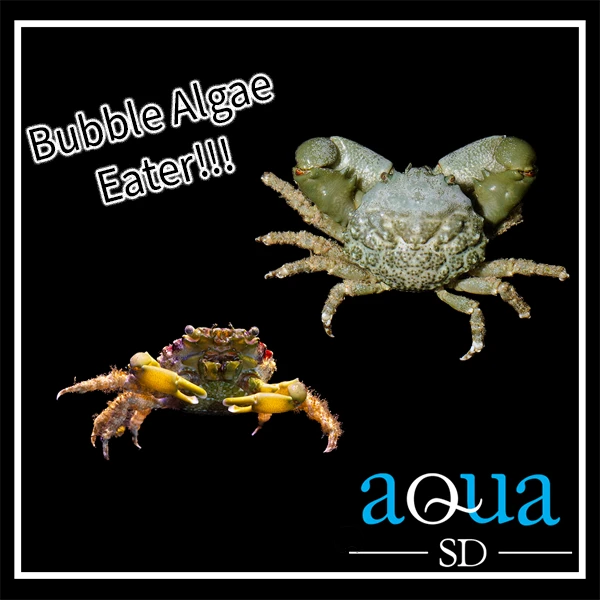
The emerald crab, Mithraculus sculptus, is a quiet, shy, and fun to watch member of the reef clean up crew. Emerald crabs come from Caribbean reefs where they have plenty of places to hide during the day. Since they are nocturnal, you most likely will not see them during the day, so long as the aquarium that they are in has a sufficient amount of rock and places for them to hide.
This small, heavily-armoured green crab is primarily herbivorous, preferring a diet of various types of algae, including adherent fleshy green algae, some bubble algae, and even coralline algae. They will also eat leftover meaty foods and organic debris.
2. Tank setup: size, rockwork and hiding
Emerald crabs are hardy, algae-eating invertebrates that play a crucial role in controlling nuisance algae in reef aquariums. Emerald crabs are nocturnal scavengers, spending most of the day hiding in rock crevices before emerging at night to graze on algae and organic debris.
A minimum of 20 gallons for a single emerald crab is recommended, with an additional 20-25 gallons for each additional specimen. Rock work arrangement significantly impacts emerald crab behavior and success. Create multiple caves and overhangs using live rock, ensuring each crab has access to several potential hiding spots.
These little guys also love live rock so make sure they have some that make little caves they can hide in during their molting process.
3. Reef safety and tank mates
The emerald crab is generally considered to be a reef safe invertebrate. They are not overtly aggressive towards other fish or invertebrates in your tank, and they will generally leave your corals alone. However, if there is insufficient food for this crab, it may put coral polyps on the menu.
If the emerald crab is provided with a sufficient diet and enough hiding places, it will likely be able to peacefully coexist with shrimp, along with other invertebrates and fish. Never keep more than one Emerald Crab per tank, as they are territorial.
4. Feeding and diet
The single most important rule is to keep them well-fed. Ensure that they have adequate supplies of food every day so they do not become famished and begin feasting on your tank's inhabitants.
Many aquarists supplement the Emerald Crab's diet with dried seaweed and chopped meaty foods, such as shrimp, as well as a quality pellet fish food. Emerald crabs are omnivorous and require a varied diet to thrive.
In a mature reef tank with plenty of algae and detritus, your Emerald Crab may find much of its own food. Supplement with macro-algae, small meaty foods, and quality pellets several times per week to be safe.
5. Water parameters and stability
Like all marine inverts, they are extremely sensitive to copper-based medications and parameter swings. Maintain these ranges consistently:
| Parameter | Range |
|---|---|
| Temperature | 72-78°F |
| Specific gravity (salinity) | 1.023-1.025 |
| pH | 8.1-8.4 |
| Alkalinity (dKH) | 8-12 |
| Calcium | 400-450 ppm |
| Magnesium | 1250-1350 ppm |
pH levels need to remain stable between 8.1-8.4, and alkalinity should be maintained at 8-12 dKH. Calcium levels of 400-450 ppm support proper molting, while magnesium should stay around 1250-1350 ppm. Test your water regularly and perform partial water changes to keep parameters stable.
6. Acclimation
Gather before you start
- Bucket or container to hold the crab temporarily
- Air line and air stone (for drip acclimation)
- Designated acclimation container
Drip acclimate over 60–90 minutes when introducing. Usually, a drip acclimation for a couple of hours is suggested before introducing the crabs to the new tank altogether.
1. Float and temperature-match
Float the shipping bag in your tank for 15 minutes to let the temperature equalize.
2. Drip acclimate
Set up a drip line from your tank to the acclimation container, allowing tank water to slowly drip into the container at a rate of about 2-4 drips per second. Continue for 60-90 minutes.
3. Introduce to the tank
Once acclimation is complete, gently pour the crab and acclimation water into your tank near rockwork where it can find shelter.
7. Health and molting
Molting is when your crab outgrows its current shell and essentially shed it entirely, which also helps get rid of any unwanted organisms that may have attached themselves to the shell along with damaged parts of the shell.
Leave the molted shell in their tank. Crabs eat their old shell as it contains vital nutrients and minerals. Provide extra hiding places during and after molting, as the crab is vulnerable when its new shell is still soft.
What you notice and what to check
| What you notice | What to check next |
|---|---|
| Crab hidden all day, no night foraging | Hunger or stress; check if food was left uneaten, increase feeding |
| New shell forming or crab pale | Molting in progress; provide extra shelter and avoid disturbance |
| Eating corals or small invertebrates | Starvation; feed more frequently and monitor closely |
| Inactive or lethargic behavior | Water parameters (copper presence, ammonia, nitrite, nitrate, pH, salinity) |
| Missing limbs or damaged shell | Recent molt or attack; provide more hiding spaces |
| Crab actively foraging at night | Healthy behavior; crab is well-adjusted |
Your care log
Added on: ______ Tank size: ______ gallons
Water parameters checked: ______ Temperature: ______ pH: ______
First feeding: ______ Foods offered: ______
First molt observed: ______ Hiding spots provided: ______
Notes: ______
Sources
Checked October 13, 2026.
- Fishkeeper.co.uk, "Emerald Crab – Mithraculus sculptus", https://www.fishkeeper.co.uk/fish/marine/crabs-shrimp/emerald-crab
- Saltwater Aquarium Blog, "Emerald crab care guide: algae eating, facts & compatibility", https://www.saltwateraquariumblog.com/emerald-crab/
- Top Shelf Aquatics, "Emerald Crab", https://topshelfaquatics.com/products/emerald-crab
- Reef Exclusive, "Emerald Crab (Mithraculus Sculptus)", https://reefexclusive.com/products/emerald-crab
- Fish Laboratory, "Emerald Crab (Mithraculus Sculptus): Ultimate Care Guide", https://www.fishlaboratory.com/fish/emerald-crab/
- ReefApp.net, "Mithraculus sculptus (Emerald/Mithrax Crab)", https://reefapp.net/en/encyclopedia/mithraculus-sculptus
- Squeaky's Aquatics, "Emerald Crab (Mithraculus sculptus) | Live Saltwater Reef Cleanup Crew, Bubble Algae Eater", https://squeakysaquatics.com/products/emerald-crab-mithraculus-sculptus-saltwater-reef
- Reef Tank Resource, "Emerald Crab Care (Clean-Up Crew Hero)", https://reeftankresource.com/emerald-crab-care-clean-up-crew-hero/
- Aquamarine Power, "Emerald Crab Care Guide: Complete Mithraculus Sculptus Info", https://www.aquamarinepower.com/emerald-crab/