

Cleaner Wrasse Care: Tank Setup, Feeding and Acclimation
You'll learn how to set up a reef tank for a Cleaner Wrasse, choose compatible tank mates, feed it properly, and acclimate it safely so it thrives.
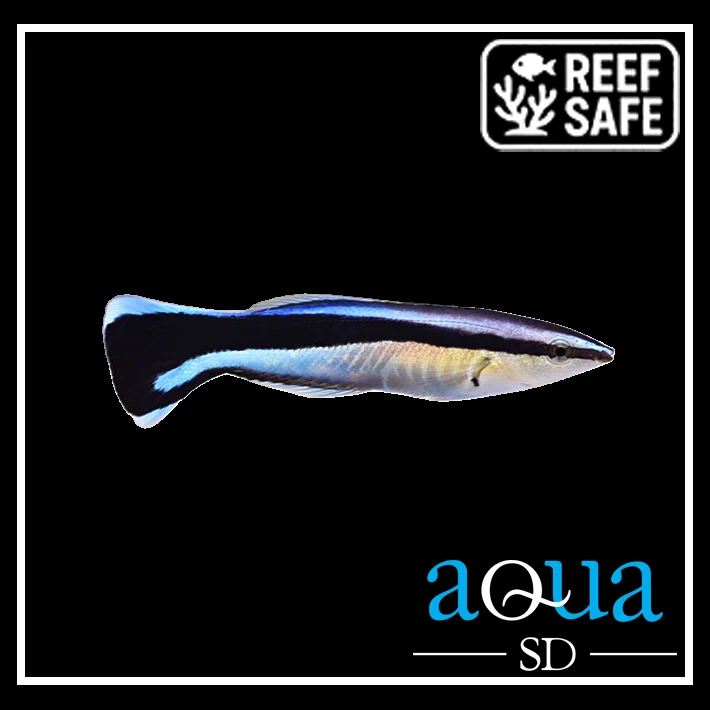
Fish care · Detailed tutorial · About 12 minutes · Beginner friendly
The key habit: Feed your Cleaner Wrasse 3–5 small meals per day with meaty frozen foods. A Cleaner Wrasse should not be expected to survive solely by removing parasites from aquarium tankmates, as a typical home aquarium cannot provide the continuous natural food supply available on a wild reef.
In this guide
- What a Cleaner Wrasse is and where it comes from
- Tank size, setup, and equipment
- Tank mates and temperament
- The reality of feeding: parasites and prepared foods
- Water parameters and daily care
- Acclimation and quarantine
- Health signs and common issues
1. What a Cleaner Wrasse is
The Cleaner Wrasse is one of the most recognizable and behaviorally fascinating saltwater fish found on tropical coral reefs. In the wild, it sets up dedicated cleaning stations where larger fish line up to have parasites and dead tissue removed, and this behavior often carries over into the home aquarium. Cleaner wrasses attract 'clients' by performing a display dance, then swim along the surface of their host, removing parasites with their specialised mouth parts.
A Cleaner Wrasse will establish cleaning stations in your reef tank and spend much of its time patrolling and waiting for fish to visit. This creates a genuinely engaging display, but it comes with a critical challenge: Cleaner wrasses are not a parasite control tool — they are a specialized obligate cleaner with a calorie demand a captive system cannot satisfy through natural foraging alone. Buy one without a feeding plan, and you are buying a slow death.
2. Tank setup: Size, rockwork, and equipment
A mature, well-established reef of at least 90 gallons is the right environment for this species — one with abundant live rock, open swimming space, and overhangs or ledges where the wrasse can establish its cleaning stations and tuck in at night. This species does not require a deep sand bed for sleeping, instead seeking shelter within reef structure at night.
High water quality and strong, stable filtration are important, as is a tight-fitting lid; this species can and does jump when startled or chased. Moderate water movement, excellent oxygenation, and stable water quality are recommended. Provide multiple hiding spots in the rockwork and several "cleaning stations"—the wrasse will patrol these areas and wait for fish to visit [1,2].
3. Tank mates and temperament
This species tends to do best in larger, well-stocked systems where it has regular "clients" to service — in sparse or cramped setups, or alongside aggressive tankmates, it can become stressed, and a stressed Cleaner Wrasse may start picking at the slime coats of other fish rather than just their parasites.
Ideal tank mates are mid- to large-bodied, peaceful fish that will visit the wrasse's cleaning station. The species shines in a tank stocked with mid-to-large-bodied fish that benefit from cleaning. Tangs are the classic pairing — a yellow tang, blue hippo tang, naso tang, or tomini tang will visit a cleaning station daily, and the relationship visibly reduces stress in the tang. Larger angelfish and groupers also work well [1,3].
Their disposition toward tankmates is non-aggressive, though persistent cleaning attention can irritate some fishes. Avoid small or aggressive fish and other wrasse species. Individuals have been observed picking at the mantles of Tridacna clams, so clam keepers should watch newly introduced specimens closely. Keep a single wrasse per tank unless you have extensive experience and a very large system [1,2].
4. Feeding: The make-or-break factor
This is where most Cleaner Wrasses fail. These wrasses have a high metabolism and need to feed frequently throughout the day on small meaty foods or live parasites found on other fish.
Several small meals throughout the day are strongly recommended. A Cleaner Wrasse should not be expected to survive solely by removing parasites from aquarium tankmates, as a typical home aquarium cannot provide the continuous natural food supply available on a wild reef. Feed 3–5 times daily with:
- Frozen mysis shrimp
- Frozen brine shrimp
- Frozen krill or copepods
- Small pieces of fresh fish or mussel meat
Monitor body condition carefully. A specimen that appears active but gradually becomes thin may not be receiving sufficient nutrition despite occasionally accepting food. A healthy wrasse has a round, full belly, not a pinched or concave one [1,2,3].
5. Water parameters and daily maintenance
Cleaner Wrasses do not tolerate unstable water conditions. Use reef-standard parameters [1]:
| Parameter | Range | Notes |
|---|---|---|
| Temperature | 72–78°F | Avoid swings larger than 2°F per 24 hours |
| Salinity (SG) | 1.020–1.025 | Reef standard; use a refractometer |
| pH | 8.1–8.4 | Stable value matters more than exact number |
| Alkalinity (dKH) | 8–12 | Critical for reef coexistence |
| Nitrate | Under 10 ppm | Preferred; higher stresses the wrasse and clients |
| Ammonia/Nitrite | 0 ppm | Must be zero; cycle tank fully before adding |
Perform water changes weekly and test parameters regularly. Moderate water movement, excellent oxygenation, and stable water quality are recommended. Any fluctuation—especially a sudden temperature change—can trigger a feeding strike and rapid decline [1,2].
6. Acclimation and quarantine
Gather before you start
- A quarantine tank (10–20 gallons minimum) with heater, airstone, and dim lighting
- Salinity refractometer
- Small net or clear specimen cup
- Drip line or airline tubing with flow control
- Frozen mysis shrimp or small foods
- Observation log (paper and pen)
Cleaner wrasse are sensitive to changes in salinity, temperature, and pH. Drip acclimation is the safest way to introduce one to a new tank.
1. Float the bag
Float the bag for 15 minutes to equalize temperature. Then drip tank water into the bag or a bucket at about two to four drops per second for 45 to 60 minutes. Do not rush this step [1,2].
2. Transfer gently
During acclimation, keep lights dim and avoid chasing the fish with a net. Use a clear container or specimen cup to transfer the wrasse from the bucket to the tank. Never dump bag water into your display.
3. Quarantine for 14–21 days
Quarantine in a darkened, parameter-stable QT system for 14-21 days is strongly recommended — this is also the window where you confirm the fish is eating before committing it to the display. It also gives you a quiet place to train the fish onto frozen foods before competition from display tank mates.
Stress from rough handling often triggers a hunger strike. A calm, dim first day in quarantine can make the difference between a fish that eats and one that wastes away. Offer food 6–12 hours after introduction if the wrasse seems calm, then feed 2–3 times daily during quarantine. Watch carefully for any signs of parasites or disease [1,2,3].
7. Health signs and common issues
Signs of a healthy Cleaner Wrasse:
A healthy cleaner wrasse is active, alert, and interested in food. It patrols constantly, establishes a cleaning station, and accepts food eagerly within 30 seconds of offering [1,2].
Red flags to watch for:
Watch the fish daily for a sunken belly, rapid breathing, clamped fins, or flashing against rocks. Any change in appetite is a warning sign. Symptoms include white, stringy feces, eating without weight gain, and gradual decline despite normal water chemistry.
A small but real percentage of wild-caught cleaner wrasses arrive with internal parasites that do not respond to standard external treatments. Symptoms include white, stringy feces, eating without weight gain, and gradual decline despite normal water chemistry. If internal parasites are suspected, ask your aquarium supplier or veterinarian about deworming treatments [1,2,3].
Cleaner wrasses are prone to stress-related illnesses, especially when first introduced to a new system. Marine Ich (Cryptocaryon) and flukes are common, so a quarantine period before adding them to your display tank is highly recommended.
What you notice and what to check next
| What you notice | What to check next |
|---|---|
| Fish hides constantly and won't come out | Is the tank dark? Is there excessive noise or vibration? Dim lights and reduce disturbance for 24 hours. If hiding persists beyond 48 hours in quarantine, stress level is too high. |
| Fish ignores food for 24+ hours | Check temperature (should be 72–78°F), salinity (1.020–1.025), and ammonia/nitrite (must be 0). Offer live brine shrimp as a last resort. A starving fish may refuse food even if water is good. |
| Pinched or concave belly | Increase feeding frequency to 4–5 meals daily. Offer a variety of frozen foods and live copepods. If belly doesn't round out in 1 week, the fish may be too far gone. |
| Active but gradually thins despite feeding | Check for internal parasites or disease. Observe feces (should be brown, not white and stringy). Increase feeding and monitor water quality closely. Consider quarantine hospital tank if no improvement in 3 days. |
| Flashing against rocks or rapid breathing | Likely parasites. Quarantine immediately and do not move to display. Observe for white spots (marine ich) or rapid gill movement (flukes or stress). |
| Establishes cleaning station and actively cleans tank mates | Fish is thriving. Continue feeding schedule and monitor water parameters weekly. This is the behavior you want to see. |
Your care log
Placed on: ______
Quarantine started: ______
First feeding observed: ______
Moved to display on: ______
Feeding schedule: ______ times per day at ______ (times)
Tank mate(s): ______
Temperature: ______ °F
Salinity (SG): ______
pH: ______
Notes: ______
Sources
Checked October 20, 2026.
- Fishkeeper.co.uk, "Cleaner Wrasse (Labroides dimidiatus)" https://www.fishkeeper.co.uk/fish/marine/wrasses/cleaner-wrasse-bluestreak-cleaner-wrasse
- Top Shelf Aquatics, "Bluestreak Cleaner Wrasse Care" https://topshelfaquatics.com/pages/saltwater-fish/common-cleaner-wrasse
- FishStores.org, "Cleaner Wrasse Care Guide: Keeping Labroides dimidiatus Healthy" https://www.fishstores.org/species/cleaner-wrasse
- Aquarium Lab, "How to Care for Cleaner Wrasse: Tank, Diet, Compatibility" https://aquariumlab.co/articles/cleaner-wrasse-care-guide/
- Saltwater Fish, "Cleaner Wrasse – Wrasses Reef Safe" https://www.saltwaterfish.com/product-cleaner-wrasse
- Reef Beauties, "Cleaner Wrasse EXPERT (Labroides Dimidiatus)" https://reefbeauties.com/products/cleaner-wrasse-expert
- ReefBay, "Cleaner Wrasse Care Guide" https://reefbay.com/fish/cleaner-wrasse
- FishBase, "Labroides dimidiatus, Bluestreak cleaner wrasse" https://www.fishbase.se/summary/Labroides-dimidiatus.html
- OATA (Ornamental Aquatic Trade Association), "How to look after wrasse" https://ornamentalfish.org/what-we-do/advice-information/care-sheets/caresheets-marine-fish/how-to-look-after-wrasse/
- Aquarium Source, "Bluestreak Cleaner Wrasse 101: Diet, Tank, Mates and Size" https://www.aquariumsource.com/bluestreak-cleaner-wrasse/