

Cleaner Shrimp Care: Acclimation, Tank Setup and Health
You'll learn how to safely acclimate and care for a Cleaner Shrimp in your reef tank, and recognize signs of good health.
Invertebrate care · Detailed tutorial · About 12 minutes · Beginner friendly
The key habit: Acclimate your Cleaner Shrimp slowly via drip acclimation over at least an hour to avoid pH shock, and maintain stable water parameters with regular water changes to replenish iodine.
The Cleaner Shrimp - Lysmata amboinensis has sold: shop similar Shrimp →
In this guide
- What is a Cleaner Shrimp and where it lives
- Tank size and setup
- Water parameters and stability
- Temperament and reef tank mates
- Feeding and diet
- Acclimation: the slow drip method
- Molting, iodine, and signs of health
1. What is a Cleaner Shrimp and where it lives
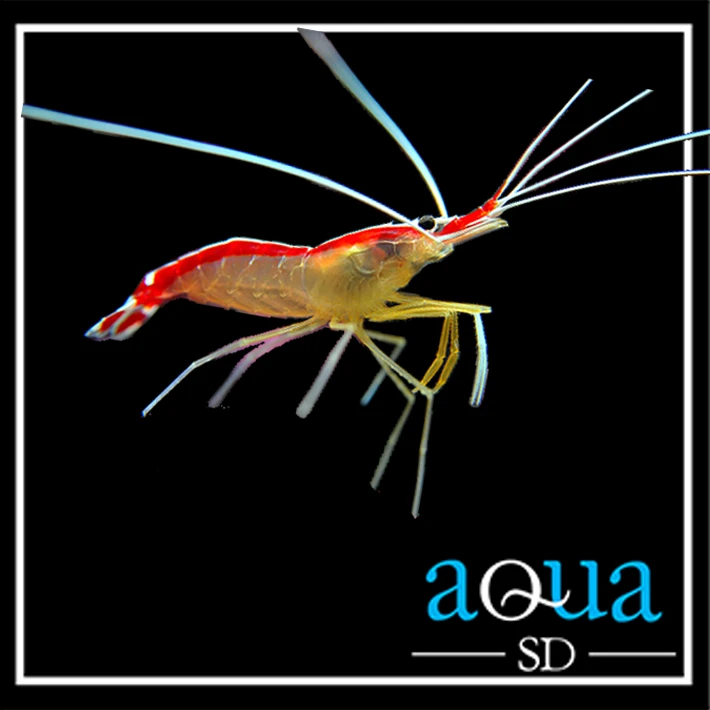
The Cleaner Shrimp (Lysmata amboinensis) is one of the most popular and recognisable invertebrates in the marine hobby, native to the Indo-Pacific. It has an orange body, dorsal red stripe with superimposed white line, long white antennae and caudal spots.
It establishes cleaning stations where it removes parasites, dead tissue, and debris from visiting fish — including large predatory species that would normally predate shrimp. It enters even the mouth and gills without being preyed upon. This symbiotic behavior makes it a valuable addition to a mature reef aquarium.
2. Tank size and setup
An established, minimum aquarium size of 30 gallons is recommended to house one, or a group of, Cleaner shrimp. Generous live rock with caves and crevices will mimic the Cleaner shrimp's natural environment. Provide plenty of hiding places and visual breaks so the shrimp feels secure.
They are compatible in pairs or small groups, though a single shrimp will do well. Cleaner shrimp are reef-safe and peaceful with corals and other invertebrates.
3. Water parameters and stability
Maintaining stable water parameters is a component to the success of keeping this invertebrate; Cleaner shrimp are intolerable of high nitrates. Recommended water conditions: 76-78° F, dKH 8-12, pH 8.1-8.4, salinity 1.024-1.026.
Regular water changes are necessary to replenish iodine that is important for the proper molting of Cleaner shrimp. Iodine is essential because the shrimp must build new shells as it grows.
4. Temperament and reef tank mates
Cleaner Shrimp make fascinating additions to the mature reef aquarium, where they will frequently be observed cleaning the parasites off of small fishes. Skunk Cleaner Shrimp should not be kept with more aggressive fish species such as Hawkfish, Lionfish and Triggerfish who may go after them.
Occasional specimens may take food from corals and slower creatures, so observe carefully to ensure that everything is receiving its fair share of food.
5. Feeding and diet
The shrimp is omnivorous and bases its diet on both detritus and organic remains, as well as parasites and bacteria that it removes from the surface of fish. In a mature reef with an active feeding schedule, the shrimp will often find enough food on its own.
Cleaner shrimp will readily accept a variety of flake, pellet, and frozen foods. Feeding them is relatively easy because they will eat nearly any meaty type of fish food that you put in the tank, just ensure that they are getting their fair share.
6. Acclimation: the slow drip method
The Skunk shrimp is usually very hardy if they have been acclimated slowly. This is the single most important step to keeping your shrimp healthy.
Gather before you start
- Drip line or airline tubing (thin plastic tubing works)
- Container for the shrimp (a small cup or breeding box, or a separate acclimation container)
- Clamp or valve to control water flow
- Test kit for salinity (optional but helpful)
1. Place the shrimp in a holding container. When you bring the shrimp home, float it in the tank in its shipping bag for 15 minutes to equalize temperature, then carefully move it to a small cup or acclimation container.
2. Start the drip. It's recommended to acclimate them to your aquarium water over a period of an hour or more to avoid pH shock. Use an airline tunic tied in a knot or a small valve to create a slow drip—roughly one drip per second. Direct the tube from your tank to the holding container.
3. Let it drip for one hour. During this time, water from your tank gradually mixes with the shipping water, allowing the shrimp's body to adjust to the new pH, salinity, and temperature.
4. Release into the tank. After an hour or more, gently net the shrimp and place it into the tank near some rockwork. Do not dump the acclimation water into your tank.
7. Molting, iodine, and signs of health
Don't be alarmed if you look in your tank one day and see what appears to be a dead shrimp; look around the tank and if the shrimp is indeed still alive, then what you're looking at is the exo-skeleton that they shed every once in a while. You will need to periodically add an iodine supplement to the water because they use iodine in building their new exo-skeleton.
What you notice and what to check next
| What you notice | What to check next |
|---|---|
| Shrimp hides and doesn't come out for hours | Check water parameters (pH, salinity, temperature); may indicate stress or post-acclimation adjustment |
| Empty shell-like exoskeleton in the tank | This is normal molting; the shrimp is still alive—don't remove the shell, as they eat it for nutrients |
| Shrimp looks pale or has dull coloring | Check iodine levels and water quality; may need iodine supplement or water change |
| Shrimp is active, extends antennae, ventures into the open | Shrimp is healthy and establishing its cleaning station |
| Redness or discoloration on the body | Water parameter issue; test salinity, pH, and check for ammonia |
| Shrimp grazes on live rock and scavenges | Normal and healthy feeding behavior |
Your care log
Acclimated on: ______ Tank temperature: ______ Salinity (SG): ______
First feeding: ______ Iodine supplement schedule: ______
Molt observed on: ______ Overall notes: ______
Sources
Checked October 10, 2026.
- Fishkeeper.co.uk, "Cleaner Shrimp-Lysmata amboinensis", https://www.fishkeeper.co.uk/fish/marine/crabs-shrimp/cleaner-shrimp-
- AquariumBreeder.com, "Lysmata amboinensis – Detailed Guide: Care, Diet, and Breeding", https://aquariumbreeder.com/lysmata-amboinensis-detailed-guide-care-diet-and-breeding/
- Fishlore.com, "Skunk Cleaner Shrimp Care (Lysmata amboinensis)", https://www.fishlore.com/profile-skunkcleanershrimp.htm
- Aquatics Unlimited, "SHRIMP – CLEANER Lysmata amboinensis", https://aquaticsunlimited.com/product/shrimp-cleaner-lysmata-amboinensis/
- Tropical Marine Centre, "Discover Lysmata Amboinensis: The Cleaner Shrimp", https://tropicalmarinecentre.com/ib/cleaner-shrimp-10450
- ReefFlexSD, "Cleaner Shrimp – Lysmata amboinensis", https://reefflexsd.com/products/cleaner-shrimp-lysmata-amboinensis