

Chalice Coral Care: Light, Flow and Feeding
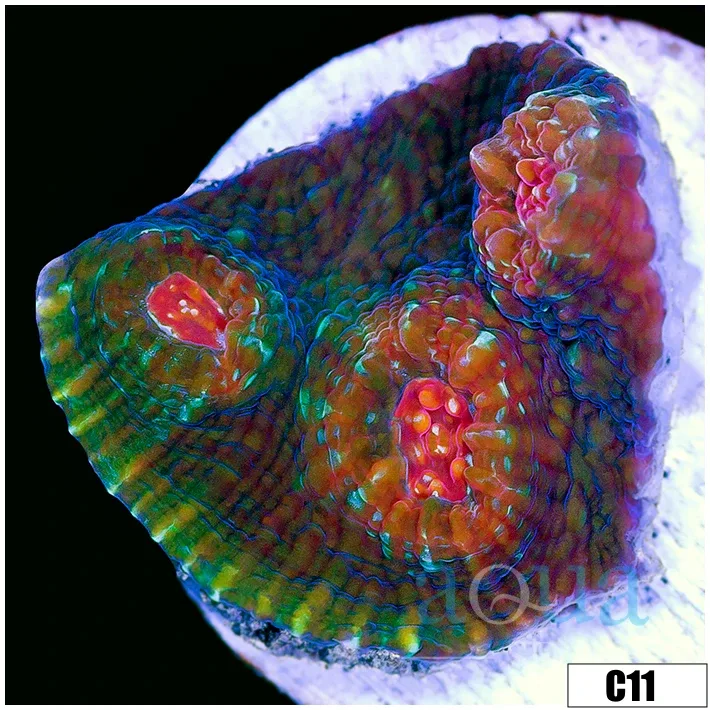
Coral care · Detailed tutorial · About 12 minutes · Beginner friendly
The key habit: Chalice corals need moderate light, gentle flow, plenty of space, and regular feeding to keep their stunning colors and polyp extension. Consistency with lighting and parameters matters more than pushing to extremes.
The ASD Evil Crocodile Chalice has sold: shop similar LPS Corals →
In this guide
- What chalice corals are and where they come from
- Setting up light and placement
- Water flow and circulation
- Acclimation and dipping
- Feeding and nutrition
- Water parameters and stability
- Spacing and tank mates
1. What Chalice Corals Are and Where They Come From
Chalice corals have the scientific names Echinophyllia sp., Enchinopora sp., Oxypora sp. and belong to the large polyp stony (LPS) coral family. In their natural habitat across Indo-Pacific reef systems, chalice corals typically inhabit mid-depth zones where they receive moderate lighting and water flow. They often grow on reef slopes and overhangs, adapting to various light conditions by adjusting their zooxanthellae density and pigmentation.
Chalice corals form plate-like colonies with undulating surfaces. Each specimen develops a unique color pattern and eye-like markings that make them highly prized by collectors. Unlike fast-growing branching corals, chalices grow slowly and deliberately, rewarding patient, attentive care with deepening color and gradual expansion.
2. Setting Up Light and Placement
Lighting is where most chalice keepers go wrong. Chalices don't like to be blasted with intense light. In fact, too much light is one of the quickest ways to lose their brilliant colouration. [1]
Chalice corals generally prefer moderate lighting intensities, with PAR values between 75-150 at the coral surface. [2] Some species like Mycedium (Raja Rampage) do best with more light while other species like your typical rainbows (Echinophyllia) will prefer light in the 100-150 range and still there are other species of coral like Oxypora which seem to do best in the 50-100 range. [2]
Placement should be bottom / sand bed. This means your chalice belongs in the lower portion of your aquascape—either on sand, on rockwork at the bottom, or on a mid-level rock shaded from above. Place them towards the bottom or shaded areas of your tank. If you're running high-powered LEDs, make sure they're not directly under the strongest point. [2]
When you first introduce your chalice, start even lower and with reduced lighting intensity. Acclimation to new lighting conditions requires patience and observation. When introducing chalice corals to your system, start with reduced photoperiods and intensity, gradually increasing over 2-3 weeks. [2]
Watch for color changes. If your Chalice starts losing vibrancy or turning pale, it may be getting too much light. [2]
3. Water Flow and Circulation
Echinophyllia prefers gentle to moderate indirect flow. Flow should keep the coral clean, prevent detritus from settling on the tissue, and support gas exchange without blasting the coral directly. [2]
This is the opposite of what many SPS corals need. You do not want a powerhead aimed at your chalice. Instead, arrange your flow so that current reaches it gently from the sides or from above, never as a direct blast. Good Echinophyllia flow should move gently across the colony, prevent detritus from collecting on plates or edges, allow normal tissue inflation, avoid direct powerhead blasts, and support feeding response and waste removal. [2]
If your chalice's tissue starts to recede along the edges, excessive flow is often the culprit. Strong direct current can cause tissue recession or irritation where the flesh meets the skeleton. [2]
4. Acclimation and Dipping
Gather before you start
- Acclimation container or float box
- Airline and drip line (or a siphon with a valve)
- Coral dip (iodine or oil-based formulation; optional but recommended)
- Turkey baster or coral feeder
- Quarantine container (optional, for separate observation)
Temperature matching: Float your chalice in its shipping bag for 20–30 minutes to equalize temperature with your tank water.
Drip acclimation: Set up a slow drip line from your display tank to the acclimation container at about 2–4 drops per second. Let this run for 1–2 hours, gradually acclimating the coral to your exact water parameters.
Coral dipping: After drip acclimation, acclimate slowly by drip or by matching temperature and salinity over 20–30 minutes; avoid bright light for the first day. Always coral-dip new Montipora before adding it to your display — an iodine- or oil-based coral dip clears many hitchhikers. [6] Use the dip for 5–10 minutes, gently agitating the coral to remove any pests or algae.
Initial placement: After acclimation, place your chalice in low light and low flow for the first week. The first 7 days are observation-only – lights low, no new tankmates, light feeding only. Days 7-14 are evaluation – is the chalice eating, exploring, showing normal behavior? If yes, resume normal lighting and feeding. [6]
5. Feeding and Nutrition
This is the part that separates thriving chalices from struggling ones: chalices must be fed regularly. Echinophyllia chalices are photosynthetic and receive much of their nutrition from symbiotic algae living in their tissue. However, they also benefit from supplemental feeding. [2]
Their polyps extend at night and will accept small meaty foods such as mysis shrimp, brine shrimp, or coral-specific pellets. Feeding 1–3 times per week promotes coloration, polyp expansion, and healthy growth. [2]
Feeding protocol:
- Turn off circulation pumps for 15–20 minutes so food particles don't disperse before the coral can capture them.
- Target feed after lights dim. They also will actively feed at night after the lights are out. Wait about an hour or so after lights out and look in on them and you will see what I'm talking about. [1]
- Use a turkey baster or coral feeder. You can target feed them mysis or brine shrimp using a modified two-liter soda bottle. Cut the bottom out and then place it over the chalice and then using a turkey baster, gently squeeze in some food while keeping the two-liter bottle there for a few minutes allowing them time to grab the food. [1]
- Observe polyp response. Gently deliver food directly to extended polyps, watching for the characteristic polyp inflation that indicates successful capture. [2]
- Resume flow after 15–20 minutes.
Avoid overfeeding, which can create water quality issues. [2]
6. Water Parameters and Stability
Water temperature – 75°F – 82°F (24°C – 28°C), keep a steady temperature. Very low levels of nitrate and low phosphate levels. Maintain calcium levels (400 – 450 ppm) and magnesium around 1300 (nsw levels). [1]
More recent guidance refines these ranges. Temperature: 74–80°F (23–27°C) pH: 8.1–8.4 Salinity: 1.024–1.026 Flow: Low to moderate, enough to bring nutrients to the polyps without blasting the plates Lighting: Moderate, ideally 50–150 PAR. [3]
For alkalinity, aim for 8–10 dKH and hold it steady. Montipora require stable calcium, alkalinity, and magnesium levels. Dosing, kalkwasser, 2-part, or calcium reactors will be needed in SPS-heavy systems. While this is written for Montipora, the principle applies to chalices as well—stability prevents tissue recession and bleaching. [6]
Test weekly and dose consistently if needed. Do not chase perfect numbers; consistency prevents the parameter swings that stress chalices.
7. Spacing and Tank Mates
The Chalice coral is considered semi-aggressive and they may have sweeper tentacles that will harm neighboring corals. [1] They are semi-aggressive, extending sweeper tentacles at night to protect their space. [3]
They extend potent sweeper tentacles at night that can sting corals well beyond direct contact, so they need more clearance than their flat appearance suggests. [2] Give your chalice 4–6 inches of clearance from neighboring corals in all directions.
Chalice corals are compatible with most peaceful reef fish and invertebrates. Avoid aggressive species that may nip at the polyps. [3] Most reef-safe fish, shrimp, and snails coexist peacefully with chalices.
What you notice and what to check
| What you notice | What to check next |
|---|---|
| Polyps fully extended during day and night | Feeding is working; maintain current routine |
| Polyps retracted or not extending | Check light intensity (too much?), flow (too strong?), or water parameters; increase feeding |
| Color fading or turning brown | May indicate too much light, or low nutrients; reduce light position or intensity, increase feeding |
| Tissue receding at edges | Usually excess flow or parameter swings; check water stability and reduce flow intensity |
| Pale or washed-out appearance | Likely too much light; move chalice lower or reduce light intensity |
| Visible algae on surface | Target feed more selectively; dip and clean if algae persists |
Your care log
Placed on: ______ Light (PAR): ______ Flow setting: ______
Acclimation completed: ______ First feeding date: ______
Weekly feeding schedule: ______ Water test results (alkalinity): ______
Observations after 2 weeks: ______
Color notes: ______
Sources
Checked October 18, 2026.
- FishLore, "Chalice Coral," https://www.fishlore.com/coral/chalice-coral.htm
- Reef Chasers, "Chalice Corals," https://reefchasers.com/blogs/reef-chasers-coral-care-guide/chalice-corals
- Whitlyn Aquatics, "Chalice Coral Care Guide," https://www.whitlynaquatics.com/blogs/news/chalice-coral-care-guide-echinophyllia-species
- Eastwood Aquarium, "Chalice Coral (Echinophyllia sp.) — Care Guide," https://eastwoodaquarium.com.au/coral-profiles/chalice-coral
- Aquariumsource, "Goniopora Coral 101: Colors, Feeding, Fragging, Size, Mates," https://www.aquariumsource.com/goniopora-coral/
- Fast Aquatics, "Mummy Eye Chalice care guide (Echinophyllia sp.)," https://fastaquatics.com/corals/mummy-eye-chalice/