

Blue Jaw Trigger Care: Tank Setup, Feeding and Acclimation
Blue Jaw Trigger Care: Tank Setup, Feeding and Acclimation
Blue Jaw Trigger care starts with knowing this fish's origin—it's native to the Pacific Ocean around Indonesia and Hawaii. This is one of the most reef-friendly triggerfish available, though it needs space and careful introduction to thrive.
Fish care · Detailed tutorial · About 10 minutes · Beginner friendly
The key habit: Give your Blue Jaw Trigger at least 125 gallons with plenty of swimming room and hiding spaces, and introduce it slowly with dimmed lights and shelter so it settles in without fear.
Shop the Blue Jaw Trigger Male Medium
In this guide
- What is a Blue Jaw Trigger and why it's different
- Tank size and rockwork setup
- Tank mates and temperament
- Feeding your Blue Jaw Trigger
- Water parameters and quality
- Acclimation: Getting your trigger settled
- Signs of good health
1. What Is a Blue Jaw Trigger and Why It's Different
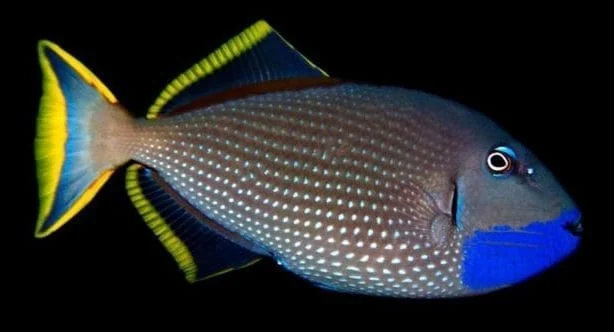
The Blue Jaw Trigger is a striking open-water triggerfish known for its metallic blue-green body, yellow accents, and the male's bright blue jaw and throat. An adult Blue Jaw Trigger can reach a size of approximately 8 inches.
It is one of the more aquarium-friendly triggerfish and is generally less destructive than many other trigger species. All triggers in the genus Xanthichthys are considered reef safe because they will not nip at coral. This makes the Blue Jaw unusual among triggerfish—most are too destructive for reef tanks. However, caution is still needed with invertebrate cleanup crews.
2. Tank Size and Rockwork Setup
A minimum 125 gallon aquarium that is at least 12″+ wide is ideal. Your tank requires plenty of swimming room, excellent filtration, strong water movement, secure rockwork, and a tight-fitting lid to prevent jumping.
The Blue Jaw trigger appreciates some live rock in the aquarium, especially caves and crevices to take refuge in if felt threatened. Provide ample caves and overhangs, ideally including one that faces a quieter side of the tank. Make sure your rockwork is sturdy—triggers will wedge themselves into hiding spots and may shift or topple unstable structures.
3. Tank Mates and Temperament
Blue Jaw triggers have a semi-aggressive temperament and are versatile candidates for both community and semi-aggressive tanks. Tank mates should be large enough and tough enough to hold their own against a feisty trigger. These are very active fish, spending most of their time in the open searching for food or other fish to chase.
Only one male Blue Jaw trigger should be kept per aquarium to avoid conflict and territoriality, however several females can be kept with a male. Blue Jaw triggers will not nip at coral but should be added "with caution" into a reef aquarium as it will vary individual to individual about whether the invertebrate clean-up crew is in danger. Larger Blue Jaw Triggerfish may eat ornamental shrimp, even if the shrimp is added prior to the Trigger's introduction.
4. Feeding Your Blue Jaw Trigger
Blue Jaw triggers are carnivores requiring a diet consisting of various proteins and frozen preparations such as brine shrimp, squid, mysis shrimp, krill, chopped fish, and clams. Feed small portions 2–3 times per day rather than one large meal.
Triggerfish teeth grow continuously, and a diet of only soft foods can lead to overgrowth. They will need hard shell foods such as clams to help keep their teeth filed down. It is safest to feed Triggerfish with feeding tongs as hand feeding will often cause accidental biting.
A quirky observation about Blue Jaw triggers is that they eventually associate the hobbyist as the one who feeds them, and may spit water out of the aquarium in an act of begging for food. This is normal behavior—make sure to cover any open wiring or electronics near the tank.
5. Water Parameters and Quality
The water conditions should be stable, with a temperature range of 72-78°F, a pH of 8.1-8.4, and a salinity of 1.020-1.025. Maintain KH 8-12.
Blue Jaw Triggerfish are hardy but can be susceptible to common marine diseases such as ich and marine velvet. Regularly monitor water parameters and perform routine water changes to maintain a clean environment, reducing stress and disease risk.
6. Acclimation: Getting Your Trigger Settled
Gather before you start
- Thermometer
- Quarantine tank or acclimation container (10–20 gallons minimum)
- Airline tubing and airstone
- Net or fish bag
- Your display tank with rockwork and caves ready
To help the fish acclimate: 1) Dim lights for the first few days, or reduce the photoperiod—bright lights can intimidate them. 2) Provide ample caves and overhangs, ideally including one that faces a quieter side of the tank. 3) Use a social acclimation box (for 3–7 days) if there are assertive tankmates; this lets the trigger see others without being chased.
1. Float and drip acclimate
Float the fish in your display tank for 15 minutes to equalize temperature. Then use airline tubing to drip water from your tank into an acclimation container at a rate of 2–3 drips per second for 30–45 minutes. This slowly adjusts the fish to your water parameters.
2. Net the fish and release
Gently net the Blue Jaw Trigger and place it in the tank near a cave or sheltered spot. Do not pour acclimation water into the display tank—scoop it out and discard it.
3. Expect hiding and reluctance to eat
While acclimating it may be hard to get your Blue Jaw to eat. Start with very enticing foods like thawed mysis, enriched brine shrimp, or small bits of fresh clam or shrimp on a feeding stick. This may take a few days. Be patient and keep the tank quiet.
7. Signs of Good Health
| What you notice | What to check next |
|---|---|
| Fish hiding all day after acclimation | Normal—give it 3–7 days before expecting active behavior |
| Sunken or pinched belly | Increase feeding frequency; variety of frozen meaty foods |
| Clamped fins or lethargy | Test water parameters; perform a 25% water change |
| Bright blue jaw and yellow fin edges (males) | Excellent nutrition and health |
| Fish spitting water or splashing | Normal behavior—cover electronics to prevent water damage |
| White spots on body or gills | Possible ich; check salinity, temperature, and filter function |
Your care log
Placed on: ______ Tank size (gallons): ______ Hiding spots provided: ______
Feeding schedule: ______ times per day Food type: ___________________________________
Temperature: ______ °F Salinity: ______ pH: ______ Date of first feeding: ______
Sources
Checked November 4, 2026.
1. Top Shelf Aquatics, "Blue Jaw Triggerfish Care Guide"
2. Aquatics Unlimited, "TRIGGER – BLUE JAW Xanthichthys auromarginatus"
3. ReefBay, "Bluejaw Triggerfish Care Guide"
4. That Pet Place, "Blue Jaw Trigger – Xanthichthys auromarginatus – Medium Male"
5. Blue Zoo Aquatics, "Blue Jaw Triggerfish – Xanthichthys auromarginatus"
6. Reefkeeping, "Fish Profile: Blue Throat Trigger Fish"
7. Harry's Marine Life, "Blue Jaw Trigger Male Medium"
8. Saltwateraquarist, "Blue Jaw Trigger Reef Safe?"
9. Eastwood Aquarium, "Blue Throat Trigger (Xanthichthys auromarginatus) — Care Guide"