

Blonde Naso Tang Care: Tank Size, Flow, Feeding and Acclimation
You will learn how to set up a long-term home for a Blonde Naso Tang, keep its water stable, build a proper feeding routine, and acclimate it safely to your tank.
Fish care · Detailed tutorial · About 12 minutes · Beginner friendly
The key habit: Plan your aquarium around your Blonde Naso Tang's need to swim constantly in long, open lanes. This fish succeeds or fails based on tank size and stable feeding, not on complex equipment or elaborate setups.
Shop the Blonde Naso Tang – Naso elegans
In this guide
- What the Blonde Naso Tang is and where it comes from
- Tank size and setup: the long footprint requirement
- Water flow, stability and filtration
- Temperament and tank mates
- Feeding strategy and diet
- Water parameters and acclimation
- Signs of health and stress
1. What the Blonde Naso Tang is and where it comes from
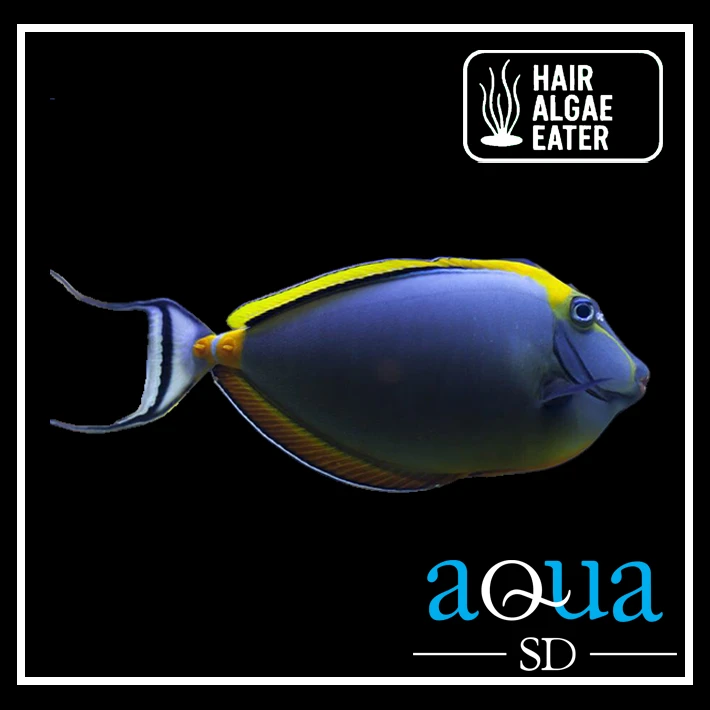
The Blonde Naso Tang, also known as the Elegant Unicornfish or Orange-Spine Unicornfish, is a spectacular large-bodied surgeonfish recognized for its bold yellow dorsal fin, dark bluish-gray body, black facial mask, yellow lips. It is a species of marine ray-finned fish belonging to the family Acanthuridae, the surgeonfishes, unicornfishes and tangs. It is native to Hawaii, Australia, Africa, the Red Sea, and Central America. It is commonly found in coral reefs, where it feeds on small invertebrates and sponges. In their natural habitat, they graze algae from rock and reef surfaces, frequently in pairs or small groups.
Juveniles you purchase will often be smaller and less colorful than adults. As a juvenile, it is gray with a yellow stripe on both the dorsal and anal fin. When matured, the body takes on a darker bluish-gray tone and the juvenile striping is supplemented with additional color.
2. Tank size and setup: the long footprint requirement
Tank size for the Blonde Naso Tang is not just a number—it is about the shape. Plan on a minimum of 180 gallons for an adult, ideally with a footprint of five feet or longer. This species is an active swimmer that needs long, open lanes. This is a restless, open-water swimmer that spends the day patrolling the length of the aquarium. Tank dimensions are particularly important, as the Blonde Naso Tang spends considerable time cruising through open water and benefits greatly from a long aquarium footprint. A tall but narrow tank will feel cramped to this fish, even if the gallon count is high.
This tang enjoys some rock work and crevices to take occasional refuge, but should be provided with ample open swimming and turning space. Moderate to strong flow with high oxygenation suits the species well, and one or two sheltered nooks within the rockwork give it a place to retreat and sleep. A secure lid is important, since this tang and its relatives are known to jump from open-top systems.
The tank should be mature and established before introduction. Long-term housing should be planned around the species' adult size rather than the considerably smaller size at which Blonde Naso Tangs are commonly offered.
3. Water flow, stability and filtration
Moderate to strong water movement and good oxygenation are appropriate for this active reef species. Strong filtration and consistent water quality are also important because large tangs consume substantial amounts of food and can contribute significantly to the aquarium's biological load.
Keep water ultra-stable and clean: temp 76–78°F, salinity 1.025–1.026, pH 8.1–8.4, nitrate <15 ppm, phosphate low but not zero. Sudden changes in salinity, temperature, pH, or water quality can cause stress, appetite loss, flashing, parasite outbreaks, or long-term decline.
A diet largely consisting of algae-based foods is absolutely necessary to maintain optimal health, coloration, immune function, and reduce aggression. If not, tangs often develop head and lateral line erosion from such deficiencies. This means your aquarium must have robust biological filtration and regular maintenance to keep the water pristine.
4. Temperament and tank mates
Temperament toward unrelated tankmates is mild, and it coexists well with angelfish, wrasses, clownfish, and similar community species. However, it is aggressive towards other tangs, but peaceful with other fish in the tank. Blonde naso tangs do not conflict with other tank-mates and aren't overly territorial in nature, but they may act out toward conspecifics (other Naso species). If you want to keep multiple tangs, add the Blonde Naso before more aggressive species.
The Blonde Naso Tang is reef compatible. However, they are susceptible to marine ich and head/lateral line erosion (HLLE) if stressed or underfed, so water quality and diet are critical.
5. Feeding strategy and diet
The Blonde Naso Tang is primarily herbivorous and naturally feeds extensively on benthic algae. A marine algae-rich diet should form the foundation of its captive nutrition.
Offer dried nori or other marine algae regularly using a feeding clip, ideally making grazing material available frequently throughout the week. The diet of this fish should contain a large amount of marine based seaweed and algae. Blonde Naso Tangs will eat meaty foods, but frequent feedings of dried seaweed products like Sea Veggies or Seaweed Select are required for long term success. Vitamin enriched frozen brine and mysis shrimp should also be offered to help with a balanced diet.
Live rock with heavy algae growth is ideal, as it will allow the Tang to scrape it teeth along the rock. The more established your tank is, with abundant natural algae growth on rockwork, the easier it will be to feed your tang. Many experienced keepers recommend offering algae-based foods at least three to four times a week, and meaty foods two to three times per week.
6. Water parameters and acclimation
Gather before you start
- Quarantine tank (minimum 75 gallons for a juvenile; ideally same size as your display if possible)
- Quarantine tank filter running for two weeks before the fish arrives
- Fine mesh net
- Specimen container or acclimation box
- Airline tubing and airstone
- Salinity refractometer
- Thermometer
- Algae-based frozen and dry foods for the first feeding
Acclimation steps
Temperature: 75–80°F, Specific Gravity: 1.024–1.026, pH: 8.1–8.4, Alkalinity: 8–12 dKH. Maintain consistent temperature and salinity and avoid sudden changes in major water parameters.
- Float the bag. Place the sealed bag containing your Blonde Naso Tang in your quarantine tank for 15 minutes to allow the temperature inside the bag to match the tank temperature.
- Begin water acclimation. Open the bag and use airline tubing and an airstone (or drip acclimation if you prefer a slower process) to begin adding quarantine tank water to the bag at a rate of about one drop per second. Do not remove the fish yet.
- Gradually equalize salinity. Over the next 30–45 minutes, continue dripping quarantine tank water into the bag until the bag water contains approximately half quarantine tank water. Check the salinity of the bag water with your refractometer. It should begin to approach your quarantine tank's salinity.
- Net the fish into quarantine. Use the fine mesh net to gently move the fish from the acclimation bag into your quarantine tank. Do not pour the bag water into the tank.
- Maintain quarantine conditions. Keep the fish in the quarantine tank for a minimum of two to three weeks. Observe for signs of marine ich (white spots), clamped fins, or erratic swimming behavior. Feed small amounts of algae-based foods two to three times per day during quarantine to help the fish settle.
- Monitor and observe. Quarantining new arrivals is strongly advised, as this species is prone to ich and other parasites due to stress from transport.
- Transfer to display. If the fish shows no signs of illness after quarantine, proceed with a second acclimation—matching the tank water of your display aquarium to the quarantine tank over a period of 30–45 minutes before netting the fish into the display.
Why quarantine matters: Tangs in the wild live in established reef communities with stable conditions. Capture, transport, and handling stress their immune system. A quarantine tank gives your fish time to recover and allows you to spot problems before they spread to your display.
7. Signs of health and stress
| What you notice | What to check next |
|---|---|
| Fish holds fins close to body and hides in rockwork most of the day | Water parameters (temperature, salinity, pH), feeding schedule, recent tank mates added, sudden changes in lighting |
| White spots on body or fins, rubbing against rocks | Marine ich infection; isolate to hospital tank and consider treatment options |
| Rapid, gasping breathing; lethargy | Ammonia, nitrite, or dissolved oxygen levels; test immediately and perform partial water change |
| Bumps or erosion on head or along lateral line | Head and lateral line erosion (HLLE), usually from inadequate algae-based diet or poor water quality |
| Bright coloration, active swimming, eating greedily at feeding time | Fish is acclimating well; maintain current care routine |
| Loss of appetite, refusing algae sheets or pellets | Sudden water parameter change, parasites, or stress; check water quality and feeding variety |
Your care log
Quarantine started on: ______ Salinity at arrival: ______
Display tank introduced on: ______ Temperature set at: ______
Algae feeding schedule: ______ Meaty food days: ______
First signs of natural algae grazing observed: ______
Color changes noted (juvenile to adult transition): ______
Tank mates housed with: ______
Sources
Checked October 26, 2026.
- Top Shelf Aquatics, "Blonde Naso Tang," topshelfaquatics.com
- Saltwater Aquarium World, "Blonde Naso Tang Care Guide," saltwateraquariumworld.com
- Aquatics Unlimited, "TANG – NASO BLONDE Naso elegans," aquaticsunlimited.com
- Marine World Aquatics, "Moorish Idol (Zanclus canescens)," marineworldaquatics.co.uk
- High Tide Corals, "The Ocean's Most Beautiful but Challenging Fish," hightidecorals.com
- Quality Marine, "Blonde Naso Tang," qualitymarine.com
- Live Aquaria, "Blonde Naso Tang," liveaquaria.com
- Barrier Reef Aquariums, "Blonde Naso Tang," barrierreefaquariums.com
- Summit City Coral, "Blonde Naso Tang," summitcitycoral.com
- Wikipedia, "Naso elegans," en.wikipedia.org