

Bangai Cardinal Care: Tank Setup, Feeding and Acclimation
After reading this guide, you will be able to set up a suitable home for a Bangai Cardinal, feed it a proper diet, and acclimate it safely to your tank.
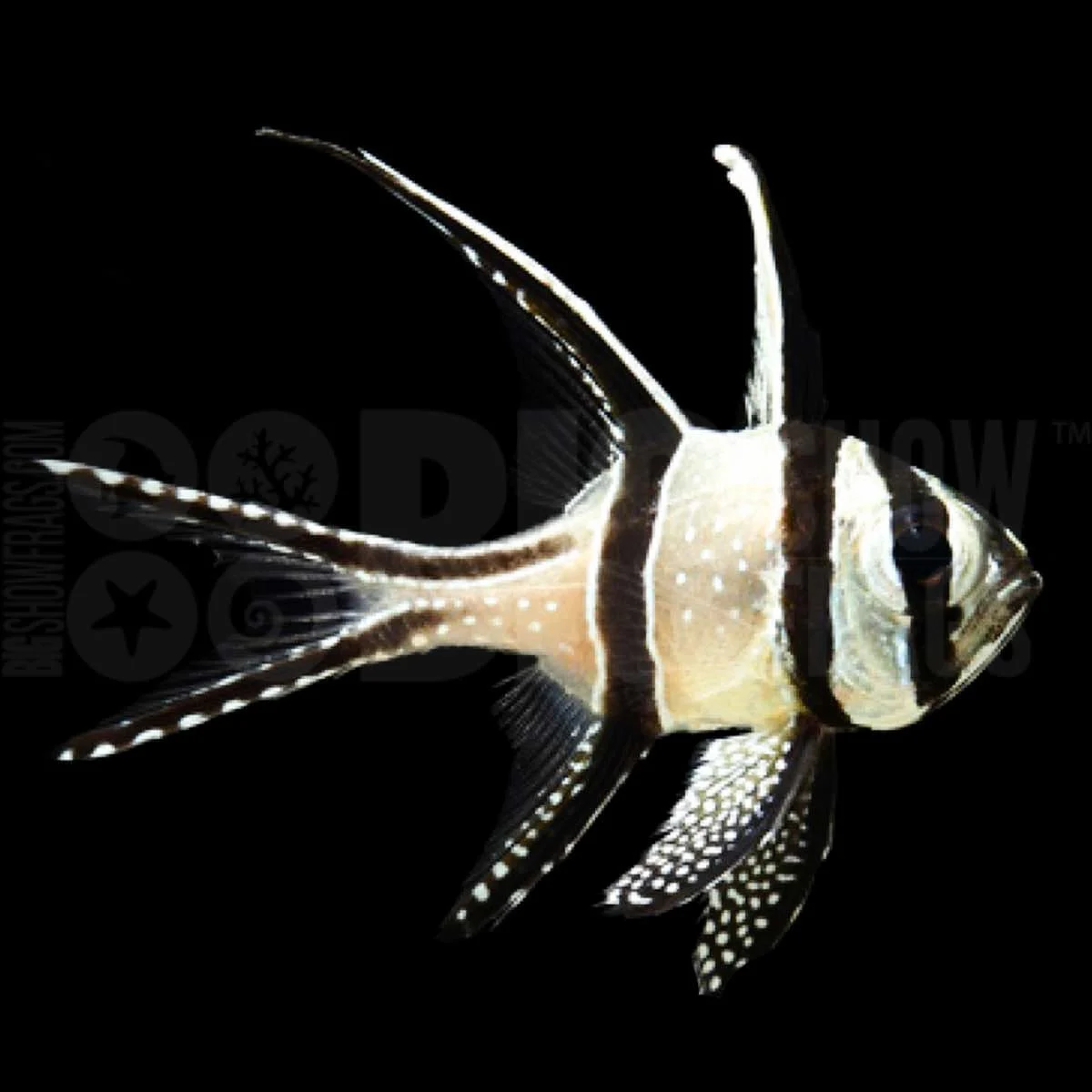
Bangai Cardinal Care: Tank Setup, Feeding and Acclimation
Bangai Cardinal care begins with a solid understanding of this species' simple but specific needs. Bangai Cardinalfish are tolerant of standard reef parameters and do not require anything exotic.
Fish care · Detailed tutorial · About 12 minutes · Beginner friendly
The key habit: Stability matters far more than chasing a specific number; a cycled, mature tank with consistent water chemistry will suit them well.
In this guide
- What Bangai Cardinals are and where they come from
- Tank size, aquascaping and flow
- Reef compatibility and tank mates
- Their natural diet and feeding in captivity
- Water parameters
- Acclimating your Bangai Cardinal to your tank
- Signs of good health
1. What They Are and Where They Come From
The Bangai Cardinal is native to Indonesia's Banggai Islands, where they may associate with bottom-dwelling organisms such as sea anemones, sea urchins and corals for hiding and protection from predators. In nature they feed primarily on copepods, a group of small crustaceans. Bangai Cardinals hover in mid-water and move deliberately rather than darting like many small fish, and they are peaceful toward most species but can show dominance within groups.
2. Tank Size, Aquascaping and Flow
A bonded pair or a small harem needs at least a 30-gallon tank. The fish themselves are not large, but they appreciate horizontal swimming room and clear sight lines to claim distinct territories. They're slow swimmers that don't need a lot of open water; what they need is enough rockwork and structure for each fish (or pair) to claim a small piece of territory, with a few good vertical anchor points spread around the tank, especially if you're keeping a group, so each pair can claim its own.
Bangai Cardinals prefer a small cave with subdued lighting as a home, and the balance between open water and shelter matters because these fish need both. Low to moderate flow is ideal.
3. Reef Compatibility and Tank Mates
Most soft corals and LPS corals are compatible with Bangai Cardinals since the fish do not nip at coral tissue. They are outstanding community fish compatible with virtually all peaceful to moderately aggressive tank mates.
However, despite their peaceful reputation toward other fish, cardinalfish can display serious aggression toward members of their own species. A single fish or bonded pair is usually the safest long-term setup unless the aquarium is large enough. For a community reef containing other peaceful fish, step up to 55 gallons or larger.
4. Their Natural Diet and Feeding in Captivity
In the wild, Bangai Cardinals are planktivores, feeding on tiny crustaceans, copepods, and other zooplankton that drift through the water column near their shelter sites. In the aquarium, they need small, meaty foods offered in a way that matches their slow, hovering feeding style—they generally won't compete well against fast-swimming fish for food dropped at the surface.
The staple diet for captive Bangai Cardinals should center on high-quality frozen foods, particularly mysis shrimp, which closely approximates the size and nutritional profile of their natural prey. Offer mysis shrimp, enriched brine shrimp, finely chopped krill, marine carnivore blends, and other appropriately sized frozen foods. Copepods, amphipods, and other small meaty foods can help support natural feeding behavior.
Feed Bangai Cardinals two to three times daily in small portions rather than one large feeding; their stomachs are small and their metabolism is moderate, so frequent small meals match their biology better than gorging once a day, with each feeding offering only what the fish can consume within two to three minutes.
Because they're slow eaters, keep an eye on whether each fish in a group is actually getting food—in a tank with fast tangs or wrasses, Bangai Cardinals can quietly lose out at feeding time.
5. Water Parameters
Stability matters far more than chasing a specific number. Maintain temperature between 76 and 82 degrees Fahrenheit, with 78 to 80 being the sweet spot for long-term health. Alkalinity in the 8 to 12 dKH range keeps the buffering capacity stable, and calcium and magnesium should be maintained at reef-appropriate levels if you are running a reef tank alongside the cardinals.
| Parameter | Target | Notes |
|---|---|---|
| Temperature | 76–82°F | Stability matters more than precise targets |
| Salinity | 1.023–1.025 SG | Use a refractometer for accuracy |
| pH | 8.1–8.4 | Standard reef range |
| Ammonia | 0 ppm | Any detectable level is toxic |
| Nitrite | 0 ppm | Must read zero before adding fish |
| Nitrate | <15 ppm | Lower is better; perform water changes if it rises |
| Alkalinity | 8–12 dKH | Provides buffering capacity |
| Calcium | 420–440 ppm | Important for reef tanks |
| Magnesium | 1260–1350 ppm | Works with calcium for stability |
Temperature should remain stable as well and should stay within a 2 degree range.
6. Acclimating Your Bangai Cardinal to Your Tank
Gather before you start
- Clean bucket or container (5-gallon minimum)
- Airline tubing and air valve (or turkey baster)
- Net
- Specimen container or breeder box (optional, for very shy fish)
Bangai Cardinals are sensitive to being rushed through acclimation—their slow, deliberate nature extends to how they handle change; drip acclimate over at least 30–45 minutes when introducing new fish, and avoid large, rapid swings in salinity or temperature during water changes.
- Float the bag for temperature: Float the bag for 15 minutes to equalize temperature, then transfer the fish and bag water to a clean container.
- Drip acclimate slowly: Insert airline tubing in the fish bag and set 2 to 4 drops of tank water per second in the bag for 2 hours. Alternatively, add 1/4 cup of tank water to the container every 5 minutes for 40 minutes.
- Dim the lights: Dim the light of the tank during the acclimation period.
- Move the fish to the tank: Net the fish into the tank without adding the bag water to your system.
- Place near shelter: Move the specimen container (or use your hands with a net) to place the fish near rockwork or shelter where it can retreat. Bangai Cardinals prefer a small cave as a home, so let it find its own hiding spot.
7. Signs of Good Health
| What you notice | What to check next |
|---|---|
| Fish hiding for the first day or two | This is normal after acclimation; continue regular feeding |
| Bright colors and bold stripes | Good sign of stable water and proper diet |
| Actively hovering and hunting | Fish feels secure; environment is suitable |
| Not eating after 3–5 days | Check water parameters; may need smaller food or target feeding near shelter |
| Pale coloration or clamped fins | Check ammonia, nitrite, and nitrate; perform water change if parameters are off |
| Rapid gill movement or gasping | Test dissolved oxygen and water quality; ensure adequate circulation |
Your care log
Tank size: ______ gallons
Date placed: ______
Salinity (SG): ______
Temperature: ______°F
pH: ______
Feeding schedule: ______
Primary shelter location: ______
Tank mates: ______
Notes: ______
Sources
Checked November 10, 2026.
1. Top Shelf Aquatics, "Cardinalfish Care: Pairs vs Groups, Feeding and Behavior"
2. FishStores.org, "Banggai Cardinalfish Care Guide: Tank Mates & Breeding"
3. Hygger, "How Many Banggai Cardinalfish In A Fish Tank"
4. Summit City Coral, "Banggai Cardinalfish"
5. Furry Critter, "Banggai Cardinalfish Care Guide"
6. Furry Critter, "Bangai Cardinal"
7. Sea Life Planet, "Banggai Cardinalfish Care Guide: Tank Setup, Diet & Breeding"
8. AIO Reef, "Banggai Cardinal Care: Essential Tips for Your Reef Aquarium"
9. The Aquarista, "Bangai Cardinalfish: Care, Habitat, and Breeding Tips"
10. Oregon Coast Aquarium, "Banggai Cardinalfish"
11. Georgia Aquarium, "Banggai Cardinalfish"
12. Roxy Aquarium, "Cardinalfish Banggai"