

ASD Red Goniopora Care: Light, Flow and Feeding
You'll learn how to place, light, feed, and maintain stable water chemistry for your Goniopora to keep it fully extended and colorful.
Coral care · Detailed tutorial · About 12 minutes · Beginner friendly
The key habit: Start with moderate lighting, gentle variable flow and stable water chemistry. This is the single most important foundation for keeping your Goniopora healthy and preventing the slow starvation that historically caused problems with this species.
In this guide:
- What Goniopora is and how it grows
- Lighting and PAR
- Water flow: the key to extension
- Placement in your tank
- Feeding for long-term health
- Water parameters
- Acclimation and dipping
1. What Goniopora is and how it grows
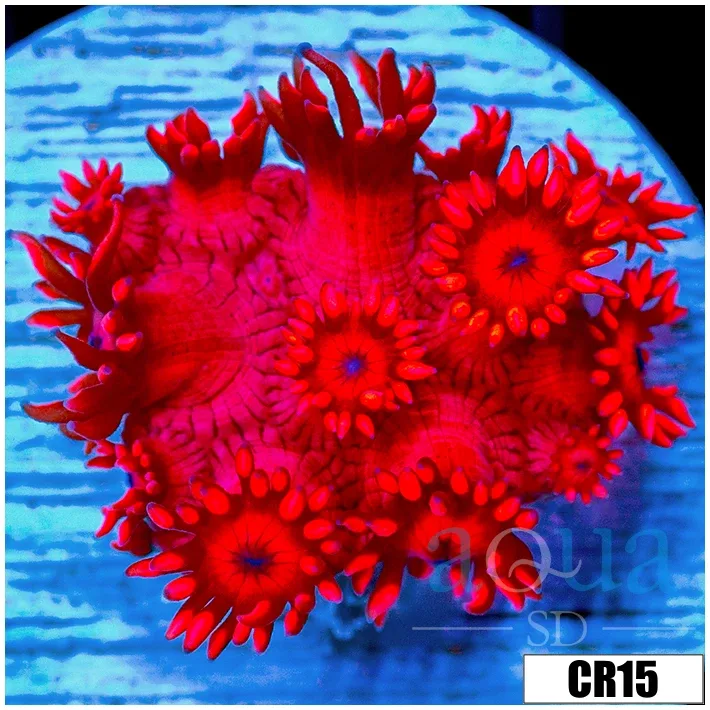
Goniopora coral, commonly called Flowerpot coral or Daisy coral, is a large polyp stony (LPS) coral. Goniopora brings stunning movement and color to reef aquariums with its flowing, flower-like polyps in shades of neon green, pink, red, and purple. The ASD Red Goniopora displays vibrant red tones within this range.
Goniopora once had a reputation for being extremely difficult to keep, but reef keeping practices and access to established aquacultured strains have improved significantly. Many Goniopora varieties can now thrive long term when provided with appropriate lighting, water flow, nutrition and stable water chemistry. Care level is intermediate, and a PAR range of roughly 75–125 is a reasonable starting point for many Goniopora.
2. Lighting and PAR
Goniopora Corals generally do well under low to moderate lighting. Goniopora can adapt to a fairly wide range of lighting, but approximately 75 to 125 PAR is a good conservative starting point. Moderate lighting intensities of 75-150 PAR work well for many varieties, but the species is more susceptible to light damage than many LPS corals, and excessive PAR causes bleaching and tissue recession.
Some established Goniopora can tolerate significantly more light, but that does not mean a newly introduced coral should immediately be placed under intense lighting. Reef keepers should start colonies under lower light intensity and increase gradually over several weeks to allow the zooxanthellae to adjust.
Colonies that receive too little light will turn brown as zooxanthellae overpopulate the tissue, while those under excessive light will pale and bleach.
3. Water flow: the key to extension
Low to medium randomized flow is generally preferred over strong direct flow. The goal is enough circulation to keep waste and detritus from settling on the coral while allowing the polyps to extend and sway naturally. Use moderate, indirect, and changing flow.
Their long polyps make them easy to get carried away with the flow, so securely anchor them down. Avoid placing the coral directly in front of a powerful wavemaker at close range. Allow the polyps enough room to fully extend without being blasted by a powerhead or touching neighboring corals.
4. Placement in your tank
Place them in the sand at the bottom of your tank or in the middle of rocks. Placing Goniopora in the lower to middle tank regions typically provides the appropriate PAR range without requiring precise measurement. Place a new coral in moderate light and acclimate it gradually if the aquarium is brighter than the system it came from.
Give the coral plenty of room around it and avoid strong direct flow zones. If the coral remains healthy and consistently extended, you can leave it alone; moving it repeatedly makes it harder to tell what is actually helping.
5. Feeding for long-term health
Goniopora are photosynthetic thanks to their symbiotic zooxanthella but also benefit from occasional spot feeding. Colonies are sensitive to alkalinity fluctuations and depend on regular supplemental feeding with amino acids and fine particulate foods to prevent the slow starvation that historically caused wild-collected specimens to decline within months.
Spot feed Gonis a blend of very fine foods a couple times a week. Phyto and zooplankton are good choices due to Goniopora having very small mouths. Place them in adequate flow after fragging to maximize waste and mucus removal. Adequate flow will also prevent algae growth on the newly exposed cut areas, which can choke out and stunt the healing process.
6. Water parameters
Goniopora thrive in stable reef aquarium conditions. Stability matters more than hitting exact numbers—avoid rapid swings, especially in alkalinity and salinity.
| Parameter | Range |
|---|---|
| Temperature | 72–80°F |
| Salinity | 1.023–1.026 |
| pH | 8.1–8.4 |
| Alkalinity | 8–12 dKH |
| Calcium | 400–450 ppm |
| Magnesium | 1250–1350 ppm |
| Nitrate | 5–20 ppm |
| Phosphate | 0.05–0.15 ppm |
The water chemistry must be precise, and regular maintenance is important to ensure the well-being of these corals. The flow should be moderate, with a gentle current that is not too strong. This will help to distribute nutrients and oxygen throughout the tank and prevent debris from settling on the coral.
7. Acclimation and dipping
Gather before you start
- A clean plastic container or tote (margerine tub size)
- Airline tubing and valve (or turkey baster)
- Coral dip solution (Coral Rx or similar)
- Fresh tank water for rinsing
- Aquarium water from your main tank
- Soft brush or turkey baster
- Float the bag: Float the bag in your tank for at least 15-20 minutes to allow the temperature in the bag to equalize with the temperature in your tank.
- Drip acclimate slowly: Aim to add a 1/2 cup of aquarium water every five or so minutes. Some aquarists prefer using a drip to acclimate corals as gradually as possible. We recommend at least an hour of drip time. If your parameters are more than a 1 dKH difference than your system or significantly higher nutrients, we recommend a longer drip to properly acclimate the coral to prevent any necrosis.
- Wait before dipping: We recommend that you wait 10 to 24 hours after adding your new corals to your reef to dip. We do not recommend dipping corals during or just after acclimation due to corals being stressed from shipping. This can cause irreversible damage to your recently shipped corals.
- Dip carefully: Prepare a container with aquarium water from your tank. Float your newly arrived specimens in your aquarium, with the shipping bags still fully sealed, for about 10-15 minutes. This will allow the temperature to to equalize. Next, open the bag and mix with some water from your aquarium at a 50/50 ratio. Add your coral dip solution to the water, per manufacturer's instructions. Use a small turkey baster to gently blow the water into the coral specimen. Make sure you get it into all the nooks and crannies!
- Rinse and place: Let the coral sit in the container for another couple of minutes. Then, you just rinse the specimen in some fresh aquarium water, and you're ready to go. Place it in the position you've chosen, in moderate light with gentle indirect flow.
What you notice and what to check
| What you notice | What to check next |
|---|---|
| Polyps fully extended day and night | Lighting and flow are appropriate; water parameters are stable |
| Polyps retracted or staying closed | Reduce direct flow; check if light is too intense; verify salinity and alkalinity haven't dipped |
| Pale or brownish coloration | PAR may be too high or too low; check nutrient levels and feeding schedule |
| Dull, faded color | Likely lacking nutrients; increase feeding frequency or verify stable lighting |
| Visible damage or tissue recession | Check for strong flow blasting the coral; verify no aggressive neighbors nearby |
Your care log
Placed on: ______ Light (PAR): ______ Flow (gentle/moderate): ______
First feeding date: ______ Feeding schedule: ______ Dip date: ______
Water parameters checked (date): ______ Alkalinity (dKH): ______ Salinity: ______
Sources
Checked October 8, 2026.
- Reef Builders, "Introduction to Goniopora Care", https://reefbuilders.com/2025/09/23/introduction-to-goniopora-care/
- Frag Box Corals, "Goniopora Coral Care", https://fragbox.ca/coral-care/goniopora-coral-care/
- Queen City Corals, "Goniopora Coral Care Guide: Lighting, Flow, Placement & Feeding", https://www.queencitycorals.com/goniopora-coral-care-guide/
- Whitlyn Aquatics, "Goniopora & Alveopora Coral Care Guide", https://www.whitlynaquatics.com/blogs/news/goniopora-alveopora-coral-care-guide-care-feeding-lighting-tips
- Sunnyside Corals, "Goniapora Coral Care: Tips And Guidelines For Keeping Your Coral Healthy", https://sunnysidecorals.com/blog/goniapora-coral-care-tips-and-guidelines-for-keeping-your-coral-healthy/
- Meta Reef, "Goniopora Coral Care Guide – Lighting, Flow & Feeding", https://metareef.com/corals/goniopora
- Gem State Corals, "Goniopora Coral Care Guide: Light, Flow, Feeding & Placement", https://gemstatecorals.com/blogs/news/goniopora-coral-care-guide
- Serious Reefs, "Goniopora | Coral 101 Care Guide, Tips, & Troubleshooting", https://www.seriousreefs.com/coral-101/gonioporacoral
- Extreme Corals, "Goniopora Coral Care Guide (Lighting, Flow, Feeding and Placement)", https://www.extremecorals.com/blog/understanding-goniopora-coral-an-overview.html
- Bulk Reef Supply, "World Wide Corals Acclimation Instructions", https://www.bulkreefsupply.com/wwc-acclimate
- Unique Corals, "Acclimation", https://uniquecorals.com/pages/acclimation
- Top Shelf Aquatics, "Acclimating Coral Frags for Maximum Health and Lifespan", https://topshelfaquatics.com/blogs/news/acclimating-coral-frags-for-maximum-health-and-lifespan
- West Coast Frogs, "Coral Acclimation Guide", https://westcoastfrogs.com/acclimation/
- Extreme Corals, "How to acclimate Corals to your Reef Tank", https://www.extremecorals.com/blog/how-to-acclimate-corals-to-your-reef-tank.html