

Arrow Crab Care: Setup, Feeding and Tank Mates
You will learn how to set up a tank, feed, and house an Arrow Crab safely with appropriate reef companions.
Invertebrate care · Detailed tutorial · About 8 minutes · Beginner friendly
The key habit: Keep only one arrow crab per tank, since they fight with each other. Feeding them well reduces the risk they'll pick at corals or hunt small tank mates.
Shop the Arrow Crab; Atl. – Stenorhynchus seticornis
In this guide
- What arrow crabs are and where they come from
- Tank setup: rockwork and space
- Water parameters and quality
- Feeding and diet
- Tank mates and reef compatibility
- Acclimating your arrow crab
- Signs of health and problems to watch
1. What arrow crabs are and where they come from
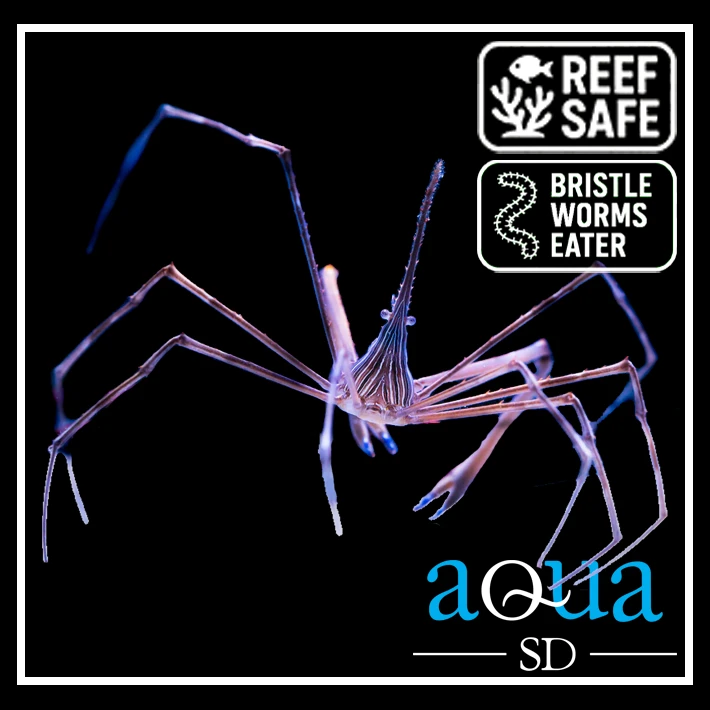
The Arrow Crab is from the Caribbean and Western Atlantic. Its legs are often three times the length of their bodies, making them look like spiders; an arrow crab's legs measure up to 4 inches long, while the carapace is much shorter. They are a nocturnal species, often retreating to shaded areas during the day and becoming more active at night. They are best known for hunting bristleworms, but they also scavenge leftover food.
2. Tank setup: rockwork and space
Arrow crabs need a minimum tank size of 30 gallons. They need plenty of rockwork to climb, with open areas where they can move their long, thin legs freely. These crabs like to scuttle across the tank floor to scavenge and hunt, so providing them with some open space on the substrate is also a good idea. In nature, Arrow crabs often live within the tentacled safety of anemones, so including some in your reef community will help to make the crabs feel secure and at home in an aquarium setting.
3. Water parameters and quality
Arrow crabs are intolerant of high nitrates. They do not tolerate high levels of ammonia, nitrite, or nitrate; avoid adding them to new, unestablished tanks and they should be one of the last additions to a tank because they cannot handle the nitrogen cycle.
| Parameter | Range |
|---|---|
| Temperature | 76-78° F |
| pH | 8.1-8.4 |
| Alkalinity | dKH 8-12 |
| Salinity | 1.024-1.026 |
| Nitrate | Less than 10 ppm |
Acclimate slowly and keep conditions stable to support molting.
4. Feeding and diet
In captivity, arrow crabs are pretty easy to cater for in a reef tank; they will eat any type of flake and pellet food, as well as meat, bristle worms, and any other detritus that falls down from above onto the aquarium substrate. Live, fresh, and thawed frozen foods are their favorites, including brine shrimp, mysis shrimp, and krill. Provided that you keep your crabs well-fed, they are unlikely to trouble other peaceful residents of the reef.
Feed this crab a small amount of food every other day, ensuring it has enough to eat without overloading the tank with waste.
5. Tank mates and reef compatibility
Keep only one arrow crab per tank, since they fight with each other. Arrow crabs do well with medium to large, active fish such as tangs, angelfish, and larger wrasses. Avoid triggerfish, puffers, and hawkfish, which may prey on them.
Feather dusters, small ornamental shrimp, nudibranchs, and small or slow fish are at risk. Adult specimens have been documented picking at LPS polyps, stealing food from corals, and hunting small ornamental shrimp and slow-moving fish over time. They are usually safe around corals, though they may pick at polyps and soft corals; stick with hard corals to avoid damage.
6. Acclimating your arrow crab
Gather before you start
- Airline tubing with a gang valve
- A bucket or container
- A net
- Your tank with lights off or dimmed
Always drip acclimate over 60 to 90 minutes, equalizing the bag water with tank water gradually before transferring the crab into the display. Use airline tubing with a gang valve set to 2-3 drops per second.
- Receive the crab in its bag. Arrow crabs are known for being able to easily jump out of acclimation bags and buckets, so work carefully and keep the bag partially sealed.
- Set up the drip line. Place one end of the airline tubing in your tank and set the gang valve to 2-3 drops per second. Place the other end over the crab's acclimation container.
- Let water flow for 60 to 90 minutes. This allows the crab's body to adjust to your tank's temperature, pH, and salinity without stress.
- Place in the tank with the lights off. It is best to introduce this specimen with the lights out; when finished acclimating, place crab in net and move net near rockwork where the crab can get to safety quickly.
7. Signs of health and problems to watch
| What you notice | What to check next |
|---|---|
| Crab is actively foraging on rockwork | Normal behavior; your setup is working well |
| Crab curled motionless in a corner | A healthy specimen should be actively foraging on the rockwork — not curled motionless in a corner |
| Legs missing or damaged | Molting, injury, or stress; check water parameters |
| Picking at corals or hunting fish | Likely underfed; increase food offerings |
| Spines or appendages deteriorating | Check for ammonia, nitrite, or nitrate spikes |
Your care log
Introduced on: ______ Tank size: ______ Starting water parameters: ______
Day 30 check — Water quality: ______ Behavior: ______ Feeding: ______
Sources
Checked October 18, 2026.
- Top Shelf Aquatics, "Arrow Crab" https://topshelfaquatics.com/products/arrow-crab
- Aquatics Unlimited, "CRAB – ARROW Stenorhynchus seticornis" https://aquaticsunlimited.com/product/crabarrowstenorhynchusseticornis/
- Aquariadise, "How To Best Care For An Arrow Crab: Everything You Need To Know" https://www.aquariadise.com/arrow-crab/
- Fish Stores, "Arrow Crab Care: Tank Mates, Diet & Bristle Worm Control" https://www.fishstores.org/species/arrow-crab
- Build Your Aquarium, "A Guide To Arrow Crab Care" https://www.buildyouraquarium.com/arrow-crab/
- Blue Zoo Aquatics, "Arrow Crab" https://www.bluezooaquatics.com/productDetail.asp?did=2&pid=1128&cid=80
- Aquarium Source, "Arrow Crab 101: Diet, Mates, Size, Breeding and Behavior" https://www.aquariumsource.com/arrow-crab/
- Reeflings, "Yellowline Arrow Crab (Stenorhynchus seticornis)" https://reeflings.com/species/stenorhynchus-seticornis