

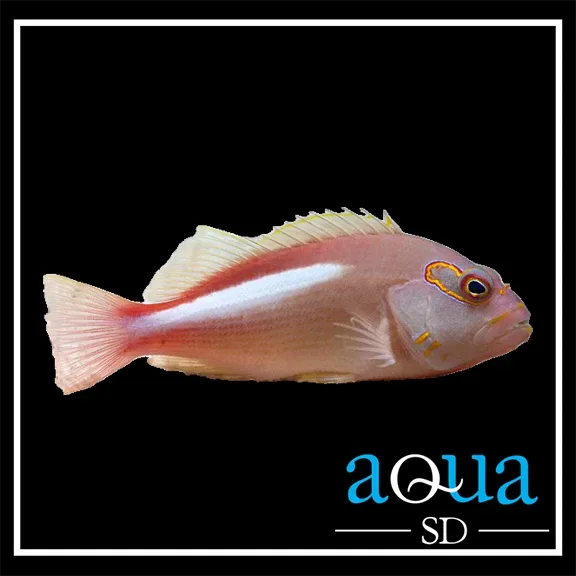
Arc Eye Hawk Care: Tank Setup, Feeding and Acclimation
You will be able to set up a proper home for an Arc Eye Hawkfish, acclimate it safely, and keep it healthy through feeding and water maintenance.
Fish care · Detailed tutorial · About 12 minutes · Beginner friendly
The key habit: Strong water flow and efficient filtration are essential to maintain water quality, but the most important daily routine is careful feeding. They are opportunistic and will overeat if you allow, so establishing a consistent feeding schedule and portion size prevents health problems and reduces aggressive behavior.
In this guide
- What the Arc Eye Hawk is and where it comes from
- Tank size and aquarium setup
- Temperament and compatible tankmates
- Feeding your Arc Eye Hawk
- Water parameters and quality
- Acclimation and quarantine
- Signs of good health
1. What the Arc Eye Hawk is and where it comes from
Native to the tropical Indo-Pacific, Paracirrhites arcatus ranges from East Africa across the Pacific to Hawaii and the Pitcairn region, north to southern Japan and south to Australia. It inhabits coastal lagoons and seaward reefs, where it typically rests on branching corals and elevated reef structures while watching for prey.
Hawkfish are extremely personable and fun to watch as they "hop" and perch around the aquarium. It spends much of its time perched on rock ledges, coral branches, and high points in the aquascape. This behavior is what makes the Arc Eye Hawk distinctive in a home tank—it's not a traditional swimmer but a deliberate hunter that waits from its chosen vantage points.
2. Tank size and aquarium setup
Arc Eye Hawkfish thrive in tanks that mimic their natural reef environment, requiring a minimum of 75 gallons with plenty of live rock for hiding and perching. While some sources cite a smaller minimum (30–55 gallons), a 75-gallon tank gives the fish room to establish multiple perching sites and reduces territorial stress with tankmates.
Leave open swimming routes between the rock structures and provide a secure cave for nighttime shelter. A sand or fine-gravel substrate is suitable, although this species has no specialized substrate requirement. Use a fitted lid or secure mesh cover, as hawkfish may jump when startled or during territorial disputes.
Corals and rock structures should be securely mounted because a full-grown specimen may dislodge loose fragments while moving between perches. Arrange rockwork so the fish can perch at various heights and see into different areas of the tank—this supports its hunting behavior and confidence.
3. Temperament and compatible tankmates
Arc Eye Hawkfish are semi-aggressive and territorial, especially towards other hawkfish and smaller tankmates. They are best kept with similarly sized or larger fish that can hold their own.
Avoid housing them with small, timid species or invertebrates, as they may be seen as prey. Cleaner shrimp, peppermint shrimp, small crabs, and other ornamental crustaceans may be eaten, particularly when they are small enough to fit in the fish's mouth. Larger established shrimp may occasionally coexist with an individual hawkfish, but they should not be considered reliably safe.
Keep the fish singly, as conspecifics will fight in confined spaces. If you want to keep it with other fish, the hawkfish should be the last one to enter the aquarium. This gives established tankmates territory and reduces aggressive confrontation.
Ample hiding spots and territories reduce aggression and stress among tank inhabitants.
4. Feeding your Arc Eye Hawk
Arc Eye Hawkfish are carnivores and do best on a varied diet of small meaty foods: mysis shrimp, finely chopped krill, marine fish flesh, enriched brine shrimp, and quality marine carnivore pellets. Do not rely on one food item. Variety improves condition, color, and immune strength.
Feed small portions 1–2 times daily; they are opportunistic and will overeat if you allow. Smaller portions are better than large occasional feedings.
To reduce aggression during feeding, use a turkey baster or target-feeding tool to spread food around the tank, so other fish get some first, then direct a portion toward the hawkfish's perch. Avoid dropping all of the food in one spot, which trains the hawkfish to charge aggressively into the feeding area.
Soak foods in vitamins once or twice each week. That is especially useful for newly imported specimens.
5. Water parameters and quality
Water conditions should be stable, with temperatures between 72–78°F, a pH of 8.1–8.4, and a salinity of 1.020–1.025.
Regularly monitor water parameters and perform routine water changes to maintain optimal conditions. Strong filtration is important, but stability matters most. Aim for low nitrate by reef standards, though this species is forgiving of minor fluctuations.
The Arc Eye Hawk is hardy but depends on a cycled, mature tank. Do not place it in a new system. Ensure your biofilter is established before introduction.
6. Acclimation and quarantine
Gather before you start
- Clean bucket or container (never one that held chemicals or soap)
- Standard airline tubing (3–4 feet)
- Tubing clamp, knot, or airline valve to control drip rate
- Net for transferring the fish
- Quarantine tank (if possible; at least 20 gallons for a 5-inch fish)
Hawkfish ship well compared to many reef fish, but proper acclimation and quarantine remain strongly recommended. Hawkfishes should be quarantined for 2 to 4 weeks to avoid introducing parasites into the main tank. Quarantine also lets you confirm eating response and observe behavior before risking your main reef. Hawkfish adapt well to prepared foods during this period.
1. Prepare the tank. Turn off the lights on the main display tank or your quarantine tank. Dim the lights in the room where you will be unboxing the new fish. This reduces stress and the shock of bright light.
2. Equalize temperature. Float bag to equalize temperature (15 to 20 minutes). Do not open the bag during this step.
3. Begin drip acclimation. Slowly drip tank water into shipping container over 45 to 60 minutes. Pour the fish and its bag water into a clean bucket. Adjust the tubing (pinch it or tie a loose knot) until you achieve 2–3 drops per second.
4. Monitor the bucket. Let tank water slowly dilute the bag water. For every 15 minutes, check the fish's gill movement—rapid, labored breathing means you need to slow down or pause.
5. Net the fish into the tank. Net or cup fish into the tank; never add shipping water. Release the fish near rockwork with several hiding options.
6. Keep lights reduced. Keep lighting reduced for the first few hours. Dim conditions help the fish settle and reduce territorial stress.
7. Offer food later. Offer a small meaty meal later that day or the next morning.
During the first week, expect cautious behavior. The fish may perch quietly and observe the tank. Signs of good adjustment include active scanning, regular feeding, and movement between several chosen perches. Persistent hiding, rapid breathing, or refusal to eat for many days should prompt a review of water quality and tankmate aggression.
7. Signs of good health
A healthy Arc Eye Hawkfish should show a full belly, strong interest in feeding, and active perch-to-perch movement. The fish spends time alert on its chosen perches, scanning the tank and responding to feeding time.
If appetite drops suddenly, check water quality, aggression, and possible internal parasite issues. Signs of stress include rapidly flaring gills while staying in one spot, very pale body color, or staying hidden for long periods even when food is added.
Arc Eye Hawkfish are generally hardy but can be susceptible to common marine diseases like ich and marine velvet. Provide a balanced diet to support their immune system.
What you notice and what to check next
| What you notice | What to check next |
|---|---|
| Fish hides constantly, does not perch | Water quality (ammonia, nitrite, nitrate); aggression from tankmates; lack of adequate rockwork or hiding spots |
| Rapid gill movement or gasping | Oxygen level (aeration and flow); ammonia or nitrite spike; parasites (ich spots or rapid swimming) |
| Loss of appetite or skips meals | Water parameters (especially temperature stability); bullying by other fish; recent major changes to the tank |
| Faded arc marking or body color | Stress from aggression; sudden water parameter changes; inadequate diet (feed vitamin-soaked foods) |
| Constant chasing of tankmates | Fish is reaching maturity and becoming more territorial; possible need for additional rockwork to separate territories |
| Full belly and active scanning of tank | Fish is adjusting well; continue consistent feeding schedule and water maintenance |
Your care log
Placed on: ______ Tank size: ______ gallons
Aquarium setup: Rockwork type ______ Number of perches: ______
Feeding: Food ______ Times per day: ______ Portion size: ______
First observed behavior: ______
Temperature: ______ °F Salinity: ______ pH: ______
Quarantine observations (if applicable): ______
Notes on tankmates and compatibility: ______
Sources
Checked October 27, 2026.
- Top Shelf Aquatics, "Arc Eye Hawkfish Care Guide," https://topshelfaquatics.com/pages/saltwater-fish/arc-eye-hawkfish
- Top Shelf Aquatics, "Arc Eye Hawkfish – Paracirrhites arcatus," https://topshelfaquatics.com/products/arc-eye-hawkfish-paracirrhites-arcatus
- Fancy Reef, "Arc Eye Hawkfish Care Guide for Reef Tanks," https://fancyreef.com/arc-eye-hawkfish-paracirrhites-arcatus/
- Abyss Aquatics, "Arc Eye Hawkfish," https://www.abyssaquatics.co.uk/product/arc-eye-hawkfish/
- Aquatic Community, "Arc-eye Hawkfish," https://www.aquaticcommunity.com/Hawkfish/arc-eye.php
- Aquatics Unlimited, "HAWK – ARC EYE Paracirrhitus arcuatus," https://aquaticsunlimited.com/product/hawk-arc-eye-paracirrhitus-arcuatus/
- Blue Zoo Aquatics, "Arc-Eye Hawkfish," https://www.bluezooaquatics.com/productdetail.asp?did=1&cid=28&pid=490
- Gee Marine, "Arc Eye Hawkfish," https://www.geemarine.com.au/shop/arc-eye-hawkfish/
- Reef Archive, "Arc-Eye Hawkfish (Paracirrhites arcatus) – Care Guide," https://www.reefarchive.com/fish/hawkfish/arc-eye-hawkfish
- The Beginners Reef, "How To Easily Acclimate Aquarium Fish," https://www.thebeginnersreef.com/how-to-acclimate-saltwater-fish/
- Aquariadise, "How To Acclimate Fish: Drip vs. Floating Methods (Safe Guide)," https://www.aquariadise.com/acclimation-fish/
- Fish Stores, "How to Acclimate Fish — 3 Methods Explained," https://www.fishstores.org/guides/how-to-acclimate-fish
- Fishlore, "Acclimating Fish to Your Aquarium," https://www.fishlore.com/acclimating-tropicalfish.htm
- Tropical Treasures Wyoming, "How to Acclimate New Fish: Drip, Float & Quarantine Methods," https://tropicaltreasureswyo.com/blogs/tank-buddy-blog/how-to-acclimate-new-fish-properly
- Aqua IRI, "Acclimating New Fish: The Drip Method Guide," https://aquairi.app/learn/en/acclimating-new-fish-drip-method