

Acropora Care: Light, Flow, Stability and Acclimation
Learn to light, place, and acclimate an Acropora coral, maintain stable water chemistry, and prevent common pests in SPS systems.
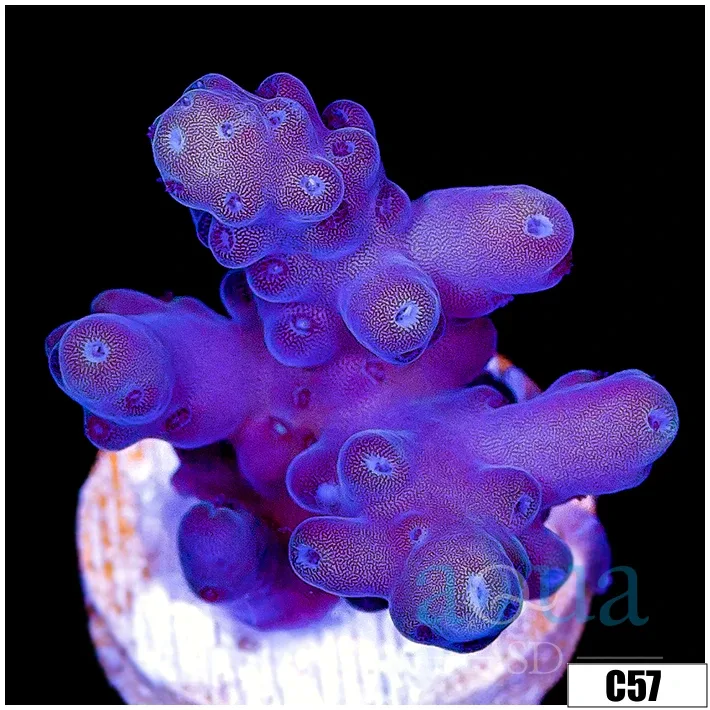
Coral care · Detailed tutorial · About 18 minutes · Beginner friendly
The key habit: Test alkalinity, calcium and magnesium twice weekly. Stability matters more than hitting one perfect number—sudden swings stress Acropora and cause tissue recession.
Shop the Solomon Island Purple Monster Acropora
In this guide
- What Acropora are and how they grow
- Light and PAR: the most important foundation
- Water flow: strong, turbulent and random
- Placement: planning for long-term growth
- Water parameters: the big three and the rest
- Acclimation and dipping: the first two weeks
- Fragging and recovery
1. What Acropora are and how they grow
Acropora corals are known for their vibrant colors, fast growth, and intricate branching structures. The genus comprises many species found throughout the Indo-Pacific. They are small-polyp stony corals (SPS)—meaning they build calcium carbonate skeletons and have tiny feeding polyps. Once settled, Acropora grow quickly, but they demand more stability and precision than many other reef corals. Acropora can be one of the touchiest corals to grow, requiring a stable system with very little fluctuation in water parameters and temperature, so most tanks typically need to be close to a year old before you start to add Acros.
2. Light and PAR: the most important foundation
Acropora corals generally require more stability, light and water movement than many LPS and soft corals. Approximately 200 to 350 PAR is a practical starting range for many aquarium-grown Acros, but individual varieties may thrive above or below that range. Some sources suggest 300-450 PAR once established.
The critical point is gradual acclimation. A coral that was previously grown at 200 PAR can become stressed if it is suddenly placed directly beneath a powerful LED fixture producing 500 PAR. Gradual light acclimation is extremely important, as research shows these corals can photoacclimate to different lighting environments, but the process is not instantaneous, and abrupt changes in available light can affect growth and photophysiology.
If you do not know the PAR under which the coral was previously grown, place it in a moderate-light area and slowly increase exposure over time. Watch the coral rather than chasing one exact PAR number—good coloration, consistent growth and healthy tissue are more meaningful than trying to force every Acro into the same lighting range.
3. Water flow: strong, turbulent and random
Acropora Corals generally thrive with strong, variable water movement. The goal is chaotic, multi-directional flow. Laminar flow isn't good for Acropora because the coral will simply grow leaning in one direction. Gyre movement, alternating pumps, pulsed flow and randomized patterns can all help create a more complete flow field.
Avoid blasting the same spot constantly. Flow should show strong movement around all sides of the coral, no constant direct tissue blasting, detritus does not settle around the base, flow reaches between branches, polyp movement without tissue irritation, and good gas exchange at the surface and overflow.
4. Placement: planning for long-term growth
Acropora need to be placed where light and water flow allows—at the top and middle portions of the reef, though some extremely high-tech setups may allow for lower portions to be utilized. SPS corals like Acropora need strong light and should be positioned toward the upper third of the tank; place SPS frags in this zone and allow ample space for growth, which happens quickly once lighting and flow are optimized.
Before placing Acropora frags permanently, it is important to think about long term colony growth, flow paths, light exposure and available negative space. This prevents the need to move the coral later, which interrupts acclimation.
5. Water parameters: the big three and the rest
Stable water chemistry is one of the most important requirements for Acropora—SPS corals build calcium carbonate skeletons and can respond poorly to rapid swings in alkalinity, temperature or salinity.
For these reasons, water testing, especially of alkalinity and pH, should be done daily. An aquarium maintaining a consistent alkalinity of 8 dKH is generally preferable to one repeatedly swinging between different values because the aquarist is trying to hit an exact target.
| Parameter | Range | Notes |
|---|---|---|
| Temperature | 76–79°F | Stability is more important than exact number |
| Salinity | 1.025–1.026 sg | Use a calibrated refractometer |
| pH | 8.0–8.4 | Test daily if possible |
| Alkalinity (dKH) | 7.5–9 | Most critical parameter for SPS growth |
| Calcium (ppm) | 400–450 | Works with alkalinity and magnesium |
| Magnesium (ppm) | 1250–1400 | Helps stabilize calcium and alkalinity |
| Nitrate (ppm) | 1–10 | Measurable but not zero |
| Phosphate (ppm) | 0.03–0.1 | Keep ultra-low but not absent |
When it comes to keeping SPS corals healthy, stable water parameters matter just as much — if not more — than hitting exact numbers. There are 3 major chemical parameters that need to be monitored for a successful Acropora filled tank: calcium, alkalinity, and magnesium. Calcium and alkalinity become increasingly important as Acropora colonies grow—rapidly growing SPS colonies can consume significant amounts of calcium and carbonate, so testing and consistent supplementation become more important as the reef matures.
6. Acclimation and dipping: the first two weeks
Gather before you start
- Clean, dip-safe container or white bowl
- Aquarium siphon or pipette for drip acclimation
- Reef-safe coral dip (CoralRx, BioScrub, or similar)
- Fine magnifying glass or jeweler's loupe
- Frag rack or isolated placement spot
- Turkey baster (optional, for viewing frag base)
Water acclimation and dipping
Float the sealed bag 15 minutes, drip acclimate 45 minutes, and dip the frag before it goes anywhere near your display. Add ½ a cup of your aquarium water into the container every few minutes, continuing the dripping method for 30 minutes – 1 hour.
Quarantine all new Acropora for 3–6 weeks minimum, dipping every 4–7 days with CoralRx or Revive while examining for flatworms in a white bowl with Lugol's solution. Acropora-Eating Flatworms (AEFW) are introduced into aquariums through new coral additions, and without proper treatment, inspections and quarantine, they can rapidly spread, leading to widespread coral losses.
Light acclimation: the critical step
New Acropora additions should begin at lower tank positions around 150–200 PAR and gradually acclimate upward over 2–4 weeks to prevent bleaching. When adding new Acropora to your tank, start them lower in the rockwork and gradually move them up over 2–4 weeks. Do not place a new Acropora frag under full intensity; start it low on the rockwork for the first week and raise it in stages across three to four weeks, since bleaching from a sudden light jump does not appear for several days and nearly every dead acro frag in this hobby was killed in its first two weeks by light, not by water chemistry.
Monitoring early growth
Avoid judging an Acropora frag only by the first few days of polyp extension—tissue condition, color stability, no recession and gradual encrusting are more reliable signs of successful acclimation. Newly introduced Acropora frags often take 2–4 weeks to acclimate before visible growth begins.
7. Fragging and recovery
Acropora frags quickly and can be a good way to multiply a colony, but timing is important.
1. Choose a healthy branch at least ½ inch long, without visible damage or pest marks.
2. Make a clean cut using sharp, sterile tools—a bone cutter or razor blade work well. Use sharp, sterile tools to make clean cuts and avoid damaging the coral tissue.
3. Secure to substrate using reef-safe cyanoacrylate gel or epoxy. Use reef-safe cyanoacrylate (super glue gel) or a combination of glue and epoxy putty to attach frags to ceramic plugs or rock rubble, and let the glue cure for at least 5 minutes before placing in water.
4. Recovery zone: Do not rush frag recovery by placing new frags directly into high light and high flow—instead, start frags in moderate areas, allowing them to heal and reattach before gradually moving them to more intense zones. Place frags in a moderate-flow, moderate-light area of the tank, avoid blasting with direct flow or placing under peak lighting immediately, and expect new tissue growth over the cut areas within 1–2 weeks, with full recovery and visible new branch growth in 4–6 weeks.
What you notice and what to check
| What you notice | What to check next |
|---|---|
| Polyps fully retracted after placement | Normal during acclimation—wait 3–7 days before judging color or health |
| Brown coloration appearing slowly | Verify PAR at the coral's placement; may indicate low light or high nutrients; not always bad during acclimation |
| Pale or washed-out appearance | Check for light stress; move slightly lower if coloration doesn't improve in 3–5 days |
| Tissue recession at the base | Verify alkalinity is above 7.5 dKH; check for flatworms by examining colony underside; quarantine if pest suspected |
| No visible polyp extension for over a week | Confirm flow is present but not direct blasting; verify temperature and pH are stable |
| Fast encrusting and visible new branches | Excellent sign of successful acclimation; continue current light and flow regime |
Your care log
Coral placed on: ______ Location in tank: ______
Light (PAR at placement): ______ Initial height in rockwork: ______
Weekly PAR checks: Week 1: ______ Week 2: ______ Week 3: ______ Week 4: ______
Alkalinity (dKH) — test twice weekly:
- Monday: ______ Thursday: ______
- Monday: ______ Thursday: ______
- Monday: ______ Thursday: ______
Calcium (ppm) — test weekly: ______ ______ ______ ______
Magnesium (ppm) — test weekly: ______ ______ ______ ______
Notes on polyp extension, growth, or color changes:
_________________________________________________________________
_________________________________________________________________
Sources
Checked October 8, 2026.
- Queen City Corals, "Acropora Coral Care: Lighting, Flow, PAR & Water Parameters", https://www.queencitycorals.com/acropora-coral-care-guide/
- AquariumStoreDepot, "Acropora Coral Care – A First-Timers Guide", https://aquariumstoredepot.com/blogs/news/acropora-coral-care
- Matt's Corals, "Understanding Coral Placement: Light, Flow, and Aggression Zones", https://mattscorals.com/blogs/blog/understanding-coral-placement-light-flow-and-aggression-zones
- Meta Reef, "Acropora Coral Care Guide – Lighting, Flow & Pest Prevention", https://metareef.com/corals/acropora
- Leonardo's Reef, "Acropora Care Guide: Lighting, Flow & Parameters", https://leonardosreef.com/acropora-care-guide/
- Extreme Corals, "Acropora Coral Care Guide for Reef Tanks: Lighting, Flow, Placement and Growth", https://www.extremecorals.com/blog/acropora-care-guide.html
- Top Shelf Aquatics, "The Ultimate Guide to SPS Corals: Care, Placement, and Best Practices", https://topshelfaquatics.com/blogs/news/the-ultimate-guide-to-sps-corals-care-placement-and-best-practices
- Reef Bay, "Complete Acropora Care Guide: Mastering SPS Corals", https://reefbay.com/guides/complete-acropora-care-guide-mastering-sps-corals
- TFH Magazine, "Amazing Acropora Corals", https://www.tfhmagazine.com/articles/saltwater/amazing-acropora-corals
- Melev's Reef, "What do SPS need?", https://melevsreef.com/articles/what-do-sps-need-what-you-need-read
- Sunny Side Corals, "Acropora Coral", https://sunnysidecorals.com/categories/sps-coral/acropora/
- Reeflabs, "How to Identify and Treat Acropora Eating Flatworms", https://reeflabs.com.au/pages/aefw2
- Acro Kingdom, "Acropora Frags: A Guide to Thriving Coral Propagation", https://acrokingdom.com/acropora-frags-a-guide-to-thriving-coral-propagation/
- The Underwater Gardener, "Coral Pests: AEFW, Red Bugs, Zoa Eaters", https://theunderwatergardener.com/coral-pests-101-how-to-identify-and-treat-the-bugs-eating-your-coral/
- The Underwater Gardener, "Acropora Care Guide: Light, Alkalinity, Pests and Your First Acro", https://theunderwatergardener.com/acropora-care-guide/
- AllCorals, "Acropora Care Guide: The Ultimate SPS Coral for Advanced Reefers", https://allcorals.com/guides/acropora
- The Underwater Gardener, "ACI Sunbeam Acropora – Aquacultured Frag, Cut to Order", https://theunderwatergardener.com/shop/sps-corals/acro/aci-sunbeam-acropora-aquacultured-frag/