

Acid Wash Bubble Tip Anemone Care: Light, Flow and Placement
Invertebrate care · Detailed tutorial · About 10 minutes · Beginner friendly
The key habit: Water temperature stability proves crucial for long-term success, as rapid changes can stress these animals and cause them to move from their chosen spot. Set up stable conditions before your anemone arrives, and maintain them religiously.
Shop the Acid Wash Bubble Tip Anemone
In this guide
- What bubble tip anemones are and where they come from
- Tank size and setup
- Light and PAR requirements
- Water flow and placement
- Acclimation and first placement
- Feeding
- Water parameters and stability
- Signs of health and common problems
1. What Bubble Tip Anemones Are
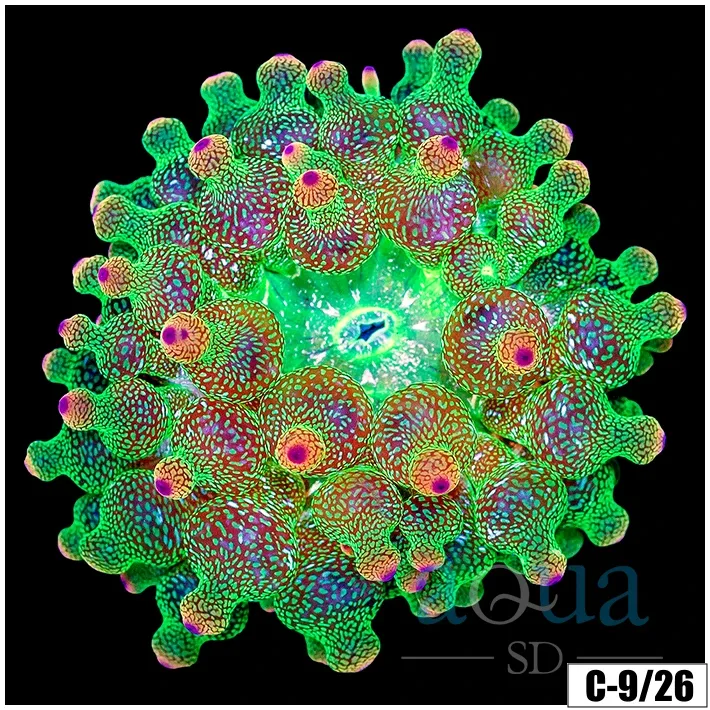
The Bubble Tip Anemone (Entacmaea quadricolor) is native to Fiji, Tonga, and the Indo-Pacific. Often called moon or brain corals, they grow as encrusting domes of tightly packed corallites, each one ringed with contrasting color. They want low to moderate light and gentle flow, feed readily at night, and hold color better than almost any other LPS coral in the shaded lower third of a reef. In the reef aquarium hobby, BTAs are prized for their dramatic tentacle bubbles and vivid coloration—especially acid wash patterns that glow electric green, purple, or blue under actinic lighting.
Unlike many corals, anemones move freely around the tank to find the conditions they prefer. BTAs mostly depend on light to feed, deriving energy from symbiotic algae in their tissue.
2. Tank Size and Setup
Tanks with insufficient light and insufficient anemone feeding will often see them wither away after a few months. Successful bubble tip anemone keeping requires an established tank with at least 6 months of maturity to provide stable water conditions these animals need to survive and thrive.
A minimum of 30 gallons is recommended, though larger tanks help maintain stable temperature and water quality. Provide rocky crevices or ledges where the anemone can anchor. Ensure the tank is mature and stable before adding, and give the anemone space away from corals and powerheads. Plan for the anemone to move; it may or may not choose to stay where you place it.
3. Lighting: Finding the Sweet Spot
Proper lighting in the 250-350 PAR range combined with moderate flow creates optimal conditions for bubble formation and healthy growth. However, moderate-high lighting around 200-250 PAR is often found best, and allow the anemone to adjust its position as desired. Overall these anemones seem adaptable to a variety of lighting conditions.
Watch for bubble loss: Usually due to high light intensity, stress, or suboptimal water conditions. Reduce bright lighting gradually and ensure stable parameters to encourage bubble reformation. Too much flow may cause bubble tips to lose their bubbles.
Use a PAR meter if possible to check your lighting intensity. Start at the lower end (150 PAR) and observe the anemone's response. If it stays closed, increase light gradually.
4. Water Flow and Placement
Flow should be low-moderate. A moderate amount of flow is recommended. Many aquarists agree that too much flow will cause the anemone to stretch out and look stringy. Keeping things moderate will help avoid this from happening.
Turn down the flow and place the Bubble Tip Anemone in a crevice in the rock. After it has attached you may increase the flow again. Avoid directing your jets at the anemone. The creatures enjoy subtle movement at all times.
Leave 3"-5" between the anemone and nearby corals. It can be a real challenge to keep Bubble tip anemones with other corals because they can sting them. Even if you provide ample spacing between the anemone and your corals to prevent chemical warfare, they can move back.
5. Acclimation and First Placement
Gather before you start
- Separate container or acclimation vessel
- Turkey baster or syringe
- Powerhead guards (if not already installed)
- Low-flow rockwork or crevice prepared in the tank
1. Acclimate slowly. Begin with a drip acclimation: place the anemone in a small container and slowly add tank water (one drip every 2–3 seconds) over 30 minutes to an hour. This prevents shock from salinity, pH, and temperature changes.
2. Reduce flow temporarily. When you first introduce the anemone to the tank, turn down any pumps. The flow should be minimal until the anemone gets settled in.
3. Place carefully. Choose a sheltered spot with moderate light and low-to-moderate indirect flow. Try to minimize handling and support it by its slippery foot as much as possible.
4. Monitor for movement. Your new Bubble Tip Anemone will move around the tank until it finds a suitable spot to call home. This can take several days. If it drifts toward corals, adjust the direction of flow in the aquarium to cause it to release and re-attach elsewhere.
5. Increase flow gradually. Once the anemone settles (usually 3–5 days), gradually return powerheads to normal levels.
6. Feeding
Bubble Tip Anemones feeding is one of the easiest parts of their care. These animals get food from a lot of different sources. They are photosynthetic and use light to create food, but supplemental feeding boosts color and health.
These anemones enjoy small morsels of shrimp and squid. They will also accept many frozen foods. Feed once or twice per week. Attach the food to a stick or large tweezers and aim for the mouth at the center of the tentacles.
Avoid overfeeding, which fouls water quality. Small pieces the size of a pea or smaller work well.
7. Water Parameters and Stability
The best way to ensure their long term success and survival is to strive for stable tank parameters. Stable, essential nutrients are the key to keeping healthy anemones that will thrive and grow for years to come.
| Parameter | Target range |
|---|---|
| Temperature | 75–82°F (24–28°C)—stay near 78°F |
| Salinity (Specific Gravity) | 1.024–1.026 (aim for 1.025) |
| pH | 8.1–8.4 |
| Alkalinity | 8–12 dKH |
| Calcium | 400–450 ppm |
| Magnesium | 1,300–1,450 ppm |
| Nitrate | 10–25 ppm (low) |
| Phosphate | 0.01–0.1 ppm (very low) |
Do frequent, small water changes to replace nutrients in your aquarium, avoiding large water changes that can swing parameters suddenly, shocking your anemone and other corals.
8. Signs of Health and Common Problems
| What you notice | What to check next |
|---|---|
| Tentacles fully expanded, holding round bubbles | Lighting and flow are good; continue current care |
| Tentacles closed or flat for more than 24 hours | Check temperature stability, lighting, flow, and water quality |
| Loss of bubble tips (stringy tentacles) | Reduce light intensity gradually; check for excess flow or stress |
| Pale or bleached color | Reduce light (moving to lower PAR); check for rapid parameter swings |
| Drifting toward corals repeatedly | Adjust flow direction; ensure space between corals is adequate |
| Visible injury, tissue damage, or brown slime | Move away from aggressive neighbors; perform small water changes; consider dipping |
A healthy anemone should hold vibrant color, keep its tentacles inflated, and feed readily when food is offered.
Your care log
Placed on: _______ Light (PAR): _______ Flow setting: _______
First feeding: _______ Feeding schedule: _______
Temperature: _______ Salinity: _______
Notes on movement and settling: _______________________________________________________
Sources
Checked October 17, 2026.
- Bulk Reef Supply, "ECC Rainbow Bubble Tip Anemone," https://www.bulkreefsupply.com/ecc-rainbow-bubble-tip-anemone-eye-catching-coral.html
- TopShelf Aquatics, "Bubble Tip Anemone Care Guide: Feeding, Lighting, and More," https://topshelfaquatics.com/blogs/news/bubble-tip-anemone-care-guide
- Aquarium Breeder, "How to Care for Bubble Tip Anemones," https://aquariumbreeder.com/how-to-care-for-bubble-tip-anemones/
- Reef Chasers, "Bubble Tip Anemone Care Guide," https://reefchasers.com/blogs/reef-chasers-coral-care-guide/bubble-tip-anemones
- Vivid Aquariums, "Bubble Tip Anemone," https://vividaquariums.com/products/bubble-tip-anemone
- Reef Builders, "Introduction to Bubble Tip Anemone Care," https://reefbuilders.com/2025/12/29/introduction-to-bubble-tip-anemone-care/
- Reef2Reef Forum, "Bubble Tip Anemone Tips and Tricks," https://www.reef2reef.com/threads/bubble-tip-anemone-tips-and-tricks.864181/page-2