

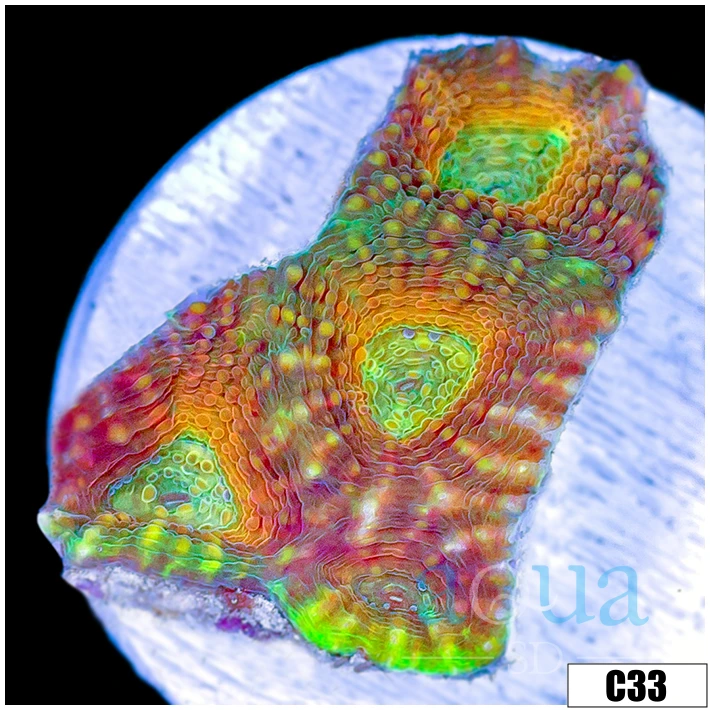
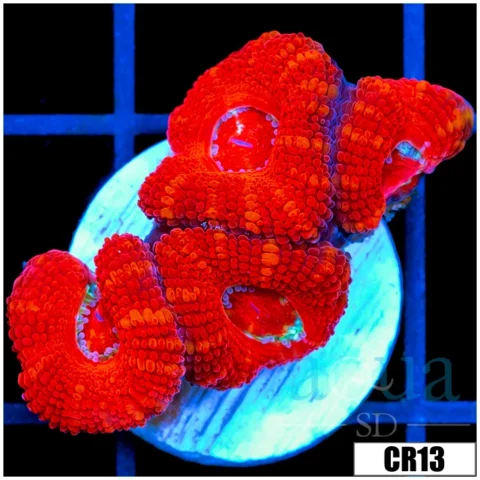
Mango Tango Enchinata
$34.99With code FALL70: $10.50Code applies automatically at checkout
Out of stock
- Packed to order with heat or cold packs for the season
- Eating and settled in our systems before it ships
- Questions? Ask a reef keeper
Share
About this coral
Mango Tango Echinata – Premium Multicolor Acanthastrea LPS Coral
About This Coral
Bring spectacular tropical color to your reef aquarium with the Mango Tango Echinata, a premium large-polyp stony (LPS) coral known for its striking orange, blue, and green coloration, intricate patterns, and textured appearance.
The Mango Tango Echinata is a distinctive collector’s variety of Acanthastrea echinata, a popular encrusting coral prized for its brilliant pigmentation and attractive fleshy tissue.
Originally popularized as the WWC Mango Tango Echinata by World Wide Corals, this named variety has become a desirable addition to premium LPS coral collections.
Unlike the rounded, individual polyps of Acan Lords, Echinata corals typically develop a more continuous, textured surface. Their closely connected corallites and fleshy tissue create an attractive encrusting appearance as the colony grows across suitable rockwork.
The Mango Tango variety is particularly eye-catching because of its contrasting warm and cool colors. Orange and green pigmentation can create dramatic patterns against blue-toned tissue, especially under appropriate reef aquarium lighting.
This coral is ideal for experienced hobbyists and intermediate reef keepers seeking an unusual LPS specimen with distinctive coloration and strong collector appeal.
Mango Tango Echinata generally prefers low-to-moderate lighting, gentle-to-moderate alternating water flow, and consistent water chemistry.
It is also important to provide adequate space around the coral. Acanthastrea echinata can be aggressive toward neighboring corals, extending feeding or stinging tentacles that may injure nearby livestock.
With appropriate placement, occasional supplemental feeding, and stable aquarium conditions, the Mango Tango Echinata can develop into a spectacular focal point.
This is a live LPS coral. Exact frag size, colors, and growth patterns may vary depending on available inventory.
Features
- Premium Mango Tango color variety associated with the WWC collector lineage.
- Brilliant orange, blue, and green coloration creates striking contrast.
- Acanthastrea echinata LPS coral with a distinctive fleshy, textured surface.
- Encrusting growth pattern allows the coral to expand across suitable mounting surfaces.
- Eye-catching under actinic lighting as fluorescent pigments become more noticeable.
- Low-to-moderate lighting requirements suitable for established reef aquariums.
- Gentle-to-moderate alternating water flow supports healthy tissue condition.
- Photosynthetic coral supported by symbiotic algae.
- Responsive to supplemental feeding with suitably sized marine foods.
- Collector-grade appearance appeals to enthusiasts specializing in colorful LPS corals.
- Suitable for isolated coral islands to help manage its aggressive behavior.
- Potential for colony development as the frag becomes established.
- Attractive lower-reef placement under appropriate aquarium conditions.
- Distinctive color contrast adds variety to mixed LPS collections.
- Aquacultured examples are available from established coral growers.
Specifications
| Specification | Details |
|---|---|
| Product Name | Mango Tango Echinata |
| Common Name | Mango Tango Acan Echinata |
| Scientific Name | Acanthastrea echinata |
| Coral Type | Large-Polyp Stony Coral (LPS) |
| Family | Lobophylliidae |
| Trade Variety | Mango Tango |
| Known Collector Lineage | WWC Mango Tango |
| Coloration | Typically Orange, Blue, and Green |
| Care Level | Moderate |
| Lighting | Low to Moderate |
| Recommended Lighting | Approximately 100–150 PAR |
| Water Flow | Low to Moderate, Alternating |
| Placement | Lower Reef or Protected Rockwork |
| Temperament | Aggressive |
| Feeding | Photosynthetic; Supplemental Feeding Beneficial |
| Growth Form | Encrusting Colony |
| Growth Rate | Generally Moderate |
| Aquarium Type | Established Saltwater Reef Aquarium |
| Frag Size | Varies by Available Specimen |
| Aquaculture Status | Confirm for Individual Inventory |
| WYSIWYG Status | Confirm Against Current Listing |
| WooCommerce Category | Live Goods > Corals > LPS |
Recommended Water Parameters
| Parameter | Recommended Range |
|---|---|
| Temperature | 75–79°F (24–26°C) |
| Salinity | 1.024–1.026 Specific Gravity |
| pH | 8.0–8.4 |
| Alkalinity | 8–9.5 dKH |
| Calcium | 400–450 ppm |
| Magnesium | 1250–1400 ppm |
| Nitrate | Approximately 2–15 ppm |
| Phosphate | Approximately 0.03–0.10 ppm |
| Lighting | Approximately 100–150 PAR |
| Water Movement | Low to Moderate, Alternating |
These are general Acanthastrea echinata care guidelines. Individual specimens may require adjustments based on their previous holding conditions.
Stable water chemistry is more important than maintaining any single exact number.
Lighting Requirements
The Mango Tango Echinata performs best under low-to-moderate reef aquarium lighting.
World Wide Corals recommends approximately 100–150 PAR for its Mango Tango Echinata.
Although Echinata corals can tolerate different lighting environments, excessive intensity may cause fading, bleaching, or persistent tissue contraction.
Lighting Recommendations
- Begin newly introduced frags at the lower end of the recommended range.
- Increase lighting gradually if necessary.
- Avoid sudden changes in light intensity or spectrum.
- Monitor tissue expansion and coloration.
- Reduce intensity if bleaching or tissue stress develops.
- Maintain a consistent reef aquarium photoperiod.
Under blue-spectrum or actinic lighting, the Mango Tango Echinata’s orange and green pigmentation may appear particularly vivid.
Actual coloration depends on the specimen and aquarium lighting conditions.
Water Flow Requirements
The Mango Tango Echinata prefers low-to-moderate, alternating water flow.
Appropriate circulation helps transport nutrients, remove metabolic waste, and prevent debris accumulation around the colony.
Strong, direct water jets should be avoided because they may damage the coral’s fleshy tissue.
For best results:
- Provide gentle-to-moderate circulation.
- Use variable rather than continuously concentrated flow.
- Avoid placing the coral directly in front of a powerful wavemaker.
- Keep the colony free from accumulated detritus.
- Observe tissue expansion to determine whether the flow is appropriate.
Feeding and Nutrition
The Mango Tango Echinata obtains much of its energy through photosynthesis, supported by symbiotic algae living within its tissue.
However, it also captures and consumes small marine foods.
Supplemental feeding may support healthy tissue condition and colony development.
Suitable Foods
- Small mysis shrimp
- Finely chopped marine shrimp
- Appropriate frozen LPS coral foods
- Small meaty marine food particles
- Suitable coral pellets
Recommended Feeding Schedule
Feed a small amount of appropriately sized marine food approximately once per week, adjusting to the coral’s response.
World Wide Corals specifically recommends weekly target feeding for its Mango Tango Echinata.
For effective feeding:
- Observe the coral for visible feeding tentacles.
- Use a feeding pipette to deliver a small food portion.
- Allow the coral time to capture and consume the food.
- Avoid forcing food into the tissue or mouth.
- Remove uneaten food when practical.
Feeding when tentacles are extended improves the likelihood that the food will be captured rather than falling into the surrounding rockwork.
Avoid overfeeding, which can increase aquarium nutrient levels.
Placement and Coral Compatibility
Ideal Placement
The Mango Tango Echinata is generally best positioned on lower rockwork or a stable coral island.
Suitable placement should provide:
- Approximately 100–150 PAR lighting
- Low-to-moderate alternating flow
- Stable mounting surfaces
- Room for encrusting growth
- Separation from neighboring corals
- Easy access for inspection and occasional feeding
Important: Aggressive Coral
Acanthastrea echinata is considered an aggressive LPS coral.
It can produce stinging tentacles that damage nearby corals, particularly at night.
Provide several inches of separation from neighboring specimens and adjust the distance based on actual nighttime tentacle extension.
Avoid positioning it directly beside:
- Acan Lord / Micromussa colonies
- Zoanthid gardens
- Fleshy brain corals
- SPS colonies
- Other valuable LPS corals
Managing Encrusting Growth
As the Mango Tango Echinata grows, it may expand across neighboring rock surfaces.
Using an isolated rock or dedicated coral island makes it easier to maintain separation from more delicate livestock.
Monitor its edges and surrounding corals regularly.
Growth and Colony Development
Under favorable conditions, Mango Tango Echinata can gradually spread across its mounting surface.
Rather than developing long branches, it forms an encrusting colony with fleshy tissue covering its growing skeleton.
Successful growth depends on:
- Stable alkalinity and calcium
- Consistent salinity and temperature
- Appropriate lighting
- Suitable circulation
- Balanced nutrients
- Adequate spacing
- Healthy tissue and pest prevention
The coral’s appearance may change as it develops additional tissue and grows over its mounting surface.
Acclimation and Introduction Instructions
- Inspect the shipment: Examine the frag and shipping container immediately upon arrival.
- Check aquarium parameters: Confirm that temperature, salinity, alkalinity, and other important values are stable.
- Equalize temperature: Carefully bring the sealed shipping container toward the aquarium’s temperature.
- Follow appropriate acclimation procedures: Avoid prolonged exposure to opened shipping water.
- Inspect for pests: Examine the frag plug, skeleton, and exposed surfaces for unwanted organisms.
- Use a suitable coral dip if appropriate: Follow the manufacturer’s directions for fleshy LPS corals.
- Quarantine when possible: Observe the coral separately before introducing it into an established reef.
- Select a protected location: Begin under low-to-moderate lighting with alternating indirect flow.
- Provide adequate spacing: Keep the coral away from vulnerable neighboring specimens.
- Secure the frag: Attach the coral to stable reef rockwork or a suitable mounting surface.
- Allow recovery time: Temporary contraction after shipment is possible.
- Monitor closely: Watch for normal tissue expansion, coloration, feeding response, and signs of stress.
Never pour coral dip or shipping water directly into the aquarium.
Signs of a Healthy Mango Tango Echinata
Healthy specimens generally exhibit:
- Fleshy tissue covering the living skeleton
- Consistent orange, blue, and green pigmentation
- Normal feeding tentacle activity
- Gradual encrusting growth
- Healthy tissue along colony edges
- No progressive tissue recession
Temporary contraction after handling may be normal.
However, persistent tissue recession, bleaching, exposed skeleton, or rapid loss of coloration may indicate stress.
Evaluate lighting, water movement, chemistry, and possible pest activity if these symptoms develop.
Important Product Information
The Mango Tango Echinata is a live Acanthastrea LPS coral intended for established saltwater reef aquariums.
Mango Tango is a named aquarium-trade variety rather than a separate scientific species.
World Wide Corals has propagated and sold the WWC Mango Tango Echinata as a farmed Acanthastrea echinata variety.
However, the product name alone does not establish that every specimen sold as Mango Tango Echinata is directly traceable to the WWC lineage.
The exact lineage, frag size, aquaculture history, and coloration of your inventory should be confirmed before making those guarantees.
Unless an individual specimen is specifically identified as WYSIWYG (What You See Is What You Get), photographs should be treated as representative examples.
Color appearance may vary under white, blue, and actinic lighting.
This coral is not suitable for freshwater aquariums.
Availability and Pricing
We ship daily, contact us for availability and price.
Recommended Application
The Mango Tango Echinata is a spectacular addition to established mixed reef aquariums, premium LPS collections, and dedicated Acanthastrea coral displays.
With its striking blue, orange, and green coloration, textured encrusting growth, and collectible appearance, this coral offers impressive visual appeal for reef keepers who can provide stable water conditions, suitable lighting, and adequate separation from neighboring corals.
You might also like
-
SoldLive
 LPS Corals
Super Mario Bowerbanki
$87.99With code FALL70: $24.00Code applies automatically at checkout -
Live
 Chalice Corals
Boogie Down Chalice
Price range: $24.99 through $64.99With code FALL70: $15.00Code applies automatically at checkout Choose size This product has multiple variants. The options may be chosen on the product page -
SoldLive
 Goniopora & Alveopora
Cherry Blossom Goni
Original price was: $119.99.$52.50Current price is: $52.50.With code FALL70: $36.00Code applies automatically at checkout -
SoldLive
 Acans
Crimson Peppermint Acan Lord
Original price was: $79.99.$28.00Current price is: $28.00.