

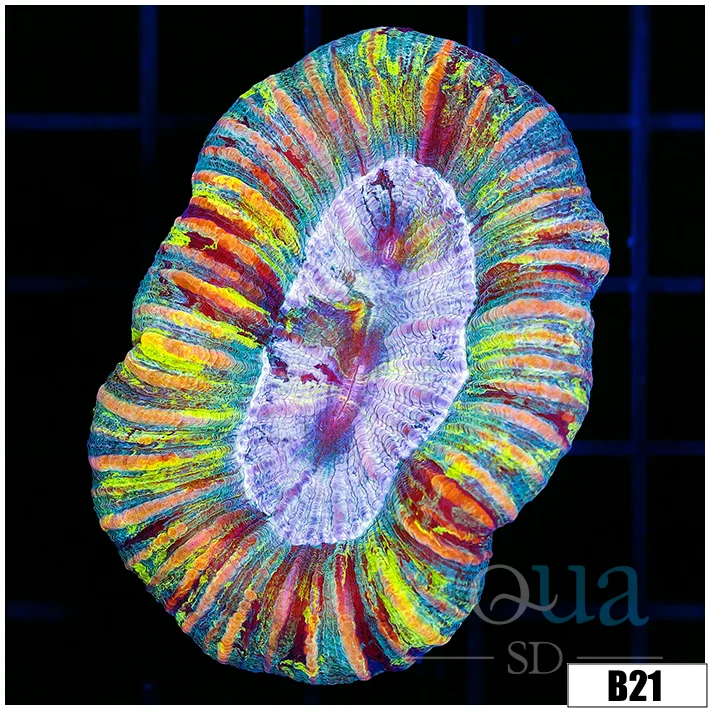
Aussie Rainbow Road Trachy
Original price was: $499.99.$175.00Current price is: $175.00.
Out of stock
- Packed to order with heat or cold packs for the season
- Eating and settled in our systems before it ships
- Questions? Ask a reef keeper
Share
About this coral
Aussie Rainbow Road Trachy – Premium Australian Rainbow Trachyphyllia LPS Coral
About This Coral
Bring an extraordinary display of color and natural beauty to your saltwater aquarium with the Aussie Rainbow Road Trachy, a premium Australian Trachyphyllia coral offered under the distinctive Rainbow Road trade name.
Trachyphyllia corals, commonly known as Open Brain Corals, are among the most spectacular large-polyp stony (LPS) corals in the reef aquarium hobby. Their oversized, fleshy tissue, intricate folds, and stunning coloration make them highly desirable centerpiece corals.
The Aussie Rainbow Road Trachy celebrates the colorful appeal of Australian Trachyphyllia, which are particularly admired for their remarkable pigmentation and unique patterns.
Rainbow Trachyphyllia varieties may feature combinations of brilliant red, orange, yellow, green, blue, and pink, often arranged in striking bands, contrasting sections, or intricate patterns.
The exact colors and pattern of the Rainbow Road variety should be confirmed against the individual specimen, as these characteristics can vary significantly.
Scientifically, Trachyphyllia corals are generally identified as Trachyphyllia geoffroyi, a free-living stony coral that naturally inhabits sandy or sediment-covered areas of tropical marine environments.
Unlike many branching corals, Trachyphyllia develop large, fleshy polyps surrounding a folded calcium carbonate skeleton.
When conditions are favorable, the coral’s tissue can inflate dramatically, creating a soft, rounded appearance that may extend well beyond the underlying skeleton.
Their dramatic tissue expansion, fascinating feeding responses, and exceptional coloration make Trachyphyllia favorites among collectors of premium Australian LPS corals.
With stable water chemistry, gentle water movement, suitable lighting, and occasional supplemental feeding, the Aussie Rainbow Road Trachy can become a stunning centerpiece in an established marine reef aquarium.
This is a live coral. Individual specimen coloration, size, pattern, and tissue expansion may vary.
Features
- Premium Australian Trachyphyllia offered under the Rainbow Road trade name.
- Rainbow-inspired coloration with potentially vibrant combinations of contrasting pigments.
- Large, fleshy LPS appearance creates impressive visual impact.
- Distinctive folded skeletal structure gives Trachyphyllia its recognizable open-brain appearance.
- Dramatic tissue expansion under favorable aquarium conditions.
- Low-to-moderate lighting preference accommodates suitable reef aquarium layouts.
- Gentle, indirect water circulation supports healthy polyp inflation.
- Photosynthetic nutrition supported by symbiotic algae within the coral tissue.
- Strong feeding response to appropriately sized marine meaty foods.
- Excellent sand-bed centerpiece for established reef aquariums.
- Beautiful under reef aquarium lighting with natural pigments that may appear fluorescent.
- Collector appeal for hobbyists specializing in colorful Australian LPS corals.
- Generally manageable husbandry for intermediate reef aquarium enthusiasts.
- Unique living specimen with natural variations in color and growth.
- Long-term display potential when maintained under stable conditions.
Specifications
| Specification | Details |
|---|---|
| Product Name | Aussie Rainbow Road Trachy |
| Common Name | Australian Rainbow Trachyphyllia / Open Brain Coral |
| Scientific Identification | Trachyphyllia geoffroyi (typical trade identification) |
| Coral Type | Large-Polyp Stony Coral (LPS) |
| Family | Merulinidae |
| Origin Designation | Australian |
| Trade Variety | Rainbow Road |
| Care Level | Moderate |
| Lighting | Low to Moderate |
| Suggested Starting PAR | Approximately 50–100 |
| Water Flow | Low, Gentle and Indirect |
| Recommended Placement | Sand Bed |
| Temperament | Semi-Aggressive; Allow Adequate Spacing |
| Feeding | Photosynthetic; Supplemental Feeding Beneficial |
| Growth Form | Free-Living Fleshy Open Brain Coral |
| Growth Rate | Generally Slow |
| Aquarium Type | Established Saltwater Reef Aquarium |
| Guaranteed Colors | Not Independently Confirmed |
| Specimen Diameter | Varies |
| WYSIWYG Status | Confirm Against Available Listing |
| WooCommerce Category | Live Goods > Corals > LPS |
Recommended Water Parameters
| Parameter | Recommended Range |
|---|---|
| Temperature | 75–79°F (24–26°C) |
| Salinity | 1.024–1.026 Specific Gravity |
| pH | 8.1–8.4 |
| Alkalinity | 7.5–9 dKH |
| Calcium | 400–450 ppm |
| Magnesium | 1280–1400 ppm |
| Nitrate | Approximately 5–15 ppm |
| Phosphate | Approximately 0.03–0.10 ppm |
| Lighting | Approximately 50–100 PAR Initially |
| Water Movement | Gentle, Indirect |
| Aquarium Maturity | Established, Stable Marine System |
These values are general Trachyphyllia husbandry guidelines. Individual specimens may require adjustments based on their previous holding conditions and their response after introduction.
Maintaining stable parameters is more important than achieving a single exact measurement.
Lighting Requirements
The Aussie Rainbow Road Trachy generally thrives under low-to-moderate reef aquarium lighting.
A starting intensity of approximately 50–100 PAR is appropriate for many Trachyphyllia specimens. Some established individuals can tolerate moderately brighter conditions after gradual acclimation.
Excessive illumination can cause bleaching, tissue contraction, or deterioration of the coral’s fleshy mantle.
Lighting Recommendations
- Begin newly introduced specimens under relatively gentle illumination.
- Gradually increase lighting only when needed.
- Avoid placing the coral directly under intense reef lights without acclimation.
- Monitor tissue inflation, coloration, and feeding behavior.
- Reduce intensity if bleaching or prolonged contraction develops.
- Maintain a consistent daily photoperiod.
Under blue-spectrum lighting, the coral’s fluorescent pigments may appear especially vibrant.
Actual coloration depends on the individual specimen and aquarium lighting settings.
Water Flow Requirements
Trachyphyllia corals prefer gentle, indirect water movement.
The Aussie Rainbow Road Trachy should be positioned where its fleshy tissue can inflate naturally without being buffeted by strong currents.
Excessive flow may cause the tissue to rub against the underlying skeleton, potentially leading to irritation or injury.
Ideal Water Movement
- Gentle circulation around the coral.
- Enough flow to prevent debris accumulation.
- No concentrated water jet directed at the coral.
- Minimal excessive folding or distortion of the fleshy mantle.
- Sufficient circulation to maintain normal aquarium water quality.
Avoid placing the coral directly in front of a powerful wavemaker or return nozzle.
Feeding and Nutrition
The Aussie Rainbow Road Trachy is photosynthetic and receives much of its energy from symbiotic algae living within its tissues.
However, Trachyphyllia corals can also capture and consume marine meaty foods, often displaying a fascinating feeding response.
Occasional supplemental feeding may support tissue health and long-term growth.
Suitable Foods
- Mysis shrimp
- Finely chopped marine shrimp
- Small portions of marine fish
- Appropriate LPS coral pellets
- Finely chopped krill
- Specialized meaty coral foods
Recommended Feeding Schedule
Offer appropriately sized food approximately once or twice per week, depending on the specimen’s feeding response and overall aquarium conditions.
Use a feeding pipette or similar tool to gently place food near the coral’s mouth.
Temporarily reducing circulation during feeding may help prevent food from being carried away.
Do not force food into the mouth, feed oversized portions, or leave uneaten food to decay in the aquarium.
Placement and Coral Compatibility
Ideal Sand-Bed Placement
The Aussie Rainbow Road Trachy is best positioned directly on a clean, stable sand bed.
Its delicate fleshy tissue may expand well beyond the underlying skeleton, making placement on sharp rockwork undesirable.
A smooth sand substrate helps reduce the risk of tissue damage.
Choose a location offering:
- Low-to-moderate lighting
- Gentle indirect circulation
- Adequate room for tissue expansion
- Stable substrate
- Separation from aggressive corals
- Protection from falling rocks or equipment
Mixed Reef Compatibility
Trachyphyllia corals can be maintained in mixed reef aquariums when given sufficient space.
Although generally less aggressive than some highly stinging LPS varieties, they should not be crowded against neighboring corals.
Provide generous clearance from Torch Corals, Galaxea, and other species capable of extending long sweeper tentacles.
Tissue Expansion
A healthy Trachyphyllia may inflate substantially during the day, sometimes appearing much larger than its skeleton.
Allow plenty of open space around the coral rather than placing it between tightly packed rocks.
Acclimation and Introduction Instructions
- Inspect the shipment: Carefully examine the coral and shipping container upon arrival.
- Check aquarium conditions: Confirm stable temperature, salinity, alkalinity, and other major parameters.
- Equalize temperature: Bring the sealed shipping container gradually toward the aquarium’s temperature.
- Follow appropriate acclimation procedures: Avoid unnecessarily prolonged exposure to opened shipping water.
- Inspect for tissue damage: Look for tears, excessive exposed skeleton, or progressive tissue deterioration.
- Handle carefully: Lift the coral by its hard skeleton or supporting base, never by its inflated tissue.
- Use coral dips cautiously: Follow manufacturer instructions and verify compatibility with fleshy LPS corals.
- Quarantine when possible: Observe the coral in a separate system before introducing it into an established display.
- Position on the sand bed: Choose a protected location with suitable light and gentle flow.
- Allow recovery: Give the coral time to regain normal tissue expansion following shipping.
- Monitor closely: Observe coloration, inflation, feeding response, and tissue condition.
Never pour shipping water or coral-dip solution directly into the display aquarium.
Signs of a Healthy Trachyphyllia
A healthy Aussie Rainbow Road Trachy commonly displays:
- Full, fleshy tissue expansion
- Consistent coloration appropriate to the individual specimen
- Intact tissue covering the living skeleton
- Normal feeding responses
- A mouth that is not persistently gaping
- No progressive tissue recession
Temporary contraction following shipping or handling can be normal.
However, persistent deflation, tissue tearing, bleaching, exposed skeleton, or progressive loss of tissue may indicate environmental stress or injury.
Important Product Information
The Aussie Rainbow Road Trachy is a live Trachyphyllia coral intended for established saltwater reef aquariums.
Rainbow Road is an aquarium-trade name rather than a separate scientifically recognized species.
The Australian origin designation, exact specimen colors, physical dimensions, and WYSIWYG status should be confirmed against the specific supplier listing.
Rainbow coloration can vary considerably between individual Trachyphyllia specimens, and the trade name alone does not guarantee any particular combination of pigments.
Unless specifically identified as WYSIWYG (What You See Is What You Get), photographs should be treated as representative rather than guarantees of the exact coral shipped.
Colors may appear different under white, blue, or actinic aquarium lighting.
Trachyphyllia are solitary fleshy corals and should not be treated like branching stony corals that can be routinely fragmented.
This coral is not suitable for freshwater aquariums.
Availability and Pricing
We ship daily, contact us for availability and price.
Recommended Application
The Aussie Rainbow Road Trachy is a spectacular choice for established reef aquariums, premium Australian coral collections, and hobbyists seeking a colorful sand-bed centerpiece.
With its impressive fleshy tissue, beautiful potential rainbow coloration, fascinating feeding behavior, and manageable lighting requirements, this Trachyphyllia offers exceptional visual appeal in a carefully maintained saltwater aquarium.
You might also like
-
SoldLive
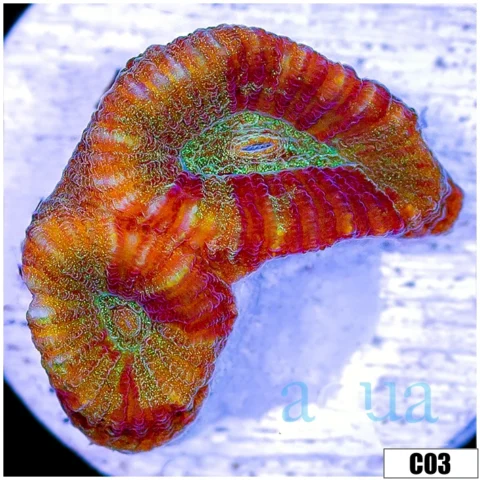 LPS Corals
Blood Moon Favia
$21.99With code FALL70: $6.00Code applies automatically at checkout -
SoldLive
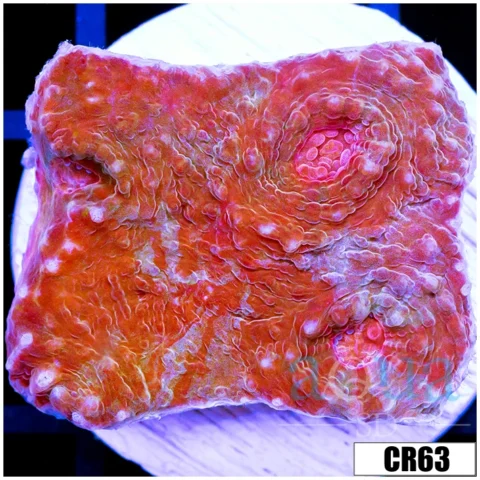 Chalice Corals
Peaches Chalice
$14.99 -
SoldLive
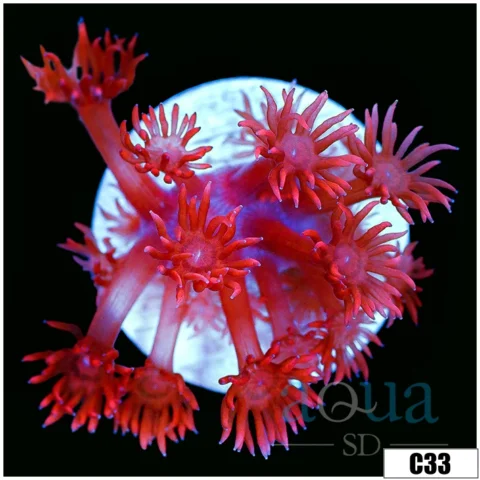 Goniopora & Alveopora
Indo Cultured Red Goni
$99.99With code FALL70: $30.00Code applies automatically at checkout -
SoldLive
 Acans
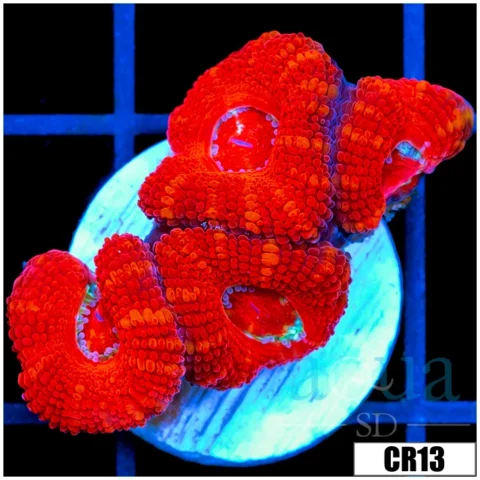
Crimson Peppermint Acan Lord
Original price was: $79.99.$28.00Current price is: $28.00.