

Orange Sun Coral Dendro Care: Light, Flow and Feeding
You will learn how to place, light, feed and maintain an Orange Sun Coral, a non-photosynthetic LPS coral that requires hand feeding and low lighting.
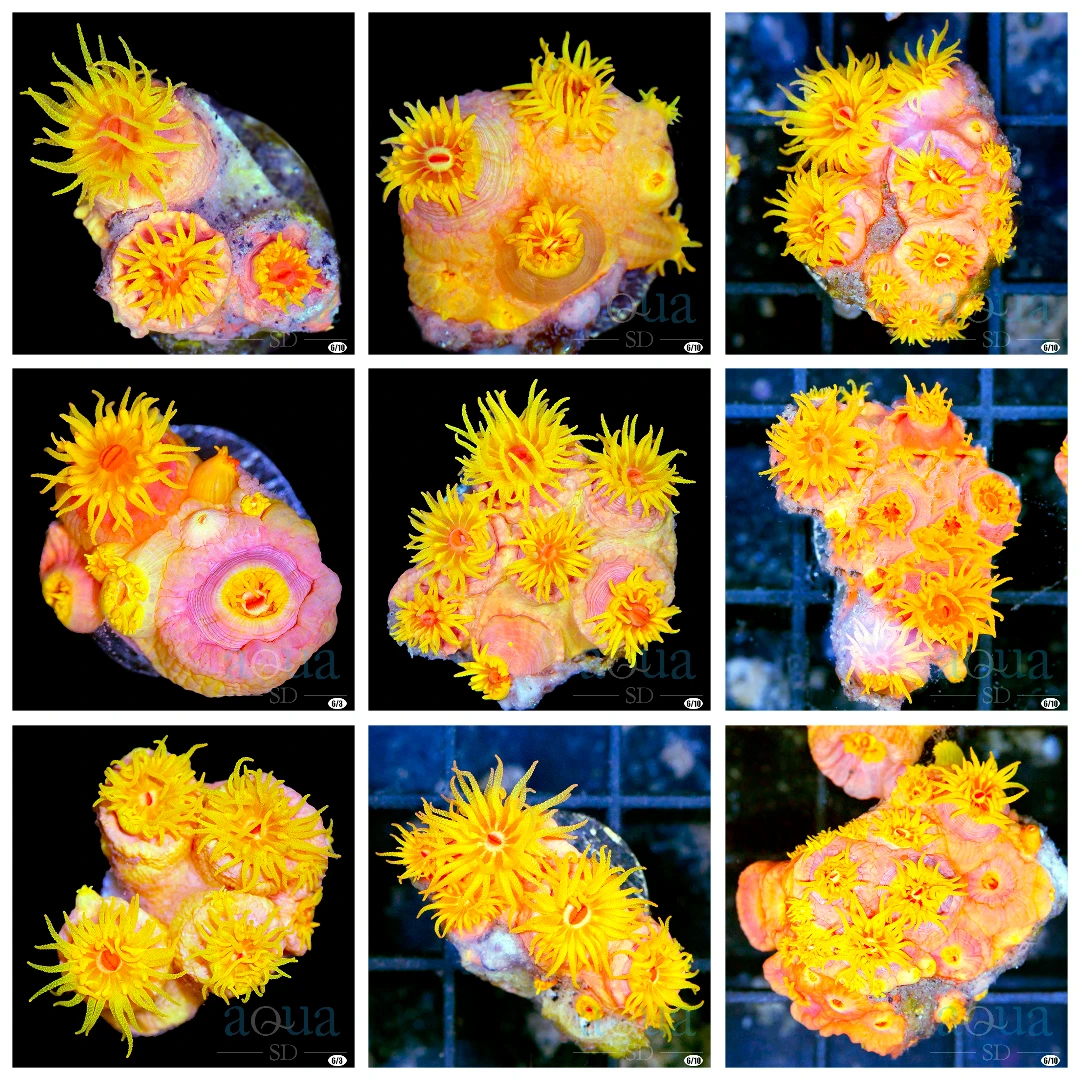
Orange Sun Coral Dendro Care: Light, Flow and Feeding
The Orange Sun Coral's scientific name, Tubastraea, is derived from Latin words meaning "tube" and "star," describing its tubular skeleton with stars at the tip of each tube. Sun coral care looks nothing like caring for most other reef corals—and that is the key to keeping one alive.
Coral care · Detailed tutorial · About 7 minutes · Beginner friendly (once you understand the system)
The key habit: The Orange Sun Coral does not contain symbiotic algae, so it must be fed vitamin-enriched brine shrimp or micro-plankton from an eye dropper directly to each polyp. Feed it on a schedule whether it looks hungry or not—this is your one job.
Shop the Orange Sun Coral Dendro
In this guide
- What you are keeping: the azooxanthellate coral
- Lighting: why less is better
- Water flow: moderate and indirect
- Placement: shaded areas of the tank
- Feeding: a schedule, not impulse
- Water parameters: a stable baseline
- Acclimation and long-term care
1. What you are keeping: the azooxanthellate coral
The Sun Coral has a large polyp stony (LPS) body with a round center skeleton and tubes branching off in all directions. Unlike photosynthetic corals, Tubastraea does not engage in photosynthesis. Instead, they are heterotrophic and feed on small planktonic organisms, such as zooplankton and microorganisms, which they capture using their tentacles. In the wild, it is often found on reef ledges or steep reef slopes.
The Orange Sun Coral can be quite fragile and must be handled with extra care. When placing in the aquarium, it must be picked up by its underside.
2. Lighting: why less is better
Here's what surprises most keepers: your sun coral will not benefit from bright lighting. PAR should be less than 50 µmol/m²/s, ideal for shaded or overhung areas of the aquarium. High lighting might harm its tissue. It will usually only expand its polyps in the evening or when it is hungry.
Place it under a ledge, in a shadowed corner, or on the lower back of your aquascape. If you have strong lighting elsewhere in your tank, that's fine—just keep this coral out of direct light. It will thrive in a part of the tank other corals might struggle in.
3. Water flow: moderate and indirect
It should have moderate to high water current combined with low lighting levels. More specifically, moderate, indirect flow provides enough water movement to carry food particles and prevent detritus buildup, but avoids strong, direct currents that may prevent polyps from opening fully.
Aim your flow to pass near the coral without pointing directly at it. A powerhead or return line set to medium strength 1–2 feet away works well. This carries your feeding particles to the polyp tentacles and keeps the coral free of settling debris.
4. Placement: shaded areas of the tank
These corals naturally grow in caves and under ledges where it is darker. Place your sun coral:
- Under a cave or overhang
- Behind rockwork on the lower tank walls
- In a shaded corner away from your main lighting
- Not near high-flow areas or competing corals' stinging tentacles
Pick it up by its underside when placing it in the tank. Once positioned, it will attach to rock naturally.
5. Feeding: a schedule, not impulse
This is the heart of sun coral care. Sun corals cannot photosynthesize sunshine so their only source of survival is by eating food.
When you first get your sun coral you need to feed it every day, twice a day, for the first 10 days or so. Once you get all the flowers to show, you can feed it every other day, or every four days, once a day moving forward.
Feeding schedule and method
Feed your coral with items such as brine shrimp, very small fish, copepods, mysis shrimp, and small pieces of clam and scallops. If you have inverts and fish competing for food, isolate the coral to feed it, then feed 2–3 times a week mysis or brine shrimp using a turkey baster to cover polyps with food after allowing time (about 30 minutes) for full extension of tentacles.
You must feed every solitary polyp or else the colony will die from hair algae attacking its weakened skeleton.
The coral will also benefit from the addition of calcium, strontium, and other trace elements to the water.
6. Water parameters: a stable baseline
Your tank does not need to be perfect, but it must be stable. Required parameters are: Temperature 24–27°C (75–81°F), pH 8.1–8.4, Salinity 1.024–1.026 SG, Alkalinity (dKH) 8–12, Calcium 400–450 ppm, Magnesium 1250–1350 ppm, Nitrate less than 10 ppm.
Do not stress about perfection. Maintain these ranges with routine water changes and standard reef maintenance. Temperature stability proves especially important—fluctuations beyond 2°F daily can cause polyps to remain closed for days.
7. Acclimation and long-term care
Gather before you start
- Turkey baster or feeding syringe
- Frozen or live brine shrimp, mysis, or finely chopped coral food
- Small container (optional, for isolation feeding)
- Test kit for alkalinity and calcium
- Heater with controller (if tank temperature varies)
Acclimation steps
1. Place the coral in a dimly lit area, ideally shaded where it will live permanently.
2. Wait 24–48 hours before feeding; let it adjust to your tank.
3. Smell test: The coral "smells" food and will respond by opening up to the food inside. If you have frozen food, thaw a small piece in a cup of tank water nearby. The coral's polyps should open.
4. Begin feeding every day, twice daily for the first 10 days with 1–2 pieces of thawed brine shrimp per polyp.
5. Watch for polyp extension. The coral will usually only expand its polyps in the evening or when it is hungry.
6. Once all polyps are regularly opening, reduce to every other day or every few days (once daily).
7. Maintain a feeding log to track your schedule and your coral's response.
What you notice and what to check
| What you notice | What to check next |
|---|---|
| Polyps open fully and extend tentacles | Feeding is working; maintain schedule and flow |
| Polyps stay closed for days | Water temperature (check for fluctuations); flow strength (may be too strong); recent feeding or water change |
| Orange tissue looks pale or white | Confirm lighting is low; check calcium and alkalinity levels |
| Small new polyps budding from base | Coral is healthy; growth is natural; this means it will reproduce |
| Tissue recession or bleaching | Increase calcium and alkalinity immediately; reduce lighting further; stable temperature; cease feeding for 24 hours if other parameters are off |
| Visible detritus on coral surface | Increase water flow slightly; improve tank filtration |
Your care log
Placed on: ____________
Light (PAR): ____________
Flow strength (GPH or setting): ____________
First feeding date: ____________
Feeding schedule: ____________ times per week, ____________ pieces per polyp
Thawing/food method: ____________
Last calcium test: ____________
Last alkalinity test: ____________
Temperature range (daily high/low): ____________
Sources
Checked November 17, 2026.
1. Rock n Critters, "Orange Sun Coral"
2. Real Aquatics, "Sun Hard Coral Tubastrea Sp"
3. Quality Marine, "Yellow Tube Coral"
4. Saltwater Aquarium Blog, "Sun coral care guide: facts, placement & feeding tube coral"
5. Discover HubPages, "Sun Coral Care Guide"
6. Nano Reef Community, "Sun Coral questions"
7. Ocean Info, "Sun Coral: Appearance, Habitat, Diet, and More"
8. Miss Salt Tease, "The prettiest CORAL in the Sun.. The Sun Coral"
9. Aquarium Source, "The Best Sun Coral Care Guide: Fragging, Feeding and Flow"
10. Tank Facts, "All about the Sun Coral"
11. Coral Axy, "Tubastrea Faulkneri 'Sun Coral'"
12. Coral Frags, "Our Tubastrea Coral Frags Online"
13. Tidal Gardens, "HOW TO CARE FOR YOUR SUN CORAL"
14. Aquamarine Power, "Sun Coral Care Guide: Complete Tubastraea Species Manual"