

Red Finger Gorgonia Care: Light, Flow, Feeding and Placement
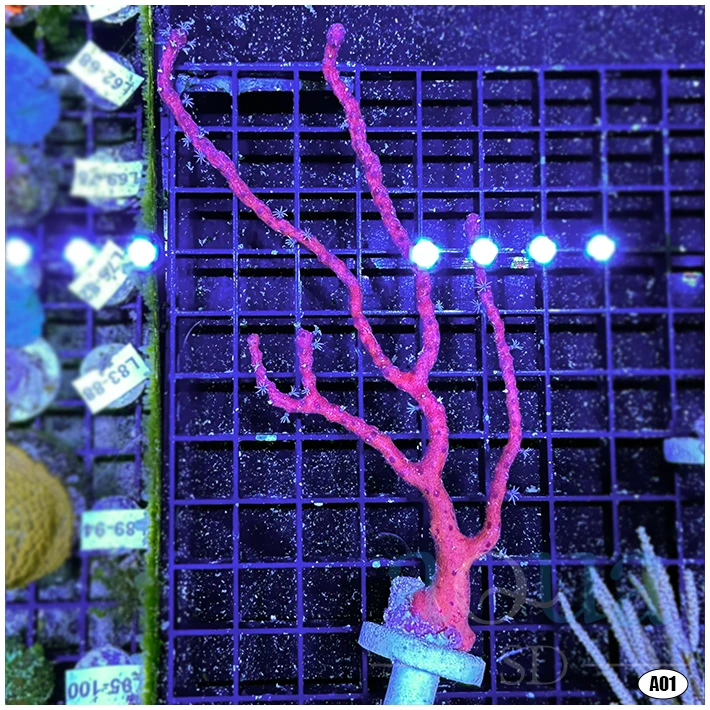
Red Finger Gorgonia Care: Light, Flow, Feeding and Placement
Red Finger Gorgonia care begins with understanding this non-photosynthetic soft coral and how it differs from the photosynthetic corals in many reef tanks. Also known as the Red Tree Gorgonian or Colorful Sea Rod, Diodogorgia nodulifera makes an eye-catching addition to established reef systems.
Coral care · Detailed tutorial · About 12 minutes · Beginner friendly
The key habit: The Red Finger Gorgonia requires regular feeding and moderate flow to prevent tissue loss. Since it cannot produce its own food through photosynthesis, feeding on a schedule is non-negotiable for long-term success.
In this guide
- What the Red Finger Gorgonia is and where it comes from
- Light and low illumination needs
- Water flow requirements
- Placement and anchoring
- Feeding your coral
- Water parameters and stability
- Acclimation and dipping
- Fragging your gorgonia
1. What the Red Finger Gorgonia Is and Where It Comes From
An attractive branching tree-like coral, it is extremely brittle and breaks easily, making it easy to propagate in this way. This sea fan is available in two color variations: bright orange-yellow with red and white polyps, or deep red to purple with white polyps. Red Finger Gorgonians are sourced from deep waters off the Florida Keys—typically from 60 to 100 feet depth. Because of this deep-water origin, it is difficult to maintain even in the well-established reef system.
2. Lighting: Low and Consistent
It is not photosynthetic and requires a low level of lighting to ward off a build-up of microalgae. For strict non-photosynthetic species like Red Finger, limiting the light cycle to less than six hours per day is often recommended. Low illumination keeps microalgae off the Red Finger Gorgonia, which is very harmful to its health. Place your gorgonia in a shaded area of the tank or underneath rockwork overhangs where light is dim.
3. Water Flow: Medium to Strong
Red Finger Gorgonia should be kept in strong water flow. It should be kept in a darker location with moderate-high flow, and should be fed on a regular basis to ensure it is receiving proper nutrients. The flow serves two purposes: it delivers food particles to the gorgonia's feeding polyps and prevents algae from settling on its branches. Position it to receive current without direct intense light exposure.
4. Placement: Bottom of the Tank
Place Red Finger Gorgonia at the bottom of your reef aquarium on a Live Rock. The Red Finger Gorgonian is peaceful, but it should be given adequate space away from neighboring corals or anemones. Underwater epoxy is commonly used to anchor its base to a piece of live rock in the reef aquarium. It will be top-heavy, so secure placement prevents it from falling over in the current.
5. Feeding: Daily Carnivore Feeding
Since it is not photosynthetic, its survival is dependent on regular and frequent feedings of micro-plankton, live, baby brine shrimp, or foods designed for filter feeding invertebrates. Red Finger Gorgonians are carnivores and require daily carnivore feeding—baby brine shrimp, frozen thawed foods, PhytoPlan. Feed them 2-3 times or more weekly. Target feeding with a turkey baster or coral feeder ensures food reaches the gorgonian's polyps effectively. Turn off pumps temporarily during feeding to reduce waste and allow the coral to capture food more efficiently.
6. Water Parameters and Stability
Stable water conditions are essential. Keep your parameters in these ranges:
| Parameter | Range |
|---|---|
| Temperature | 72–78 °F |
| pH | 8.1–8.4 |
| Salinity (Specific Gravity) | 1.023–1.025 |
| Alkalinity (dKH) | 8–12 |
| Nitrate (NO₃) | 1–20 ppm |
The Red Finger Gorgonian requires a stronger water flow and the addition of iodine, calcium, strontium, and other trace elements to the water. Test regularly and dose supplements as needed for your overall tank, especially if you keep multiple corals.
7. Acclimation and Dipping
Gather before you start
- Bucket or container (3–4 times the volume of the coral's shipping bag)
- Airline tubing or drip acclimation kit
- Clean cup or container for the final transfer
- Tank water for drip acclimation
- Optional: coral dip solution like CoralRx (follow bottle directions)
- Dim lighting
1. Float and acclimate temperature: Turn off the aquarium lights and float the bag for 10–15 minutes. The water may have cooled or warmed during transport, and it is best to start with temperature correction.
2. Begin drip acclimation: Drip acclimation slowly introduces your aquarium water into the shipping water over a longer period. This gradual adjustment reduces stress and is strongly recommended for shrimp, sensitive fish, and expensive livestock. Adjust the drip rate until water enters the container at approximately one to two drops per second.
3. Continue for 1–2 hours: This could take 1–2 hours depending on the drip rate and the original amount of water that was in the bag.
4. Optional dip: Gorgonians of this type are very hardy and should have no problem at all with a quick dip. Gotta make sure your coral is clean after all! Follow your dip product's directions.
5. Transfer to the tank: Gently move the gorgonia to its prepared location on the live rock. Do not pour the acclimation water into your tank.
8. Fragging Your Gorgonia
Red Finger Gorgonias are brittle and fragment easily, whether by accident or on purpose. Gorgonians are one of the best candidates for propagation—just get a pair of scissors and start cutting pieces from the mother colony.
1. Cut a branch: Use scissors because gorgonians are easy to cut through, but cutting pliers or fragging shears can be used as well.
2. Prepare the base: Using your scissors or razor remove 1/4 inch to 1/2 inch of the coenchyme (tissue) leaving the hard central axis. This exposed axis offers a stronger bond with the reef gel than the tissue would.
3. Attach to substrate: Using the reef glue, fill in the hole of your plug or rock completely. Hold till it sets. DO NOT sink the frag into the glue so that the skin is sinking down into the glue.
4. Place in flow: Put your new frag in an area with strong flow but low light, using the same care principles as your mother colony.
What you notice and what to check
| What you notice | What to check next |
|---|---|
| Polyps extended and white | Normal feeding response; maintain feeding schedule and water flow |
| Polyps retracted; no feeding | Check ammonia, nitrite, pH, and water flow direction |
| Brown or green film on branches | Reduce light cycle; verify flow is not stagnant in that area |
| Branch tips receding or dying | Increase feeding frequency; check that glue isn't covering exposed tissue on frags |
| Slow growth over weeks | Verify alkalinity and calcium levels; increase feeding to 3–4 times weekly |
| Brittle branches breaking | Normal; keep fragments for fragging; secure base firmly to substrate |
Your care log
Placed on: ______ Location: ______ Tank size: ______ Initial feeding time: ______
Light (hours per day): ______ Flow strength: ______ Temperature: ______
Last water test – pH: ______ Salinity: ______ Alkalinity: ______
Last supplement dose – Iodine: ______ Calcium: ______ Strontium: ______
Notes on feeding: ____________________________________________________________________
Sources
Checked November 3, 2026.
1. LiveAquaria, "Red Finger Gorgonian: Saltwater Aquarium Sea Fan"
2. Saltwater Fish, "Finger Gorgonian: Red – Atlantic – Gorgonians – Coral"
4. FreshMarine, "Red Finger Gorgonia"
5. TankFacts, "Red Finger Gorgonian"
6. Seahorse Savvy, "Red Finger Gorgonian"
7. Simstropical Fish, "Red Finger Gorgonia Lophogorgia Nodulifera"
8. Saltwater Aquarium Blog, "Gorgonian coral: care, placement, light, feeding, compatible"
9. Nano-Reef, "Photosynthetic Gorgonians in Home Aquaria"
10. Manta Systems, "Gorgonian Care Guide for Reef Tanks"
11. Whitlyn Aquatics, "Gorgonian Coral Care Guide"