

Nano Copepod Blend Culture: Setup and Harvesting Tisbe & Apocyclops
You'll learn to set up and maintain a working copepod culture using both Tisbe and Apocyclops species together, and harvest them sustainably for your reef tank.
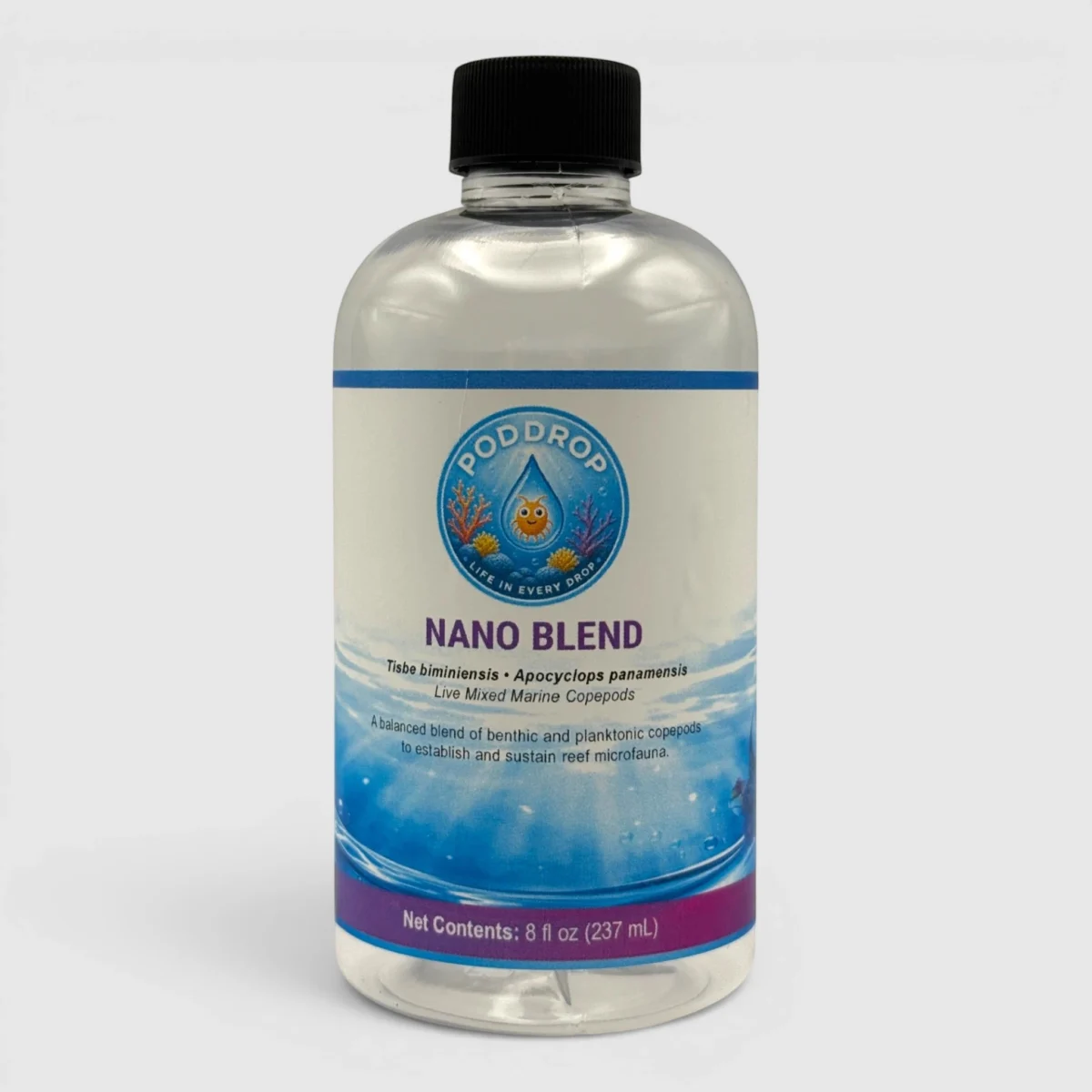
A beginner’s guide to copepod culture setup. You'll learn to set up and maintain a working copepod culture using both Tisbe and Apocyclops species together, and harvest them sustainably for your reef tank.
Nano Copepod Blend culture setup
Culturing a Tisbe and Apocyclops blend combines two functionally distinct species that occupy different ecological niches, with Apocyclops as midwater swimmers and Tisbe as bottom-dwellers. This dual approach gives you nutritious, ready-made live food for corals and small-mouthed fish.
Invertebrate care · Detailed tutorial · About 15 minutes · Beginner friendly
The key habit: Dosing live phytoplankton daily is the single most impactful thing you can do for culture productivity.
Shop the Nano Copepod Blend – Tisbe + Apocyclops
In this guide
- What Tisbe and Apocyclops are and why they work together
- Choosing and preparing your culture vessel
- Setting up aeration and water parameters
- Acclimating and inoculating your starter culture
- Daily feeding with live phytoplankton
- Harvesting copepods without crashing your culture
- Weekly maintenance and long-term care
1. What Tisbe and Apocyclops are
Tisbe biminiensis are harpacticoid copepods that spend most of their time crawling on surfaces like live rock, glass, and substrate, and are famous for their ability to consume detritus and film algae. Apocyclops are medium-sized copepods that reproduce rapidly, with females laying eggs every 4–6 days. Over time, Apocyclops may dominate the culture due to their faster reproduction rate, but regular feeding of live phytoplankton 3–5 times per week can help maintain a balanced population.
2. Choosing and preparing your culture vessel
Gather before you start
- A clean 2–5 gallon container (aquarium, plastic bucket, or Tupperware)
- Saltwater at 1.020–1.025 specific gravity
- A small air pump with airline tubing and air stone
- Flow control valve or clamp
- Live phytoplankton culture (Nannochloropsis works well)
- 100–250 micron mesh sieve or plankton net for harvesting
- Thermometer and salinity test kit
A bare bottom makes it much easier to clean and monitor the population. Your copepod culture system must be set up in a stand-alone tank—they cannot be raised in a reef tank or co-cultured with other organisms. Clean the vessel thoroughly with fresh water (no soap or chemicals) before use.
3. Setting up aeration and water parameters
1. Fill the vessel with saltwater. Mix saltwater at 1.020 to 1.025 salinity at least 24 hours before setup and let it reach room temperature.
2. Install aeration. Fill your container with clean saltwater and add an air stone or airlift, avoiding aggressive flow—copepods prefer calm water. Place air stone on low setting, just enough to disturb the water, as copepods do not like turbulence.
3. Check temperature and salinity. Ideal temperature is 74–85°F and salinity 1.014–1.022. Room temperature is fine; you do not need a heater. Test salinity before adding copepods.
4. Acclimating and inoculating your starter culture
Gather before you start
- The Nano Copepod Blend starter bottle
- A cup or small container
- 15 minutes for the acclimation process
Slowly acclimate by placing the copepod jar into your culture tank, start adding 1 cup of water from your culture every 15 minutes, and continue this procedure for 2 hours. This prevents salinity and temperature shock.
1. Float the starter bottle. Let the sealed bottle float in your culture vessel for 10–15 minutes to reach the culture water temperature.
2. Begin drip acclimation. Open the bottle cap. Start adding small amounts of culture water to the bottle with a cup or turkey baster at 15-minute intervals.
3. Introduce the copepods. After 2 hours, gently pour the entire acclimated culture into your vessel. Ensure they are near the same water parameters as that of the culture tank.
5. Daily feeding with live phytoplankton
Live phytoplankton is the gold standard food for copepod cultures, most closely matching what species evolved to eat, and its nutritional profile passes directly into the copepods meaning the phyto you dose into your culture shows up as EPA, DHA, and essential pigments.
Start small and adjust by color. Add Copepod Feed to the culture water until it reaches the colour of a Granny Smith apple skin. If the water clears before your next feeding, add more phyto. Copepods need fresh phytoplankton daily. Overfeeding can lead to a buildup of waste and a culture crash, so it is always better to feed small amounts frequently rather than one large dose.
Monitor water color. As the water clears in color, add more phytoplankton to return it to a green color, replacing the feeding amount taken from the culture tank with fresh phytoplankton.
6. Harvesting copepods without crashing your culture
Starting from day 3, harvest a minimum of 20% of your culture each day. Do not overharvest; always leave plenty behind to repopulate the culture.
1. Let the culture settle. Turn off aeration for 10–15 minutes before harvesting.
2. Use the sieve method. Use a plankton sieve of 100–250 microns to separate copepods from culture water, catching adults and larger nauplii while allowing the smallest juveniles to pass back into the culture and continue developing.
3. Return juveniles and add fresh water. You can siphon your copepods through the collector, insuring that when you feed them to your aquarium you are only adding copepods, not culture water, then discard the culture water and add new, clean saltwater to the culture to bring it back to the original level.
7. Weekly maintenance and long-term care
A weekly 50% water change keeps waste under control and avoids ammonia spikes that can wipe a culture out overnight. Change the culture tank water every 4 weeks on average or as water parameters warrant, which will help keep the quality of the culture water higher.
Monitor for crashes. If the culture water turns cloudy, smells bad, or the pod population suddenly drops, reduce feeding, do a 50% water change immediately, and increase aeration slightly. If copepods survive with no phytoplankton added for extended periods, they can survive on biofilm, but this is not sustainable for regular harvesting.
Keep a backup culture. Having two cultures of copepods gives you some redundancy in case of a culture crash.
What you notice and what to check next
| What you notice | What to check next |
|---|---|
| Water is clear within 6 hours of feeding | Increase phyto dose slightly; water clarity shows pods are feeding |
| Debris visible at tank bottom | Time for a 50% water change; debris is waste accumulation |
| Population appears smaller after several days | Reduce harvest volume; you may be taking too many pods |
| Water becomes cloudy and smells foul | Stop feeding, do 50% water change, increase aeration—possible bacterial bloom or ammonia spike |
| Pods visible in water column at night with light off | Apocyclops are active; culture is healthy and ready to harvest |
| Pods crawling on vessel glass and substrate | Tisbe activity; check phytoplankton color and increase feeding if water is clear |
Your care log
Culture started on: ______ Water parameters: Salinity ______ pH ______ Temperature ______
Phyto brand and species: ______ First harvest date: ______
Feeding schedule: ______ times per day Harvest day: ______ per week
Backup culture started on: ______ Notes: ________________________________________
Sources
Checked November 1, 2026.
1. Reef2Reef, "The Breeder's Net: A Simple How-to On Home Culture Of Copepods"
2. Aquatic Live Food, "Copepod Culturing"
3. Reefphyto, "How to Culture Copepods at Home"
4. Aquaculture Nursery Farms, "How to Culture Copepods Guide"
5. Algagen, "How to Culture Freshwater Copepods at Home"
6. TopShelf Aquatics, "Live Mixed Copepods – Reef Genetics"
7. Frags2Fishes, "2 Pod Blend Tisbe & Apocyclops"
8. PodDrop, "Apocyclops panamensis: Species & Culture Guide"
9. Algagen, "Tisbe vs Apocyclops: Which Pod for You?"
10. Algagen, "Tisbe Copepods Care: Temperature & Feeding"
11. PodDrop, "Best Foods for Copepod Cultures That Perform"
12. Reef Nutrition, "Culturing Tigger-Pods"
13. Aquaculture Kings, "How to Culture Copepods"
14. Reefphyto, "How to Successfully Culture Copepods: A Complete Guide"