

Indo Cultured Orange Phoenix Montipora: Light, Flow and Growth
SPS coral care · Detailed tutorial · About 15 minutes · Beginner friendly
The key habit: Maintain stable water chemistry first, then dial in strong indirect flow and bright light—this coral rewards consistency with visible growth within weeks.
Shop the Indo Cultured Orange Phoenix Montipora
In this guide
- What Montipora is and why it grows fast
- Light and spectrum
- Water flow and circulation
- Placement and spacing
- Acclimation and dipping
- Feeding and water parameters
- Growth and fragging
1. What is Montipora and why it grows fast
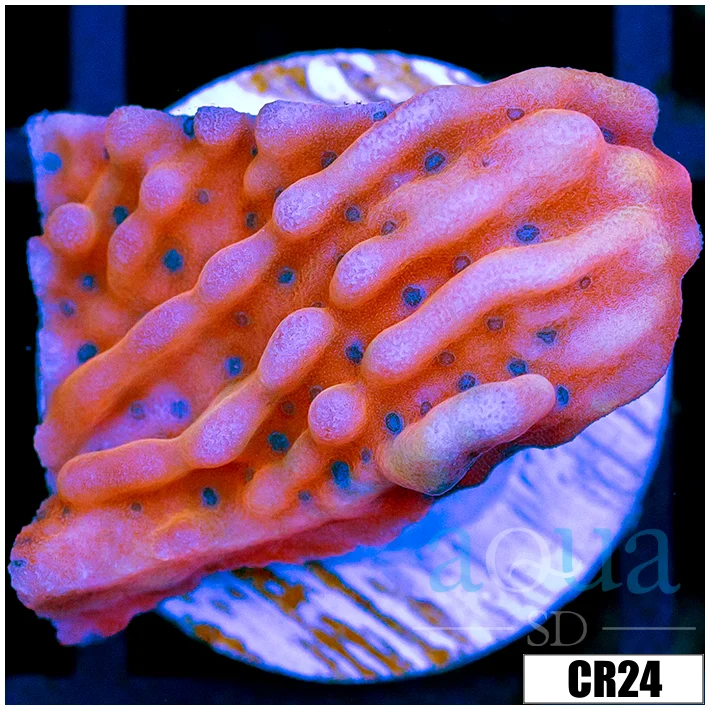
Montipora corals are small polyp stony corals within the family Acroporidae known for their diverse growth forms including plating, encrusting, and branching varieties that display vibrant fluorescent colors under actinic lighting. The Orange Phoenix is typically a branching form. Montipora corals are among the most beginner-friendly SPS corals available, offering diverse growth forms and vibrant coloration with more forgiving care requirements than Acropora.
Montipora contain an algae called zooxanthellae which provides most of the coral's nutritional needs via photosynthesis. Branching varieties like Montipora digitata expand 3-4 inches annually under optimal conditions, making them satisfying to watch and frag.
2. Light and spectrum
Montipora love light. Intense lighting is recommended for best coloration and overall health. Specific ranges vary: Montipora corals require moderate to high lighting in the 150-300 PAR range, though moderate to bright lighting (PAR 300-450) maintains color. A 14-20K color spectrum is recommended for best coloration.
Do not place a new frag directly under your brightest lights. Always acclimate new additions carefully, especially pieces from new arrival corals. Gradual light acclimation over a few weeks prevents bleaching stress.
3. Water flow and circulation
Montipora, like most SPS corals, enjoy lots of flow. They like strong flow, but usually not to the degree Acropora enjoy flow. Moderate to strong flow is best, just not too strong as the thicker growth can act as a sail for the water, potentially pushing the coral of the rock if the flow is too strong.
Ideally, the flow should be irregular and random to avoid dead spots and to promote proper growth. High indirect flow is usually ideal, avoid stagnant zones around the coral, use randomized flow patterns when possible, and avoid harsh direct blasting from a single fixed stream.
4. Placement and spacing
Position your frag where it will receive bright light and strong water flow without being directly blasted by a powerhead. Branching montis want open water around them so flow reaches every branch. Mount it on exposed rock or an epoxy plug using reef-safe adhesive.
Mount the Orange Montipora using IC gel glue, or putty, on an exposed rock or ledge in the aquarium where it will receive direct flow and light. Montipora digitata will encrust the rock and grow beautiful branched colonies. Leave space around the frag—it will expand quickly and shade nearby corals if placed too close.
5. Acclimation and dipping
Gather before you start
- A small container (1–2 gallon bucket or plastic tub)
- Tank water or saltwater at the same salinity and temperature as your display
- A coral dip product (such as Seachem Reef Dip or Brightwell CoralQuarantine), if you have it
- A small airline tube or turkey baster
- A powerhead or small pump for the dip container
Step 1: Float and equalize temperature. Float the sealed bag in your tank for 15–20 minutes to bring the coral to tank temperature.
Step 2: Acclimate to your water chemistry. Open the bag and pour the coral and its water into a bucket. Use an airline tube to slowly drip tank water into the bucket, doubling the water volume over 1-2 hours.
Step 3: Dip for pest prevention. Prepare the dip container using tank water or matching saltwater. Add the coral dip solution exactly according to directions. Place the coral into the dip gently without scraping the tissue. More than 10 minutes in any dip can strip the coral's protective mucus, leading to brown jelly disease. Stick to 5–8 minutes for most species.
Step 4: Rinse and place. After the dip, transfer the coral into a rinse container with clean saltwater. Place it in your tank in its chosen location, in low light initially if possible.
Step 5: Acclimate to light over the next week. Gradually move the coral to higher light over several days to avoid shock.
After this dipping process, the coral is placed in either a quarantine tank or in a quarantine chamber in the tank it will be kept for a week. These corals are allowed to rest in these chambers for 4-5 days and up to a week, to make sure that nothing is missed. If you notice any brown tissue or polyp loss during this time, it may harbor pests that survived dipping.
6. Feeding and water parameters
Montis get nearly all their food from light. A tank with fish being fed provides enough, and there is no need to target-feed a monti. Light broadcast feeding is optional. Feeding once or twice a week with supplemental coral foods like reef roids or phytoplankton can enhance growth and coloration.
Water parameters. Maintain alkalinity between 7-8 dKH, calcium levels at 400-450 ppm, and magnesium concentrations from 1200-1400 ppm. Temperature stability proves critical for Montipora success—maintain consistent temperatures within the 75-77°F range with minimal fluctuation. Keep nitrate levels below 5 ppm and phosphate around 0.01 ppm to prevent algae competition and maintain coral health.
Stability is more important than hitting perfect numbers. Montiporas handle a range of parameters better than rapid fluctuations.
| Parameter | Target range |
|---|---|
| Temperature | 75–77°F (ideally) |
| Salinity | 1.025–1.026 |
| pH | 8.1–8.4 |
| Alkalinity | 7–8 dKH |
| Calcium | 400–450 ppm |
| Magnesium | 1200–1400 ppm |
| Nitrate | Below 5 ppm |
| Phosphate | Around 0.01 ppm |
7. Growth and fragging
Growth rate reaches moderate—up to an inch per month. In optimal conditions with high light and strong flow, your frag will begin encrusting at its base within the first week or two. Finger-like branches will grow upward over the following weeks.
A growing colony pulls calcium and alkalinity down much faster than a tank of soft corals, so once your montis start plating out, plan on regular testing and a dosing routine instead of occasional big corrections.
When your colony becomes crowded or you want to share frags, branching Monti are easy—simply snap a 2–4 cm branch off with bone cutters, dab dry, glue to a plug. Size matters for survival. From his own experience and other hobbyists', survival is about 25 percent for a 1/2-inch frag, about 50 percent at 3/4 inch, and 75 percent or better at 1 inch. Cut bigger pieces than you think you need.
What you notice and what to check
| What you notice | What to check next |
|---|---|
| Polyps fully extended and tissue firm | Water flow is sufficient; light is within range |
| Polyps retracted; tissue appears pale | Check alkalinity and calcium; look for sudden changes in parameters or flow |
| Tissue recession or brown streaks | May indicate pest infestation or stress; inspect closely and consider re-dipping if recent |
| Bleached white tips on growing branches | Normal—this is new skeleton. If the whole coral whitens, reduce light or check for temperature swings |
| Frag is encrusting onto rock and new branches visible | Feeding is adequate and conditions are optimal; branch off frags if you wish |
Your care log
Placed on: ______ Date acclimated: ______ Initial light (PAR): ______
Current placement: Mid to high on rock ______ Current light (PAR): ______
Weekly alkalinity (dKH): ______ Calcium (ppm): ______ Magnesium (ppm): ______
Water temperature: ______ Date first frag ready: ______
Notes:
Sources
Checked October 29, 2026.
- Algae Barn, "ORA Orange Setosa," https://www.algaebarn.com/shop/corals/sps/montipora/ora-orange-setosa/
- Tidal Gardens, "Orange Montipora palawanensis," https://tidalgardens.com/stock-orange-montipora-palawanensis.html
- Vivid Aquariums, "How to Care for Orange Montipora Digitata Coral," https://vividaquariums.com/products/orange-montipora-digitata
- Manta Systems, "SPS Corals Guide: Care, Species & Reef Tank Tips," https://www.mantasystems.net/a/blog/post/intro-to-sps
- MetaReef, "Montipora Coral Care Guide – Lighting, Flow & Growth Forms," https://metareef.com/corals/montipora
- Extreme Corals, "Montipora Coral Care Guide," https://www.extremecorals.com/CoralCare_Montipora.html
- Top Shelf Aquatics, "Tips for Montipora Coral Care & Tank Placement," https://topshelfaquatics.com/pages/tips-for-montipora-coral-care-tank-placement
- Top Shelf Aquatics, "Montipora Coral: Complete Care Guide for Reef Tank Success," https://topshelfaquatics.com/blogs/news/coral-care-series-montipora
- The Underwater Gardener, "Montipora Care Guide: Light, Placement, Pests and Why Montis Turn White or Brown," https://theunderwatergardener.com/montipora-care-guide/
- Reef Bay, "Montipora Coral Care Guide (Beginner-Friendly SPS)," https://reefbay.com/guides/complete-montipora-care-guide-growing-colorful-sps-corals
- Whitlyn Aquatics, "Montipora Care Guide," https://www.whitlynaquatics.com/blogs/news/montipora-care-guide-care-feeding-lighting-tips
- Reef Builders, "How and Why to Dip Newly Acquired Corals," https://reefbuilders.com/2023/12/20/how-and-why-to-dip-newly-acquired-corals/
- Top Shelf Aquatics, "Small Polyp Stony Coral Care – Types and Care Guide," https://topshelfaquatics.com/pages/small-polyp-stony-coral-care-types-and-care-guide
- Sunny Side Corals, "Master the Art of Coral Dipping: Tips and Tricks for Success," https://sunnysidecorals.com/blog/dipping-corals/
- Fancy Reef, "How to Introduce a New Coral Without Killing Your Tank," https://fancyreef.com/how-to-introduce-a-new-coral-without-killing-your-tank/
- Sea What You Save, "Montipora Digitata Care Guide," https://www.seawhatyousave.com/articles/montipora-digitata