

Blastomussa Merletti Care: Light, Flow and Feeding
Learn the proper light, water flow, placement and feeding techniques to keep your Blastomussa Merletti healthy and colorful long-term.
Coral care · Detailed tutorial · About 8 minutes · Beginner friendly
The key habit: Place your Blastomussa in a lower-light zone with gentle indirect flow and feed it regularly to maintain a healthy, fully extended colony.
Shop the Aussie Blasto Merletti
In this guide:
- What Blastomussa is and where it comes from
- Lighting levels and how to acclimate to your tank
- Water flow and placement in the aquarium
- Feeding your Blasto and nutrition
- Water parameters and stability
- Signs of healthy growth and common problems
- Acclimation and placement
1. What Is Blastomussa Merletti?
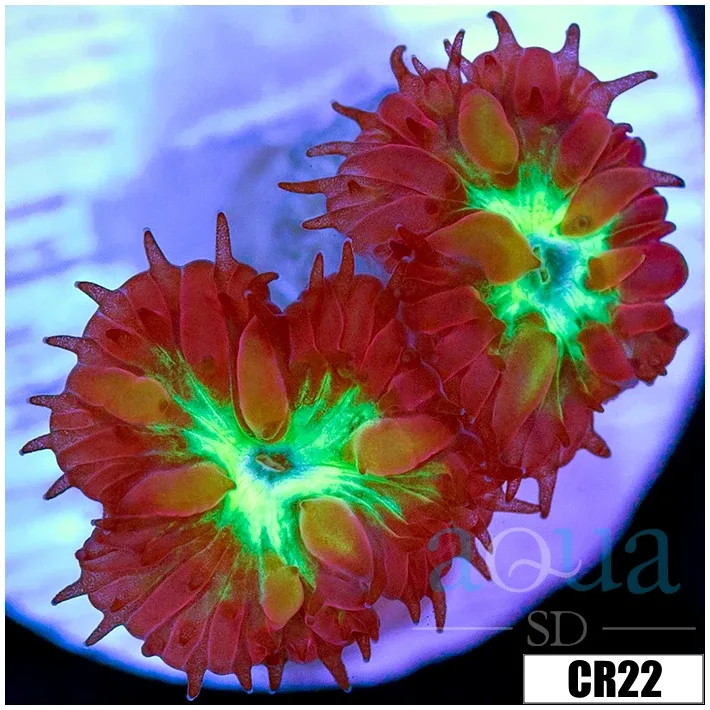
Blastomussa Merletti, commonly called Blastos, is a colorful LPS coral known for its large, fleshy polyps and relatively easy care. It originates from the Red Sea and Australia, found in low flow environments on upper reef slopes. In home reef tanks, colonies expand outward with fleshy polyps over time, making them rewarding corals to maintain and eventually frag.
The combination of attractive coloration, low maintenance needs, and forgiving nature makes Blastomussa one of the best LPS corals for reef keepers moving up from soft corals to stony coral husbandry.
2. Lighting Requirements
Blasto Coral thrives under low to moderate lighting in the 75–150 PAR range. Blastomussa Corals prefer a shaded environment, with low to moderate lighting between 75-120 PAR. This makes Blastomussa ideal for lower-light areas of your tank where other corals may struggle.
Blastomussa placed under excessive light will bleach, retract polyps, or develop an abnormal inflated appearance that signals light stress. Start newly acquired Blasto Coral in the darkest area of the tank for the first two weeks, then gradually transition Blastomussa to its permanent position. Blasto Coral does not require high-output reef lighting and performs well under standard LED fixtures positioned in the lower third of the aquarium.
3. Water Flow and Placement
Blasto Coral performs best in low to gentle indirect water flow. Low to moderate flow is important when keeping Blastomussa corals. Aim for just enough flow so that detritus and fish waste don't accumulate on the flesh of the coral.
Blastomussa Corals should be placed out of direct flow, either on live rock or glued to a frag disk and placed on the sand bed. They do best on sandbed or lower rockwork with low to moderate flow. Keep space around colonies to prevent stinging. Blastomussa corals should be positioned out of the direct flow of a powerhead. Adjustable powerheads can make dialing in the right amount of flow a bit easier, but you can also place your Blastomussa behind live rock to avoid direct flow.
4. Feeding Your Blastomussa
Blastomussa corals share a symbiotic relationship with zooxanthellae. This relationship means you don't need to directly feed your Blastos, but they can still benefit from extra feeding. Feeding your Blastomussa corals products such as Reef Roids once or twice a week will improve their development and growth rate.
Accept mysis shrimp, pellets, and reef foods; target feeding encourages faster growth. Growth is moderate and depends on lighting, flow, and especially feeding. Feed regularly to see the fastest growth and most vibrant coloration.
5. Water Parameters and Stability
Temperature should stay at 74–80°F; pH at 8.1–8.4; Salinity at 1.024–1.026; Flow at low to moderate, avoiding strong currents to allow full polyp expansion. While Blastomussa is more forgiving than many SPS corals, it tolerates moderate parameter fluctuations and does not require high-intensity lighting or precise water flow.
Maintain proper levels of calcium and alkalinity to support skeletal growth. Maintain stable alkalinity, calcium, and magnesium through regular testing and careful supplementation or feeding.
6. Acclimation and First Placement
Gather before you start
- Tank with stable water parameters established for at least one month
- Frag glue or IC gel if you plan to mount the coral
- Frag disk (if desired)
- Feeding supplies (Reef Roids or mysis shrimp)
1. Acclimate by light: Start newly acquired Blasto Coral in the darkest area of the tank for the first two weeks, then gradually transition Blastomussa to its permanent position. Place it in a lower-light zone first to prevent bleaching stress.
2. Choose placement carefully: Blastomussa Corals should be placed out of direct flow, either on live rock or glued to a frag disk and placed on the sand bed. Use frag glue or IC gel to secure it if you want a permanent position.
3. Observe polyp behavior: After one to two weeks, watch how your Blastomussa responds. Recently purchased Blastos should be placed in the darkest section of a tank. After a few weeks have passed, you can transition the coral to an area with slightly more lighting.
4. Begin feeding: Once established, start feeding once or twice per week with small amounts of Reef Roids or finely chopped frozen foods.
7. Recognizing Health and Common Problems
| What you notice | What to check next |
|---|---|
| Polyps stay retracted | Check lighting—may be too intense or too dim. Verify flow isn't direct or too strong. Confirm stable salinity and temperature |
| Bleached or pale coloration | Reduce lighting gradually or move to a darker zone. May need weeks to recover |
| Slow growth despite feeding | Verify calcium, alkalinity, and magnesium levels; feed more frequently; improve water quality |
| Tissue damage or recession | Check for aggressive neighbors; increase spacing. Verify stable water parameters |
| Fully inflated, vibrant polyps | Coral is thriving—maintain current conditions and feeding schedule |
Your care log
Placed on: ______
Light (PAR): ______
Flow intensity: ______ (gentle/low/moderate)
First feeding date: ______
Feeding frequency: ______ times per week
Notes on color and polyp extension: ________
Sources
Checked October 25, 2026.
- Queen City Corals, "Blastomussa Coral Care Guide: Lighting, Flow, Placement & Feeding" https://www.queencitycorals.com/blastomussa-coral-care-appearance-types-fragging-more/
- Whitlyn Aquatics, "Blastomussa Coral Care Guide" https://www.whitlynaquatics.com/blogs/news/blastomussa-coral-care-guide-blastomussa-merletti-care-feeding-tips
- MetaReef, "Blasto Coral Care Guide" https://metareef.com/corals/blasto
- Extreme Corals, "Blastomussa Care Guide" https://www.extremecorals.com/CoralCare_Blasto.html
- FishLore, "Blastomussa Coral" https://www.fishlore.com/coral/blastomussa-coral.htm