

Blue Hippo Tang Care: Tank Size, Water Quality and Acclimation
You'll be able to set up and acclimate your Blue Hippo Tang for long-term health in a large, well-maintained reef or fish-only tank.
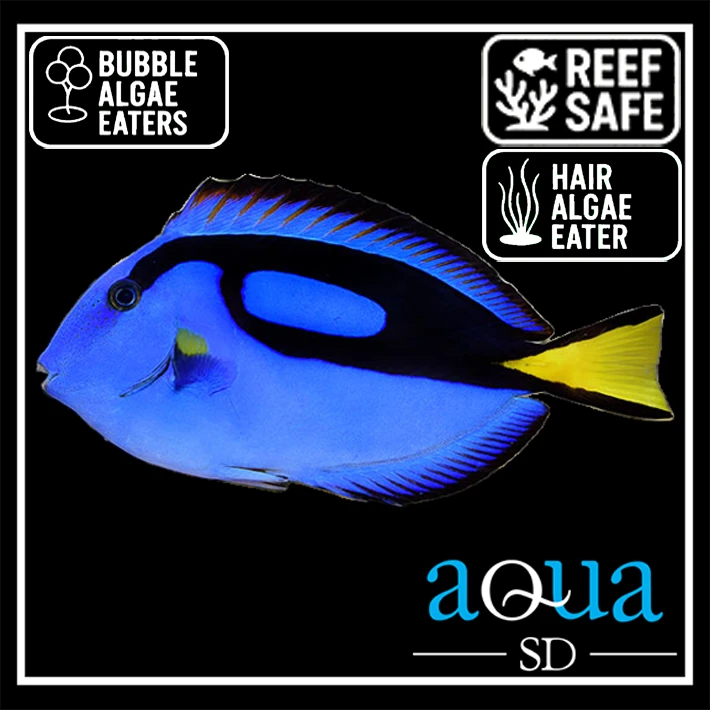
Fish care · Detailed tutorial · About 12 minutes · Beginner friendly
The key habit: Quarantine your Blue Hippo Tang for a minimum of two weeks (six weeks with copper treatment is more reliable), maintain pristine water quality with 10-15% weekly water changes, and feed an algae-rich diet 2-3 times daily. These three practices prevent the stress-related disease outbreaks that commonly kill this fish.
Shop the Blue (Hippo) Tang – Paracanthurus hepatus
In this guide:
- What the Blue Hippo Tang is and where it comes from
- Tank size and setup
- Water quality and parameters
- Reef-safe behavior and tank mates
- Feeding and diet
- Quarantine and acclimation
- Signs of good health and common problems
1. What it is and where it comes from
The Blue Hippo Tang is a type of surgeonfish that has many descriptive names used to describe the fish's appearance and where it's found. This species can be found from Japan, throughout the Indian Ocean down the east coast of Africa, and south to the Great Barrier Reef, with populations also existing from Japan to the Hawaiian Islands.
In the wild, these active fish live in the fast-flowing waters of seaward reefs up to depths around 134 feet, where they feed mainly on invertebrates, zooplankton, and some algae, and the active swimmers live in schools, swimming loosely together 3 to 6 feet above the ocean floor. Understanding this natural lifestyle — constant motion, open-water feeding, and living in groups — is essential to understanding why they have such specific tank requirements in captivity.
2. Tank size and setup
Tank size is the single most critical factor in Blue Hippo Tang success. For long-term care, a 180-gallon tank is the realistic minimum, with a 6-foot tank length considered essential and an 8-foot tank even better for adults. When the fish reach 8 inches, they must be upgraded to a 125-gallon tank, and after that a 180-gallon tank is required. If you do not have access to a tank this large, do not buy this fish.
You need a mature tank with plenty of live rock for a frightened tang to hide in and a coral sand substrate, with plenty of open water swimming space for these large, graceful fish. These fish are fast, active swimmers that patrol the entire length of the tank throughout the day, so provide complex rockwork with caves and crevices for hiding, as blue tangs are skittish and seek shelter when startled.
You will also need highly oxygenated water provided through increased surface agitation using multiple power heads and/or wave makers. The fish evolved in current-rich reef environments and requires strong, varied water movement to breathe properly and to feel secure.
3. Water quality and parameters
Like all surgeonfish, P. hepatus demands pristine, well-oxygenated water, with powerful filtration, protein skimming, and regular water changes necessary for prolonged health.
Water parameters:
- Temperature: Ideally between 72 and 78°F
- Salinity: 1.020 – 1.025
- pH: 8.1 – 8.4
- Alkalinity: 8 – 12 dKH
- Ammonia and Nitrite: Zero ppm
- Nitrate: Below 15 ppm ideal
- Calcium: 380-450 ppm (for coral-bearing tanks)
Blue tangs are sensitive to poor water quality, developing HLLE (head and lateral line erosion) when conditions deteriorate. This preventable disease appears as pits or erosion on the head and lateral line and signals that water quality, diet, or both need improvement. Weekly 10% water changes are crucial for their health.
4. Reef-safe behavior and tank mates
The Blue Hippo Tang is considered reef safe, making it suitable for planted reef tanks. They will probably not do well with other surgeonfish, especially other Blue Tangs, unless the tank is really large (100 gallons or larger). The main compatibility issue is with other tangs and similarly shaped fish, and in tanks that are too small, chasing and tail-slashing can become serious — add them at similar sizes when possible.
They are generally safe with cleaner shrimp, snails, and reef invertebrates. Don't keep puffers, triggers, or any other aggressive species that can cause your tangs to become stressed, causing potential health problems.
5. Feeding and diet
Daily nori sheets attached to a clip provide essential roughage and mimic natural grazing, and supplement with spirulina flakes, high-quality marine pellets, frozen mysis shrimp and enriched brine shrimp. A diet deficient in vegetable matter leads to HLLE and colour fading.
Feed 2–3 times daily with a varied, algae-rich diet. Feed small portions two to three times daily when possible — frequent feeding helps reduce stress and aggression, and also supports immune function. They primarily feed on nori (marine algae) and having plenty of live rock in your tank will provide plenty of grazing opportunities in between meals.
Soaking food in vitamin supplements containing garlic extract and vitamin C supports immune function — particularly valuable for this disease-prone species.
6. Quarantine and acclimation
Blue hippos should ALWAYS spend a minimum of two weeks in quarantine, though six weeks with copper treatment (0.15-0.25 ppm copper) is more reliable. While considered relatively disease-resistant when they're acclimated and introduced to your display tank, they DO tend to bring a few common diseases with them.
Gather before you start
- A separate quarantine tank (20-30 gallons minimum) with sponge filter and heater
- Hiding places (PVC elbows, caves, or inert rock)
- Nori sheets and clip
- Frozen foods (mysis shrimp, brine shrimp)
- Net or specimen container (not a regular fish net)
- Dimmed lighting or a way to dim lights in the main tank
- A clean bucket for acclimation water
1. Prepare the quarantine tank before purchase. Set up mature biological media (sponge filter seeded from your display system) so the tank is cycled and ready. This species often carries ich, and a mature quarantine tank prevents ammonia and nitrite spikes that stress the fish further.
2. Dim the lights before opening the shipping bag. Dim the lights before opening the shipping bag to reduce shock from sudden light exposure.
3. Float the bag for temperature matching. Float the bag for temperature matching for 15 to 20 minutes without opening it. This lets the water inside the bag equilibrate to the quarantine tank temperature.
4. Transfer the fish into a clean bucket. Transfer the fish and shipping water into a clean bucket. Do not add the shipping water to your tank; it may carry disease or unwanted organisms.
5. Use slow drip acclimation. Use slow drip acclimation for 30 to 45 minutes. Using an air line with a control knot, slowly drip water from the quarantine tank into the bucket at a rate of about 2-4 drips per second. This gradually accustoms the fish to the pH, salinity, and temperature of your system without osmotic shock. Proper acclimation is essential when introducing a juvenile blue tang to a new aquarium environment — the drip acclimation method introduces water from the destination tank slowly to the transport container.
6. Move the fish gently to quarantine. Move the fish gently into quarantine with a specimen container (a small mesh or clear plastic container), not a net. Be careful handling this tang with a net because they can get caught easily — if this happens, gently and slowly move the net back and forth in the tank water, and eventually they should relax their fins and come out of the net.
7. Wait before feeding. Wait several hours before the first feeding attempt. Let the fish settle and recover from shipping stress.
8. Offer food and observe daily. Offer nori and a small frozen food portion the same day, and observe breathing, swimming, and visible spots daily. Watch for white spots (marine ich), cloudy eyes, rapid breathing, or refusal to feed — all signs of stress or disease.
9. Complete quarantine before display introduction. Only move the fish to the display after quarantine is complete (minimum 2 weeks, ideally 4-6 weeks). Quarantine is strongly recommended, not optional.
7. Signs of good health and common problems
Signs of a healthy Blue Hippo Tang:
- Clear eyes, strong swimming, deep blue coloration, healthy appetite, no scratching, spots, or heavy breathing
- Constant motion and active grazing on rockwork and glass
- Vibrant, even blue body color (faded or pale color signals stress, poor diet, or low oxygen)
- Eating eagerly at feeding time
Signs of stress or illness:
- White spots, cloudy eyes, rapid breathing, loss of appetite, or unusual lethargy
- Lying on their sides on the substrate and remaining motionless — young blue tangs may "play dead" when startled or stressed, which is a normal defensive response but can indicate ongoing stress
- Persistent hiding usually points to stress
- Faded coloration
- Head and lateral line erosion (HLLE), often linked to poor nutrition, unstable water quality, or chronic stress
Blue Tangs are notorious for their susceptibility to external parasites, particularly marine ich and velvet, which often appear quickly after transport or introduction to a new system. This is why quarantine and drip acclimation are not optional steps — they are the difference between a thriving show fish and a dead or dying one.
What you notice and what to check next
| What you notice | What to check next |
|---|---|
| Deep, vibrant blue color; constant swimming and grazing | Water parameters (temperature, pH, salinity, ammonia, nitrite), feeding frequency and diet variety, tank mates and aggression |
| Faded or pale blue color | Diet variety and algae content, water quality (especially nitrate and phosphate), lighting level, stress from tank mates or insufficient space |
| White spots like grains of salt on body or fins | Water parameters and stability, stress triggers (overcrowding, poor flow, hiding spots), quarantine status, other fish in the tank |
| Hiding constantly, not grazing | Tank size and swimming space, rockwork providing crevices and caves, water flow and oxygen levels, presence of aggressive tank mates |
| Pits or erosion on head and lateral line (HLLE) | Feeding routine and diet (especially algae content), water quality (ammonia, nitrite, nitrate, phosphate), temperature stability |
| Rapid breathing or gasping at surface | Surface agitation and oxygen level, power head and wave maker function, water temperature (high temps reduce oxygen), ammonia or nitrite spikes |
Your care log
Purchased on: ______ Tank volume: ______ gallons
Quarantine started: ______ Quarantine ends: ______
Added to display on: ______ Display tank size: ______ gallons
Water parameters on day 1: Temperature ______ pH ______ Salinity ______ Nitrate ______
Feeding routine: ______ times per day Foods offered: ______
Tank mates: ______
Notes on behavior and health: ______
Sources
Checked October 25, 2026.
- FishLore, "Blue Tang Care – Paracanthurus hepatus", https://www.fishlore.com/profile-pacificbluetang.htm
- Aquariadise, "Blue Hippo Tang (Paracanthurus Hepatus) Caresheet", https://www.aquariadise.com/blue-hippo-tang/
- Saltwater Aquarium Blog, "Blue Hippo Tang Care Guide: Paracanthus hepatus", https://www.saltwateraquariumblog.com/blue-hippo-tang-care-guide/
- Gensou Premium Aquascaping, "Blue Tang Care Guide: Paracanthurus Hepatus in Home Aquariums", https://gensou.sg/blue-regal-tang-care-guide/
- TFH Magazine, "Paracanthurus hepatus Species", https://www.tfhmagazine.com/articles/saltwater/paracanthurus-hepatus
- Aquatic Community, "Blue hippo tang care", https://www.aquaticcommunity.com/Surgeonfish/Blue-Hippo-Tang.php
- Fancy Reef, "Blue Hippo Tang Care Guide for Reef Tanks", https://fancyreef.com/blue-hippo-tang-paracanthurus-hepatus/
- Top Shelf Aquatics, "Blue Hippo Tang – Paracanthurus hepatus", https://topshelfaquatics.com/products/blue-hippo-tang-paracanthurus-hepatus
- Tidal Arc, "Blue Tang (Paracanthurus hepatus)", https://tidal-arc.com/encyclopedia/fish/blue-tang/
- Kenya Marine Center, "Paracanthurus hepatus", https://kenyamarinecenter.com/product/blue-tang-yellow-belly/
- Tropical Fish Co., "Palette surgeonfish (Paracanthurus hepatus)", https://tropicalfishco.co.uk/products/palette-surgeonfish-paracanthurus-hepatus
- Furry Critter, "Blue Tang Juvenile & Adolescent", https://www.furrycritter.com/pages/life_stages/fish/blue_tang_juvenile.htm
- Dr. Reef's Quarantined Fish, "Blue Hippo Tang For Sale", https://drreefsquarantinedfish.com/product/blue-hippo-tang/
- PetHelpful, "Blue Tang Care Guide and Requirements", https://pethelpful.com/all-pets/blue-tang