

Purple Short Spine Pincushion Urchin Care: Tank Setup, Feeding and Water Quality
You will learn how to set up a tank for a Purple Short Spine Pincushion Urchin and keep it healthy through proper feeding, water conditions, and monitoring.
Invertebrate care · Detailed tutorial · About 8 minutes · Beginner friendly
The key habit: Monitor tank parameters daily and test aquarium water weekly for pollutants like ammonia and nitrates. If your urchin starts to lose spines, it is often due to poor water conditions.
Shop the Purple Short Spine Pincushion Urchin
In this guide
- What it is and where it comes from
- Tank size and setup
- Water parameters and stability
- Acclimation and introduction
- Feeding and diet
- Tank mates and reef safety
- Signs of good health
1. What it is and where it comes from
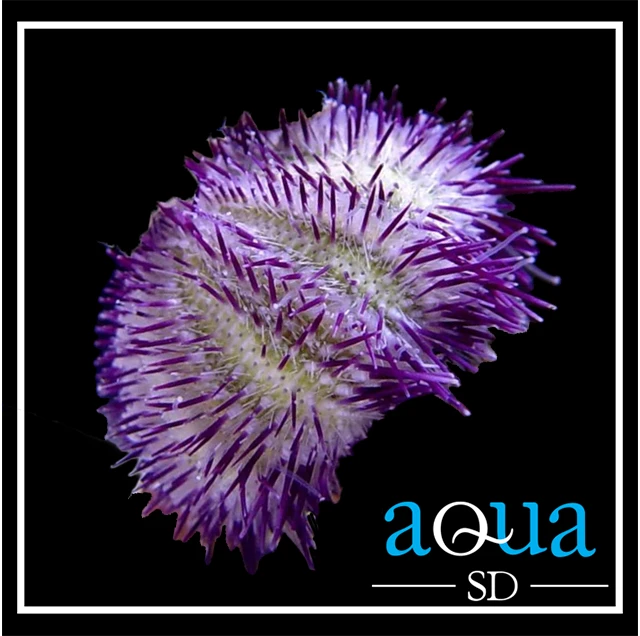
The Pincushion Urchin has an oval or round body covered with hundreds of uniform spines. Though the spines are short, they are still sharp, and can puncture skin. This species originates from Sri Lanka and Sumatra. It will scavenge over rock and substrate for bits of food and algae to eat while adding interest to your home aquarium.
2. Tank size and setup
A minimum tank size of 20 gallons is recommended for this species. However, sea urchins are best suited for mature reef aquariums with stable water parameters and plenty of natural surfaces to explore.
Include plenty of live rock to provide surfaces for grazing and hiding spots. Secure loose rocks to prevent them from being moved by the urchin's activity. During the day, it will hide among the rocks, in crevices, or under plants in a sandy substrate.
Urchins do not have specific light requirements, but make sure your aquarium lights on a regular cycle (typically 10–12 hours per day) to support the growth of algae that they will graze on.
3. Water parameters and stability
Water stability is critical. Sea urchins have specific care needs; their tank parameters must be stable, and the water must be pristine. Sudden parameter swings — even brief ones — trigger stress responses that lead to spine loss and immune suppression. Stability matters more than perfection.
Target ranges for your Purple Short Spine Pincushion Urchin:
| Parameter | Range |
|---|---|
| Temperature | 72–78°F |
| pH | 8.1–8.4 |
| Specific gravity (salinity) | 1.023–1.025 |
| Alkalinity (dKH) | 8–12 |
| Ammonia | 0 mg/L |
| Nitrite | 0 mg/L |
| Nitrate | Below 20 ppm |
| Calcium | 380–450 ppm |
| Magnesium | 1250–1350 ppm |
Employ high-quality filtration, such as a protein skimmer, to ensure optimal water quality. Maintain excellent water quality through regular water changes of 10–25% every two to four weeks.
Calcium and trace elements should be supplemented to maintain alkalinity and calcium—these support the urchin's spine and test (shell).
Avoid copper. Sea urchins are sensitive to high levels of copper-based medications and will not tolerate high nitrate levels. Never use copper treatments in a tank with an urchin.
4. Acclimation and introduction
Gather before you start
- A container that holds at least 5 gallons (a bucket or acclimation box)
- Airline tubing and airstone
- Small scissors or airline tubing pinch clamp
Sea urchins are exceptionally sensitive to changes in water chemistry, so a slow acclimation is essential [1].
1. Float the bag Float the sealed bag in your aquarium for about 10 minutes so the water temperature inside equalizes with the tank.
2. Open and begin drip acclimation Open the bag and place it in your acclimation container. Slowly introduce small amounts of aquarium water into the bag containing the invertebrate for up to an hour.
An easy way to do this: set up a siphon using airline tubing. Start the siphon from your tank into the bag, then adjust it to drip slowly (one drop per second or so). Let it run for 60–90 minutes [2].
3. Transfer carefully Once complete, carefully place the sea urchin into the aquarium whilst introducing as little bag water into the aquarium as possible. Gently place it on the rockwork or substrate and let it find its hiding spot.
5. Feeding and diet
At night, it will emerge to graze on the algae present in or near its home. The urchin will find most of its food from naturally occurring algae in an established tank.
If algae levels are particularly low, its diet will need to be supplemented with dried seaweed. If natural algae levels are low, provide dried seaweed or algae wafers. Place supplemental food near it for easy access.
Dried seaweed (nori) is widely available. You can use the same sheets sold for sushi, or buy aquarium-specific brands. Offer a small piece (about the size of your thumbnail) a few times per week if you see little natural algae growth. Remove uneaten food after an hour to avoid fouling the water.
6. Tank mates and reef safety
The urchin generally roams alone, but several of them could be housed in the same aquarium if it is large enough to provide them with adequate food (algae) and shelter. In a 20-gallon tank, keep just one.
This species is semi-aggressive and reef-compatible with caution. Most reef-safe fish will ignore the urchin. However, be cautious: some aquarists report that a hungry pincushion urchin may eat molting hermit crabs or small invertebrates [3], so provide plenty of algae to reduce this risk.
The urchin's short spines are not a significant threat to corals, and it will not intentionally damage them.
7. Signs of good health
Healthy signs:
- Spines are full, intact and upright
- Active grazing behavior at night
- Moves slowly and deliberately across rocks and substrate
- Maintains color
Warning signs:
- Loss or damage to spines can indicate poor health, stress, or starvation.
- Lethargy or lack of movement
- Faded or dull coloration
- Stays out in the open during the day without hiding
Spine loss is the most reliable early warning that something is wrong—usually poor water quality, inadequate feeding, or a sudden parameter change. Monitor tank parameters daily and test aquarium water weekly for pollutants like ammonia and nitrates. Even lightly polluted water can harm an urchin's health.
What you notice and what to check next
| What you notice | What to check next |
|---|---|
| Spines falling out or becoming bare patches | Test ammonia, nitrite, and nitrate immediately. Check temperature and pH stability. Review recent feeding. |
| Urchin stays hidden and doesn't emerge at night | Look for predatory fish or aggressive tank mates. Test water parameters, especially salinity and nitrate. |
| Urchin moves very slowly or not at all for hours | Check temperature (may be too cold). Test all parameters. Ensure the tank is mature and well-established. |
| Pale or faded color | Likely stress from poor water quality or parameter swings. Check all water parameters and perform a partial water change. |
| Edges of body or spines look bleached or white | Poor water quality or copper exposure. Review recent medications or treatments. Test water parameters. |
Your care log
Aquarium size: ______ gallons
Date added: ______
Tank mates: ______
Feeding schedule (e.g., twice weekly with nori): ______
Last water change: ______ (should be every 2–4 weeks)
Latest parameters tested (date: ______)
- Temperature: ______°F
- pH: ______
- Specific gravity: ______
- Ammonia: ______ ppm
- Nitrite: ______ ppm
- Nitrate: ______ ppm
Notes on behavior or appearance: ______
Sources
Checked October 14, 2026.
- Live Aquaria, "Purple Short Spine Pincushion Urchin," https://www.liveaquaria.com/products/purple-short-spine-pincushion-urchin
- OATA (Ornamental Aquatic Trade Association), "How to look after starfish, sea urchins and sea cucumbers," https://ornamentalfish.org/what-we-do/advice-information/care-sheets/caresheets-marine-invertebrates/how-to-look-after-starfish-sea-urchins-and-sea-cucumbers/
- Aquifarm, "Reef Tank Sea Urchin: Your Ultimate Guide To Algae Control & Tank," https://aquifarm.com/reef-tank-sea-urchin/
- Bulk Reef Supply, "How To Care For Sea Urchins," https://www.bulkreefsupply.com/content/post/how-to-care-for-sea-urchins
- RateMyFishTank.com, "Sea Urchins in the Saltwater Tank," https://www.ratemyfishtank.com/blog/sea-urchins-in-the-saltwater-tank