

Blue Damsel Care: Tank Setup, Territory and Feeding
You'll learn the essential setup and feeding practices for keeping a healthy Blue Damsel in a reef-safe environment while managing its territorial nature.
Fish care · Detailed tutorial · About 8 minutes · Beginner friendly
The key habit: Set up plenty of live rock crevices and hiding spaces before adding your Blue Damsel, and keep your water parameters stable. This hardy fish is very forgiving, but providing shelter for its territorial behavior makes all the difference.
Shop the Blue Damsel – Chrysiptera cyanea
In this guide
- What a Blue Damsel is and where it comes from
- Tank size, rockwork and territory
- Temperament and compatible tank mates
- Feeding an omnivorous damselfish
- Water parameters and stability
- Acclimation and quarantine
- Signs of health and settling in
1. What a Blue Damsel is and where it comes from
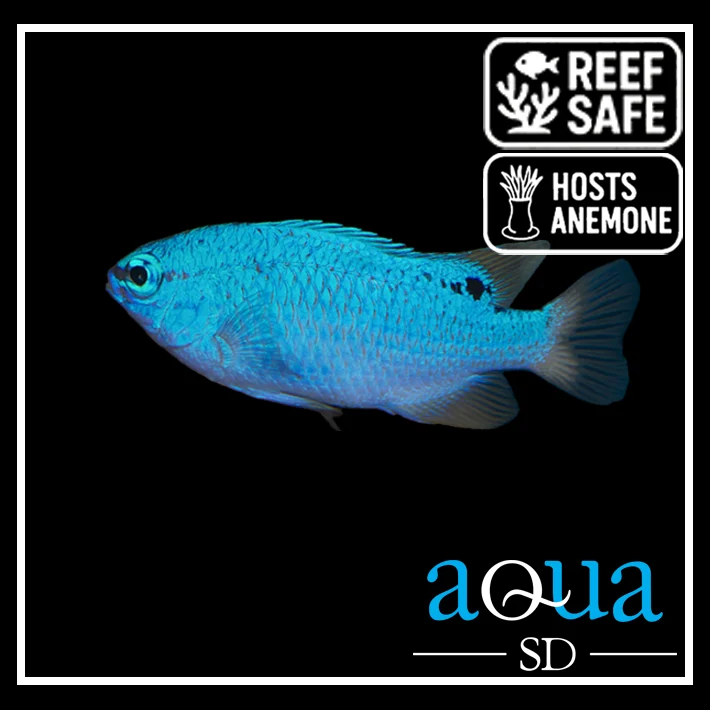
The Orangetail Blue Damsel, also known as the Blue Devil, Sapphire Devil and Blue Damsel, are found throughout the Indo-West Pacific. This damsel is named appropriately for their attractive blue bodies, though it is only the males that develop an orange tail. Damsels come from the Pomacentridae family, which they share with Chromis and Clownfish. Native to the Indo-Pacific region, including Malaysia, this species thrives in coral-rich areas of lagoons and reef slopes. Its natural habitat contributes to its resilience and adaptability in captivity.
2. Tank size, rockwork and territory
To ensure the well-being of the Blue Damsel, a minimum aquarium size of 30 gallons is recommended. A set-up with live rock is best for the health of the aquarium, and these damselfish will appreciate crevices to swim through and take refuge. They will spend much of their time in and out of the rock crevices and live rock helps decrease territorial behavior. Having live rock in your aquarium will help make them comfortable and it will provide them with hiding places. Arrange your rockwork to create multiple separate territories. This gives each damsel its own space and reduces stress and fighting.
3. Temperament and compatible tank mates
The Blue Damsel is semi-aggressive; it may defend territory, especially in smaller tanks. This species exhibits moderate aggression, particularly towards conspecifics or when defending its territory. Providing ample hiding spaces and a spacious tank can mitigate aggressive behaviors. You can get away with keeping multiple Blue Damselfish in the same tank if you introduce them at the same time. Because of their "anger management" issues it is a good idea to introduce them last into your setup. Best kept with other semi-aggressive or similarly sized fish; avoid very docile species that may be harassed. Orangetail blue damsels are considered reef safe; they will not bother any coral or invertebrate, though they will likely be too boisterous for many shy and timid reef species.
4. Feeding an omnivorous damselfish
In the wild damselfish are omnivorous. A varied diet of high quality algae, proteins, pellets, flakes, and enriched frozen foods are important for best coloration, immune function and optimal health. They are not very picky when it comes to fish food and should accept most foods that you give them. Try to give them a varied diet of live, frozen, freeze-dried and vitamin-enriched flake foods. Feed them twice daily. Damsels are some of the unfussiest of saltwater livestock when it comes to feeding.
5. Water parameters and stability
To thrive, the Electric Blue Damsel requires stable water conditions. Maintain water temperatures between 72-82°F (22-28°C), with a pH level of 8.1-8.4. Salinity should be kept at 1.020-1.025 specific gravity. Regular water changes and monitoring are essential to keep these parameters in check. Although they are hardy, consistency matters more than perfection. Use a protein skimmer and quality filtration to maintain good water quality.
6. Acclimation and quarantine
Gather before you start
- Quarantine tank (10–20 gallons minimum, with a heater and gentle filtration)
- Drip acclimation line or airline tubing
- Bucket for waste water
- Fine mesh net
- Small container (one-quart cup) to float the bag
- 30 minutes to 1 hour
They seem to be very resistant to most saltwater fish disease but you still need to take the proper pre-cautions and use a quarantine tank before introducing them into your main tank. After they've been in quarantine for two weeks or so and you notice no signs of illness you can acclimate them into your display tank.
1. Float the bag in your quarantine tank for 15 minutes so the temperatures equalize slowly.
2. Begin drip acclimation by running a siphon line from your quarantine tank into the bag, so a small stream of water drips into the bag every few seconds.
3. Continue for 30–45 minutes until the bag has doubled in volume.
4. Net the damsel carefully and place it in the quarantine tank. Discard the bag water.
5. Keep in quarantine for two weeks, watching for signs of disease like white spots, torn fins, or unusual behavior.
6. Move to the display tank only after two weeks of observation with no signs of illness. This time invest time carefully—damselfish are hardy, but a stressed fish won't settle well.
7. Signs of health and settling in
A healthy Blue Damsel will eat eagerly, display bright color, and swim actively between its rockwork hideouts. It may chase other fish around its territory—this is normal behavior and not a sign of distress. Hardy and adaptable, this species is ideal for beginner reef aquarists, but provide ample hiding spaces to reduce stress. Expect it to become more confident and bolder over the first week or two as it establishes its territory.
What you notice and what to check next
| What you notice | What to check next |
|---|---|
| Blue Damsel hiding constantly in the first few days | This is normal acclimation behavior; ensure you have plenty of rockwork and reduce tank lighting slightly for the first 24–48 hours |
| Chasing and nipping at other fish | This is territorial; if aggression increases over weeks, you may have too many fish in the same space or not enough rock crevices |
| Fading color or loss of appetite | Check water parameters (temperature, pH, salinity, ammonia); ensure stable conditions and varied high-quality foods |
| Clamped fins or white spots | Signs of stress or illness; check water quality and consider a water change; isolate the fish if spots persist |
| Active, bright coloration and eager feeding | Your damsel is thriving; maintain stable water and regular feeding |
Your care log
Tank size: ______ gallons
Placed on: ______
Rockwork crevices created: ______
Temperature (°F): ______
pH: ______
Salinity (sg): ______
Tank mates introduced with damsel: ______
Feeding schedule: ______ times per day
First signs of settling (describe color, behavior): ______
Sources
Checked October 13, 2026. Reference addresses are plain text.
- Aquatics Unlimited, "DAMSEL – ORANGETAIL BLUE Chrysiptera cyanea", https://aquaticsunlimited.com/product/damsel-orangetail-blue-chrysiptera-cyanea/
- Whitlyn Aquatics, "Blue Devil Damsel – Chrysiptera cyanea", https://www.whitlynaquatics.com/products/blue-devil-damsel-chrysiptera-cyanea
- FishLore, "Blue Damselfish Care (Chrysiptera cyanea)", https://www.fishlore.com/profile-bluedamselfish.htm
- SaltwaterFish.com, "Blue Damsel", https://www.saltwaterfish.com/product-blue-damsel
- Sims Tropical Fish, "Malaysian Electric Blue Damsel Chrysiptera Cyanea", https://simstropicalfish.co.uk/product/malaysian-electric-blue-damsel-chrysiptera-cyanea/
- AquariumDomain.com, "Blue Damselfish (Chrysiptera cyanea) Species Profile", https://www.aquariumdomain.com/SpeciesProfiles/MarineFish/BlueDamselfish.shtml
- Saltwateraquariumblog.com, "Blue devil damselfish: care guide & facts", https://www.saltwateraquariumblog.com/blue-devil-damselfish/