

Indo Neon Hammer Care: Light, Flow, Placement and Feeding
Learn how to place, light, feed and care for an Indo Neon Hammer coral so it opens fully and thrives in your reef.
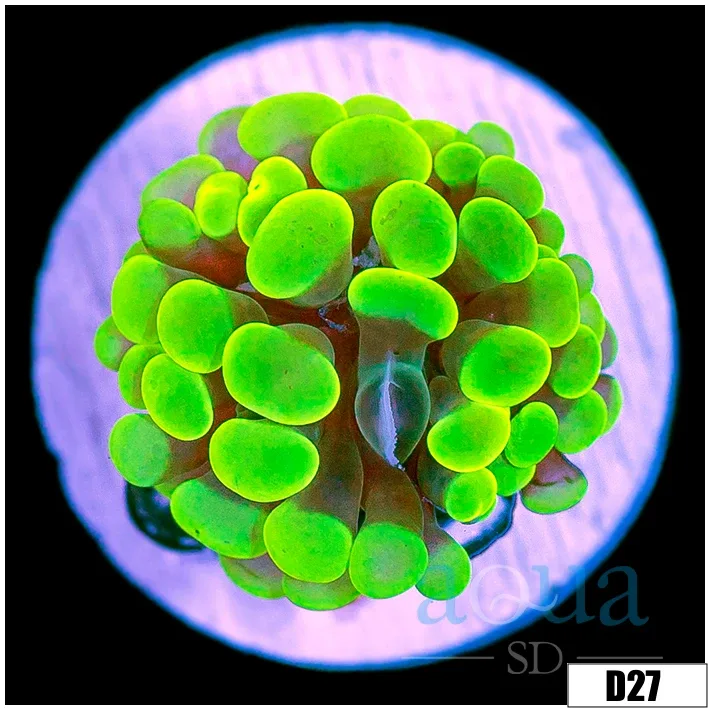
Coral care · Detailed tutorial · About 10 minutes · Beginner friendly
The key habit: Place your Hammer where it can sway gently in moderate, indirect flow and watch it open fully and stay healthy. More than anything else, flow and placement determine whether your Hammer thrives.
The Indo Neon Hammer has sold: shop similar LPS Corals →
In this guide:
- What Hammers are and where they come from
- Why flow and placement matter most
- Lighting and acclimation
- Water parameters and stability
- Feeding without overfeeding
- Sweeper tentacles and neighboring corals
- What to watch for
1. What Hammers are and where they come from
Hammer corals originate from the Indo-Pacific. They are found all throughout the Pacific reefs and are regularly harvested from the islands of the Indo-Pacific including Fiji, Tonga, Solomon Islands, and the Great Barrier Reef. Hammer corals sometimes grow in a wall formation while other hammers grow in a branching formation.
The Indo Neon Hammer is a branching form, meaning it extends thin stems with polyps at the ends. Each polyp is tipped with short tentacles that resemble hammer heads—hence the name. Hammer Coral are photosynthetic and need light to survive.
2. Why flow and placement matter most
When it comes to caring for your Hammers, placement is key! Lower to moderate flow and moderate lighting (100-150 PAR) requirements are standard, but each Hammer can be different. Move your newly acquired Hammer around until you find a spot it opens up nice and big.
Hammer Corals need moderate indirect flow. The tentacles should move back and forth in a soft rhythmic motion. They should not be pinned in one direction, whipped violently, or blasted by a direct powerhead stream. Hammer Coral receive nutrients from the water and require indirect but moderate water flow. They should be swaying with the water but should not be under strain, moving uncontrollably, or be stuck flowing in one direction. The water flow will allow these corals to move beautifully through the water and provide a stunning visual element within the tank.
3. Lighting and acclimation
Hammer Coral do not require as much light as other corals. They should be given moderate lighting in their tank and can be kept under normal output fluorescent lights. It is recommended to keep the lighting between 50-150 PAR.
When acclimating, start low and go slow. Place the Hammer coral in a lower-light area of the tank or reduce your light intensity initially. Gradually increase lighting over the next 2-3 weeks to avoid bleaching.
Gather before you start
- A quiet, shaded spot with room for branches to grow
- A turkey baster or coral feeding pipette
- Mysis shrimp and brine shrimp (frozen or live)
- Your PAR meter
- A thermometer for the acclimation bag
1. Temperature acclimate Float the bag in your aquarium for 15-20 minutes to equalize temperature. Gradually introduce your tank water to the coral.
2. Place in lower light Position the Hammer in a mid to low area of your rockwork, away from direct light and strong flow.
3. Wait two to three weeks Most corals can be gradually adapted to lighting conditions outside of their normal preferences. Slowly increase light intensity as the coral acclimates.
4. Water parameters and stability
Stable water chemistry is more important than perfect numbers. Stability beats perfection. A Hammer Coral kept at a steady alkalinity of 8.5 dKH will usually do better than one bounced between 7.5 and 10.5 because the hobbyist keeps trying to chase numbers. The coral wants consistency.
Alkalinity stability matters most. Sudden alkalinity swings are one of the most common causes of Euphyllia stress. Salinity should not drift. Use a reliable refractometer and an automatic top-off system if possible. Magnesium supports stability. Low magnesium can make calcium and alkalinity harder to maintain.
Test alkalinity and salinity weekly. Aim for the ranges in the specifications above. Perform regular water changes to keep parameters stable and remove excess nutrients.
5. Feeding without overfeeding
Like most corals, Hammers get the majority of their energy from their photosynthetic zooxanthellae. However, they can benefit from the occasional spot feeding of a mysis and brine shrimp mixture! Feed small portions one to two times per week as a safe starting point.
Turn off the power heads and use a feeding device such as the sea squirt or a turkey baster to slowly release the food over their polyps. If your tank has good nutrient export from general feeding, your Hammer may get enough without target feeding. Focus on feeding when you want to boost color or growth.
6. Sweeper tentacles and neighboring corals
Allow adequate space around the hammer as they do have sweeper tentacles that can reach far out and sting your other corals! It is important to keep them at least 6-8 inches from other corals and other reachable tank mates. Hammer Corals extend their tentacles in a sweeping motion and these tentacles may cause damage to other animals. Watch after lights out for sweeper tentacle extension.
Hammer Corals will pair well with other species in the Euphyllia genus.
7. What you notice and what to check
| What you notice | What to check next |
|---|---|
| Polyps retracted most of the time | Flow may be too strong, or lighting too intense. Gradually acclimate to less light or move to indirect flow. |
| Tissue damage or brown jelly | Alk swings, excessive flow, or sudden light changes. Test alkalinity and salinity; check for nudibranchs. |
| Faded color | Lighting may be too low or spectrum needs adjustment. Gradually increase PAR; increase target feeding. |
| Sluggish growth over months | Test calcium, alkalinity, and magnesium. Consider a dosing pump for consistency. |
| Bleaching or pale areas | Lighting intensity increased too quickly. Return to previous light level and acclimate more gradually. |
Your care log
Placed on: ______ Location in tank: ______
Initial PAR: ______ Current PAR: ______
Lights increased on: ______ Target PAR reached on: ______
First feeding on: ______ Feeding frequency: ______
Notes: ____________________________________________________________
Sources
Checked October 12, 2026.
- Reef Builders, "Introduction to Hammer Coral Care", https://reefbuilders.com/2025/08/20/introduction-to-hammer-coral-care/
- Top Shelf Aquatics, "Neon Hammer Coral", https://topshelfaquatics.com/products/neon-hammer-coral-almost-wysiwyg
- Reef Chasers, "Hammer Coral Care Overview", https://reefchasers.com/blogs/reef-chasers-coral-care-guide/hammer-coral-care-guide
- Fish Laboratory, "Hammer Coral (Euphyllia Ancora): Ultimate Care Guide", https://www.fishlaboratory.com/fish/hammer-coral/
- Quality Marine, "Neon Green Branching Hammer Coral", https://www.qualitymarine.com/quality-marine/coral/corals-lps/euphyllia/hammer-branch-green-neon-52271/
- Tidal Gardens, "Branching Neon Green Frammer", https://tidalgardens.com/stock-neon-green-frammer.html
- Whitlyn Aquatics, "Neon Green Tip Branching Hammer", https://www.whitlynaquatics.com/products/neon-green-tip-branching-hammer
- Extreme Corals, "Extreme Corals Hammer Coral Care Guide", https://www.extremecorals.com/blog/care-requirements-of-hammer-coral-in-home-reef-aquariums.html
- Extreme Corals, "Hammer Coral Care Guide: How We Keep Euphyllia Healthy", https://www.extremecorals.com/blog/the-ultimate-guide-to-keeping-hammer-corals-tips-for-thriving-reefs.html