

How to Clean Aquarium Pumps and Powerheads Safely
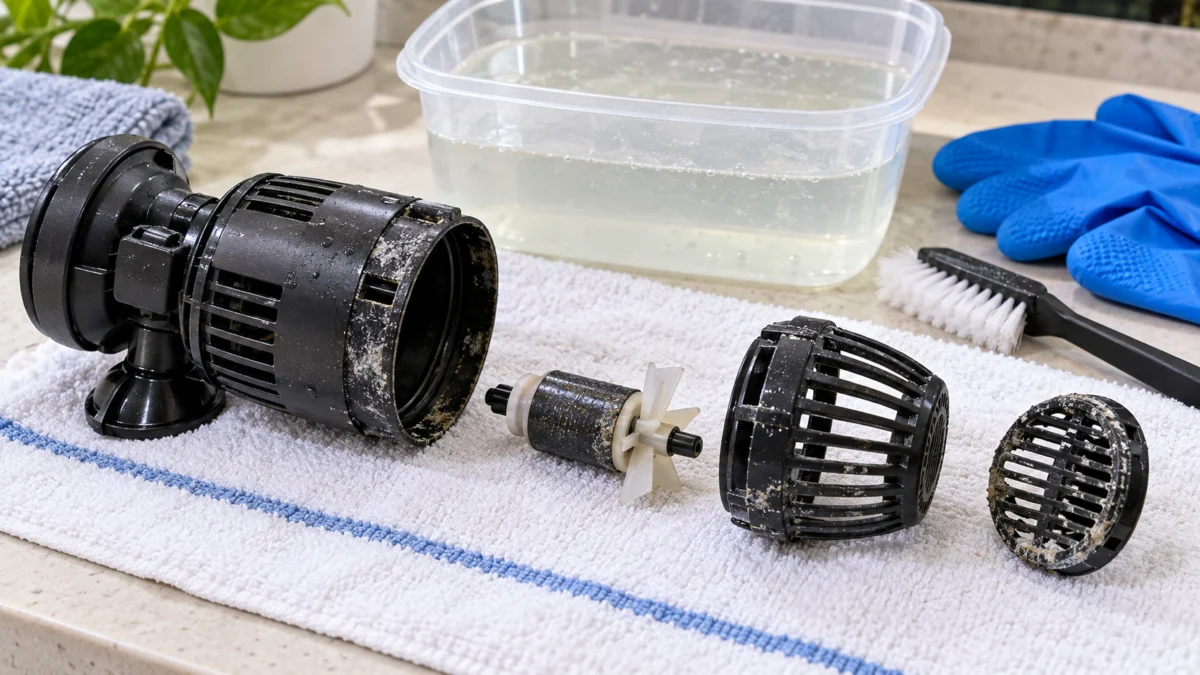
Mineral deposits and algae can reduce pump performance. Cleaning before a pump becomes heavily clogged makes maintenance easier.
Step 1: Read the pump manual
Check approved cleaners, disassembly instructions, and soaking limits. Prepare a separate container, soft brush, rinse water, and a towel for small parts.
Step 2: Unplug before removal
Disconnect power before handling the pump. Maintain circulation with other equipment while it is out. Photograph the parts as you disassemble them so reassembly is straightforward.
Step 3: Soften the deposits
If the manufacturer permits it, use an aquarium-equipment citric-acid cleaner mixed according to its label. Soak only approved components for the recommended time. Never add cleaning solution to the aquarium or mix cleaners together.
Step 4: Brush and inspect
Gently remove loosened buildup. Avoid forcing delicate shafts or scraping parts with sharp tools. Check the impeller, seals, and housing for damage; keep small bushings and fittings together.
Step 5: Rinse and restart
Rinse thoroughly, reassemble according to the manual, and reinstall. Confirm the pump starts normally and the restored flow suits the aquarium. Check for unexpected splashing or changed water levels.
Quick tip: Record the cleaning date and set your next inspection based on how quickly buildup returns in your system.
Reference: Bulk Reef Supply: Cleaning Pumps With Citric Acid