

Where Should You Place Coral
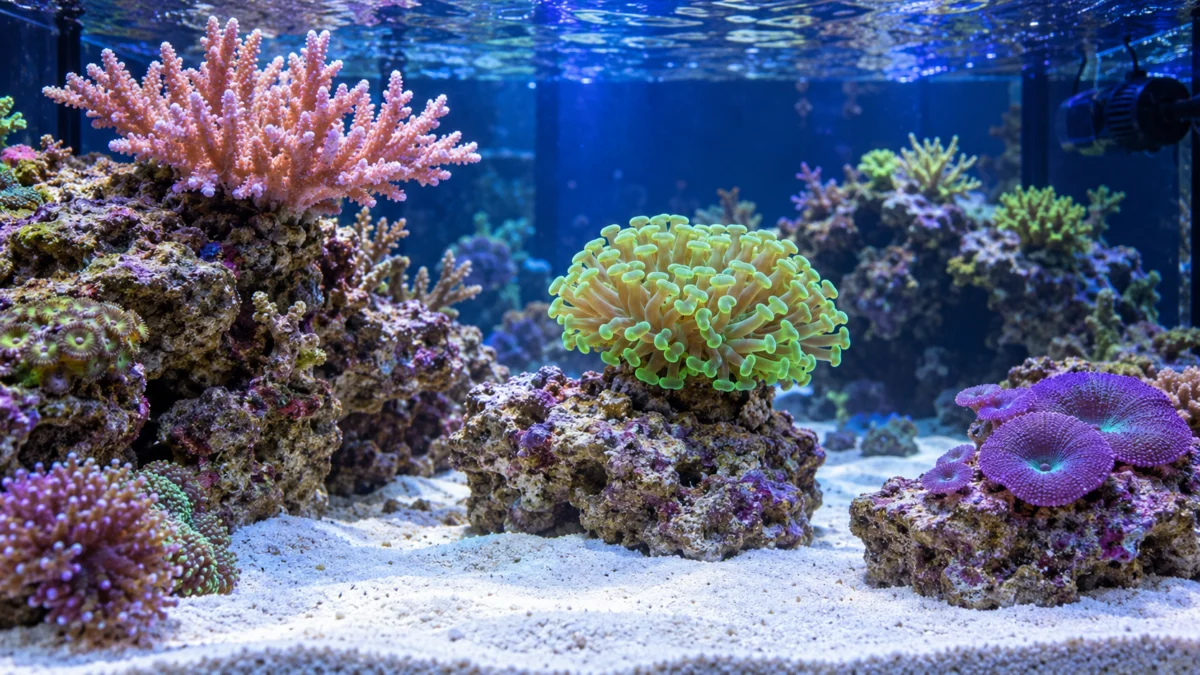
A Guide to Light, Flow, and Space
That empty spot on your rockwork might look perfect—but does it suit the coral? Plan placement around the animal’s needs before choosing the prettiest location.
Step 1: Research the exact coral
Learn its lighting needs, preferred flow, growth pattern, and aggression. Labels such as “LPS” or “soft coral” help organize a collection, but they do not replace species-specific guidance.
Step 2: Check the light at that location
Higher positions often receive more light, but shadows and fixture placement change the picture. A PAR meter helps measure actual light levels. Use the coral supplier’s guidance rather than a universal placement chart.
Step 3: Match the flow
Choose a location with movement suited to that coral. Do not assume every coral belongs directly in front of a powerhead. Observe how the current reaches the intended spot.
Step 4: Leave room for tomorrow
Account for mature size, branching or plating growth, and shadows. Aggressive corals need enough clearance that their sweeper tentacles cannot reach neighbors; a single spacing rule will not fit every species.
Step 5: Secure the base
Use an aquarium-appropriate adhesive on the frag plug or suitable exposed skeleton, keeping living tissue clear. Avoid repeatedly moving a newly placed coral simply to improve the arrangement.
Quick tip: Plan for a grown colony, not just today’s small frag.